Tuesday, 9 December 2025

ACLU: Through the Lens of Liberty: The ACLU’s Year in Photos

Through the Lens of Liberty: The ACLU’s Year in Photos

As Donald Trump started his second presidential term, 2025 began with a lot of uncertainty. However, the ACLU was ready to protect the civil liberties of individuals around the country, as we had done hundreds of times during Trump’s first term. This year saw many wins, setbacks, and enduring battles over issues like immigrants rights, trans justice, and the right to vote. As we look back on a pivotal year, join us in remembering the many moments captured on camera that defined 2025 at the ACLU.

January

A photo of Letters to America storyteller Jessica.

Credit: Adam Perez

Trump’s second administration immediately began targeting immigrant communities around the country by carrying out inhumane civilian seizures and pushing legislation that would strip individuals of their legal status. The ACLU’s “Letters to America” campaign aimed to spotlight that the individuals affected by these policies are regular people, parents and children seeking safety and opportunity.

More moments from the month: We kept individuals informed on the flurry of executive orders signed by the president during that time, as well as how they affect sex discrimination, DEI and accessibility efforts, and birthright citizenship.

February

Individuals at the ACLU's quilt making event at the Brooklyn Museum.

Credit: Scout Tufankjian

As part of our continued advocacy for trans rights amidst mounting political attacks, we commenced our Freedom To Be campaign, a multifaceted effort spotlighting trans joy along with trans and ally voices around the country. Among these efforts was the Freedom to Be monument, a quilt composed of hundreds of squares by artists celebrating trans resilience, community, and joy. Participants were welcome to join the ACLU at the Brooklyn Museum to craft their quilt panels and share stories.

More moments from the month: We showcased multiple immigrants’ rights activists in a web series combatting Trump’s anti-immigrant attacks.

March

A photo of the marsh during the Selma Jubilee.

Credit: Lynsey Weatherspoon

We sponsored and participated in this year’s Selma Jubilee, which celebrated the 1965 march from Selma to Montgomery, Alabama to support civil rights. Activists endured brutal attacks by law enforcement during the march, but the event helped introduce and usher along the passage of the Voting Rights Act of 1965. Since then, a similar march across the Edmund Pettus Bridge takes place annually to honor past civil rights trailblazers, especially as voting access faces continued legal attacks. We also helped to inform readers about Trump’s attacks on the Department of Education and emphasized the importance of state and local authorities in the fight for our civil liberties.

April

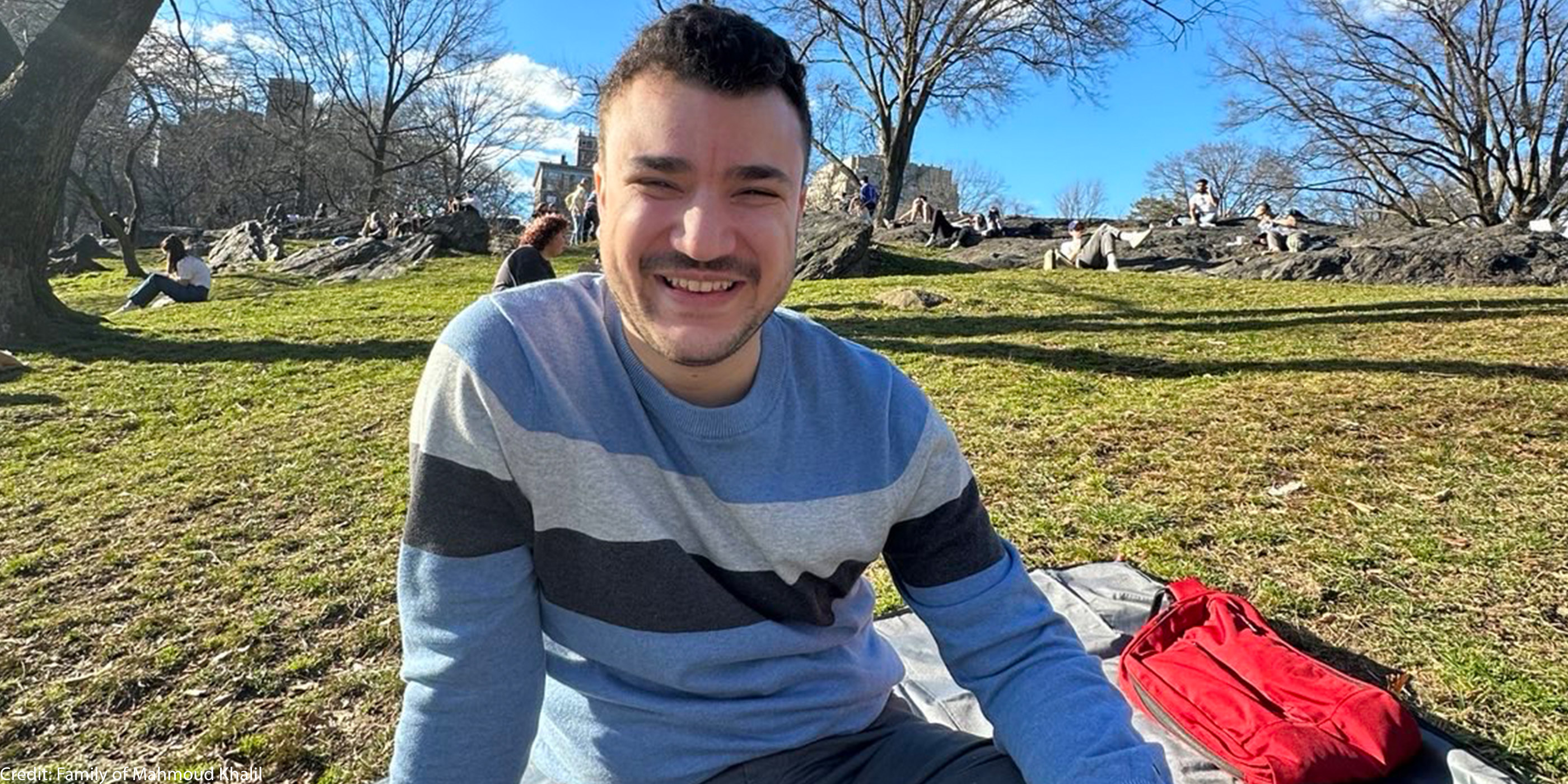
A photo of Mahmoud Khalil.

Credit: Scout Tufankjian

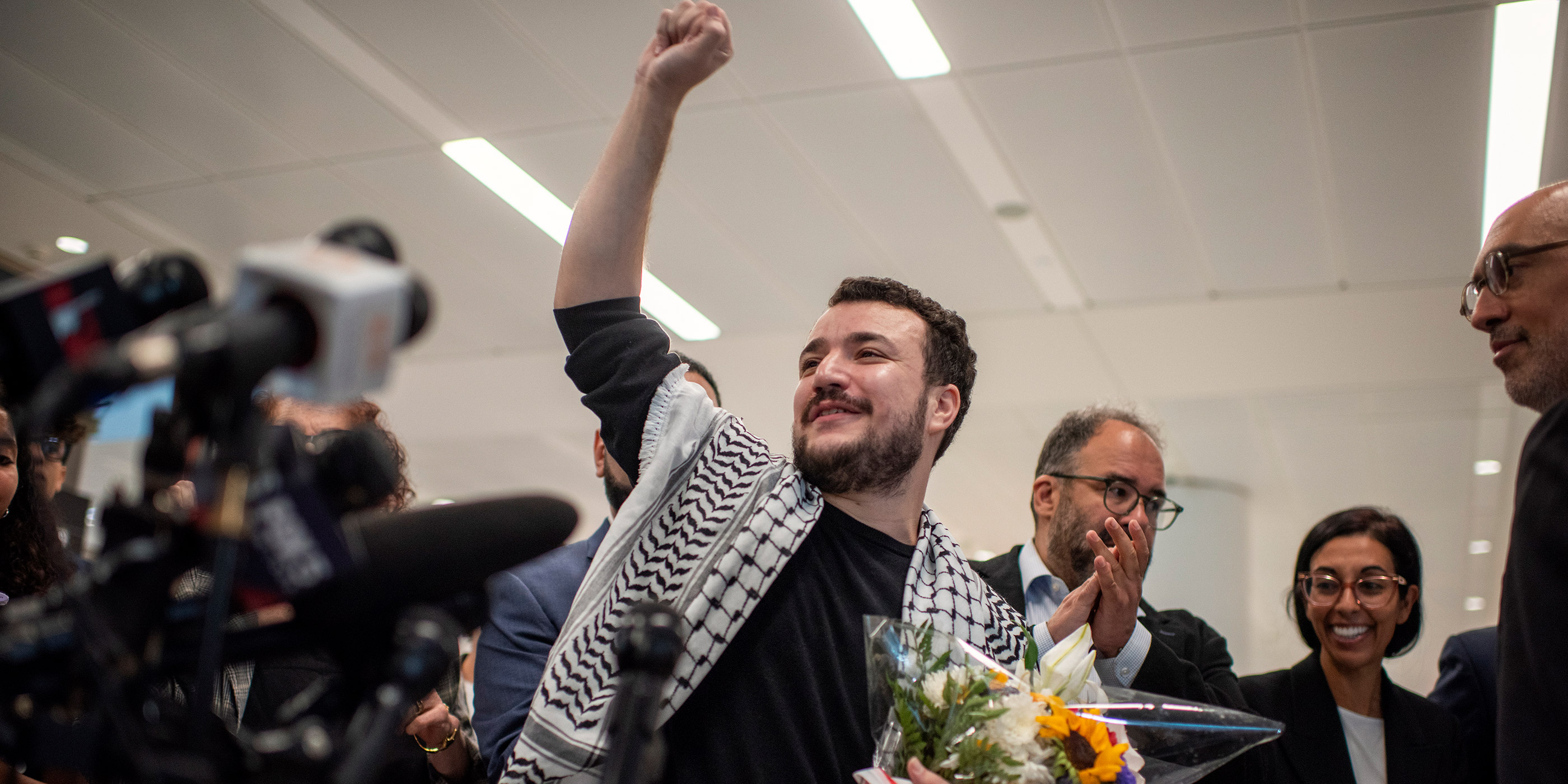
The Trump administration’s unconstitutional abduction and threats to deport several students for voicing their opinions was a blatant affront to our First Amendment freedoms. But the ACLU and partners fought back against these unlawful seizures in court and helped to ensure that these brave individuals — Mahmoud Khalil, Rümeysa Öztürk, and Mohsen Mahdawi — were released and reunited with their families.

More moments from the month: We spotlit volunteers who work to ensure that detained immigrants know their rights.

May

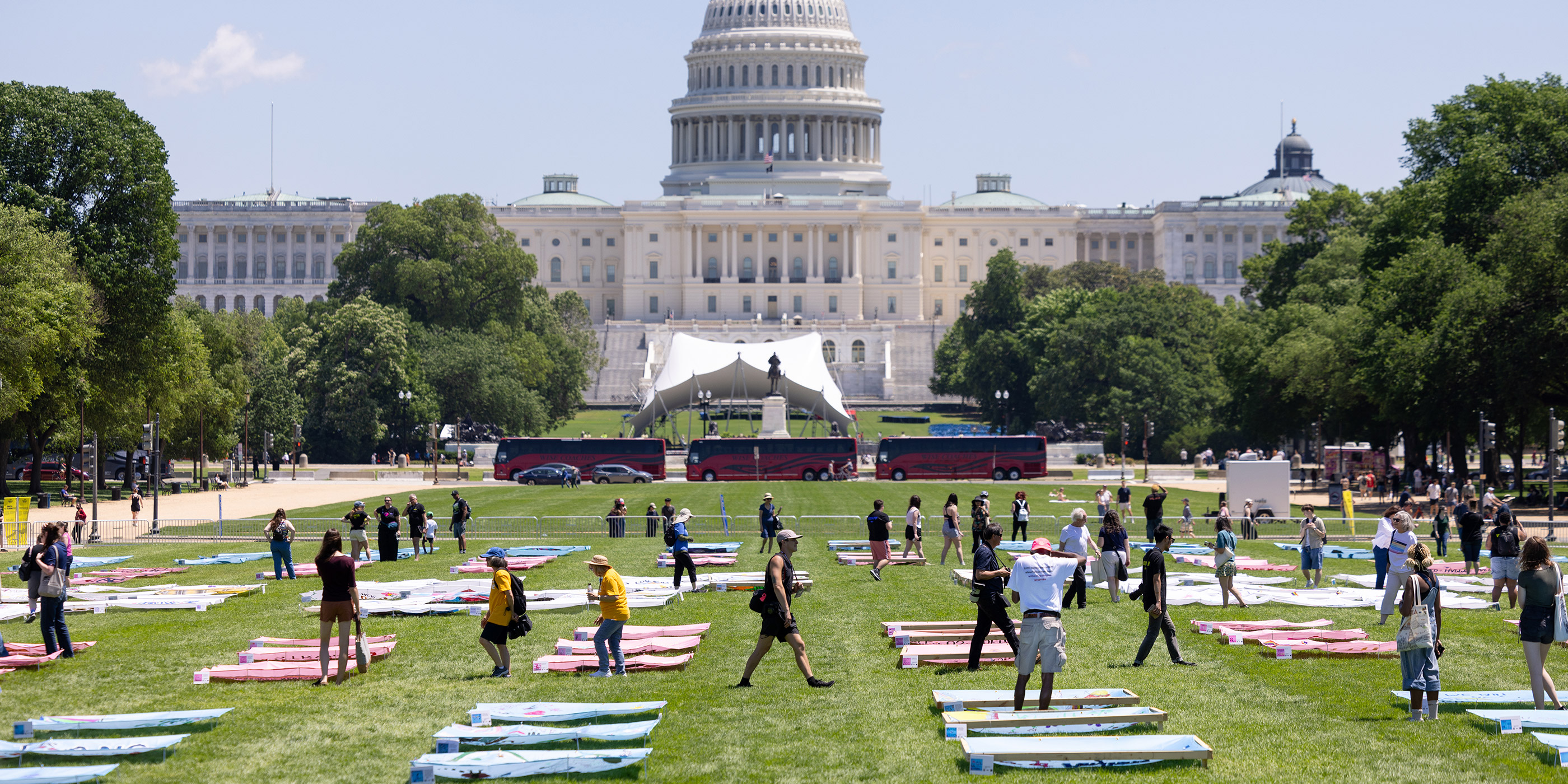
r Freedom To Be monument on the National Mall in Washington, D.C.

Credit: Allison Shelley

The ACLU unveiled its Freedom To Be monument on the National Mall in Washington, D.C. in May. Inspired by the AIDS Memorial Quilt, the sprawling installation, made up of hundreds of quilt squares, spelled out the words “Freedom To Be, and celebrated trans resilience. Observers were welcomed to wander along the mall, and admire the individual quilt squares made by trans artists, activists, and allies.

More moments from the month: We amplified the voices of undocumented immigrants around the country enduring attacks from the Trump administration, and highlighted key Supreme Court cases happening in the coming months.

June

New Yorkers gathered to protest the US Supreme Court's decision in the case United States v. Skrmetti, which upheld Tennessee's ban on gender-affirming care for trans youth.

Credit: Jordana Bermúdez

Pride Month and the consequential SCOTUS case U.S. v. Skrmetti put LGBTQ rights front and center. And though the decision on the case was a blow to gender-affirming care access, the ACLU remained steadfast in its support of trans rights through advocacy, court battles, and reflections on past legal battles that shaped LGBTQ rights.

July

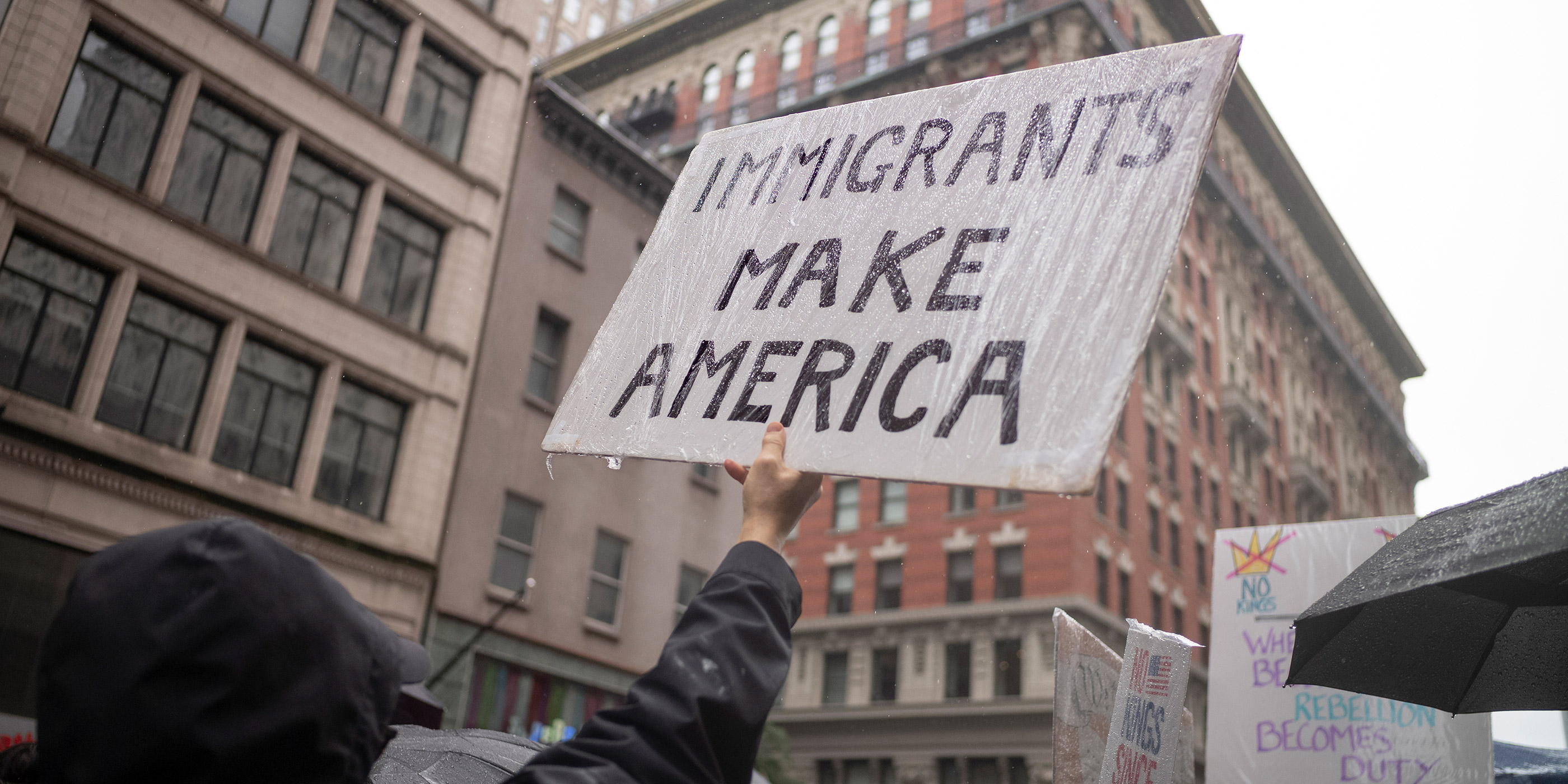
A protest sign from a No Kings rally that says "Immigrants Make America."

Credit: Scout Tufankjian

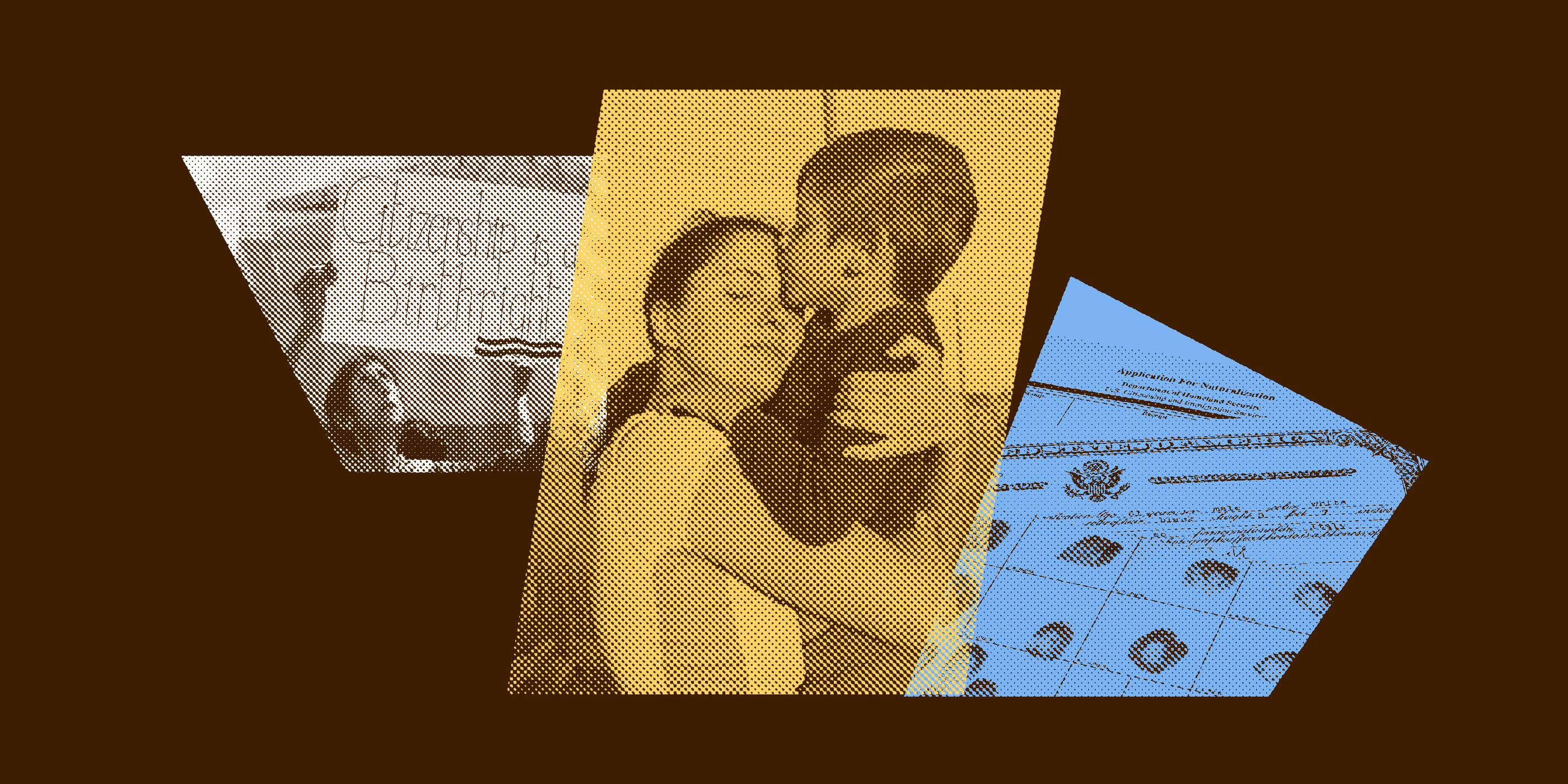
Since his first day back in office, Trump has sought to end birthright citizenship — the constitutional right to citizenship of children born in the United States. The ACLU and partners swiftly sued to block Trump’s attempts, but the legal battle has continued throughout the year, and may soon be heading to the Supreme Court. During the summer, the ACLU continued to advocate for this legal right, by keeping supporters informed about the evolving issue, and filing a class action lawsuit.

August

A demonstration sign that says "Protect Immigrants, Protect Due Process."

Credit: Scout Tufankjian

The Trump administration continued its unprecedented aggression against immigrant communities, by creating several immigration detention facilities that fly in the face of proper approval channels and due process protocols. The ACLU quickly took action by highlighting the unconstitutionality of these widespread detention measures and making sure that the rights of U.S. immigrants remained on people’s minds.

September

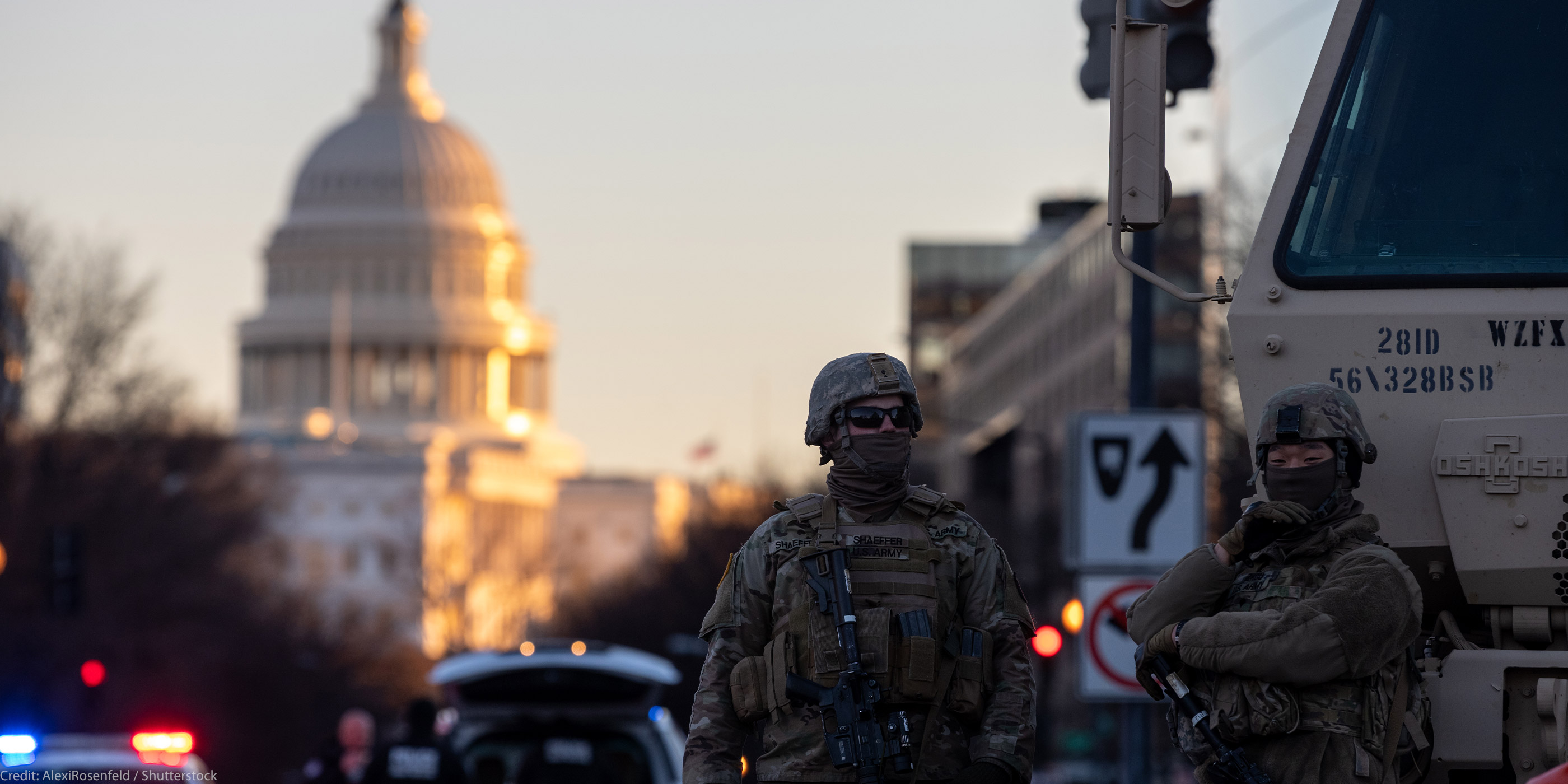
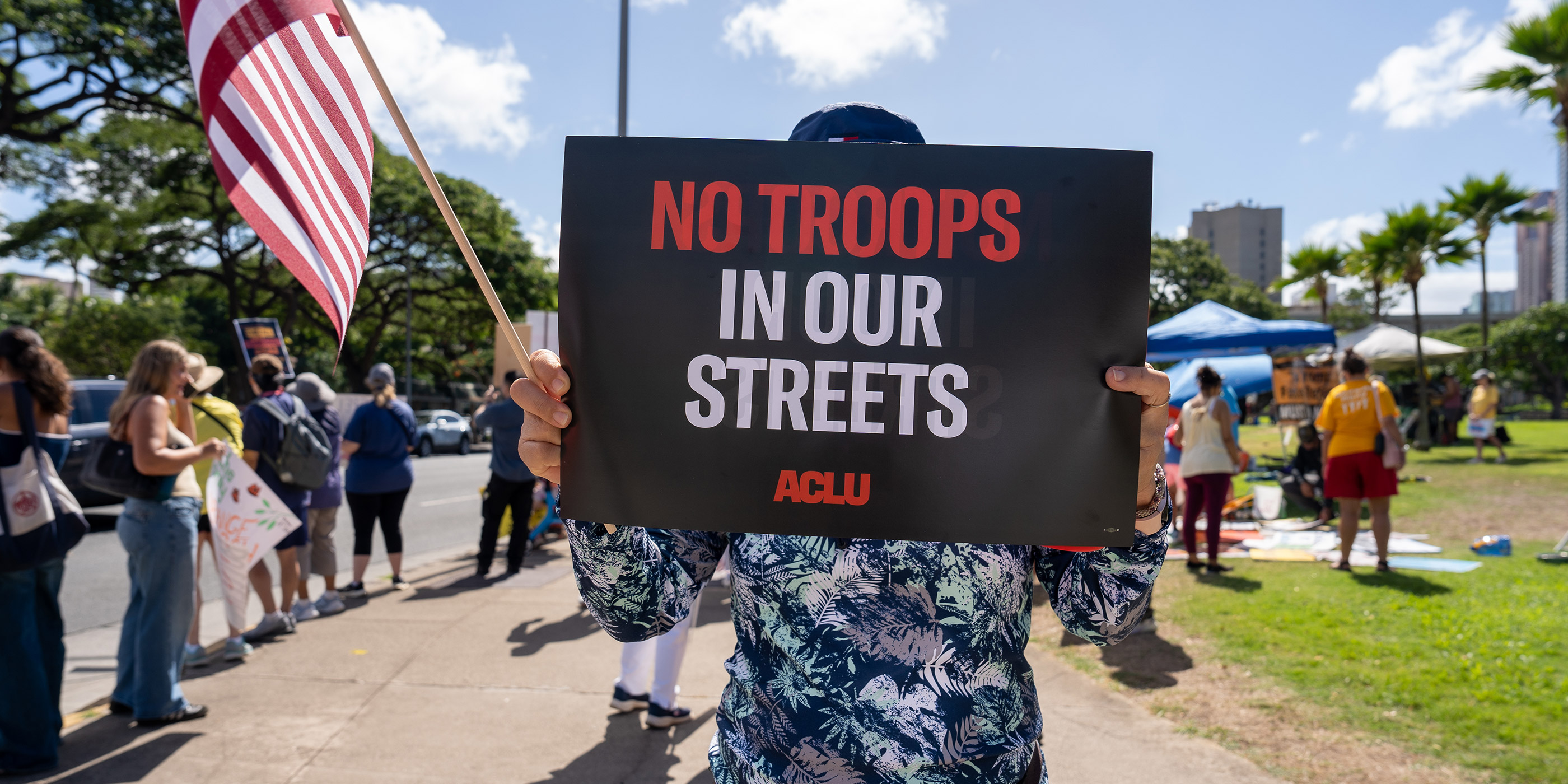
A protest sign that says "No Troops In Our Streets."

Credit: Kohar Minassian

The president took further authoritarian action in September by deploying hundreds of D.C. National Guard troops federal law enforcement agents to patrol DC’s streets. The ACLU was quick to call out that federal troops do not belong on our streets and that their role isn’t to be Trump’s personal policing power.

More moments from the month: We spotlit the country’s spreading censorship problem and began a series celebrating books that help readers understand civil liberties and civil rights.

October

People gather in Chicago to join the nationwide wave of "No Kings" protests taking place on October 18.

Credit: Alex Garcia

For the second time this year, communities around the country took to the streets for No Kings National Day of Action to call out the Trump administration’s abuses of power and advocate for our inalienable rights. The ACLU was a crucial partner in these nationwide actions, providing live coverage throughout the day, and making sure that protestors knew their rights before taking action.

More moments from the month: We amplified that the mounting pressure and censorship of late night television hosts like Jimmy Kimmel are blatantly unconstitutional — and got a few friends to cosign.

November

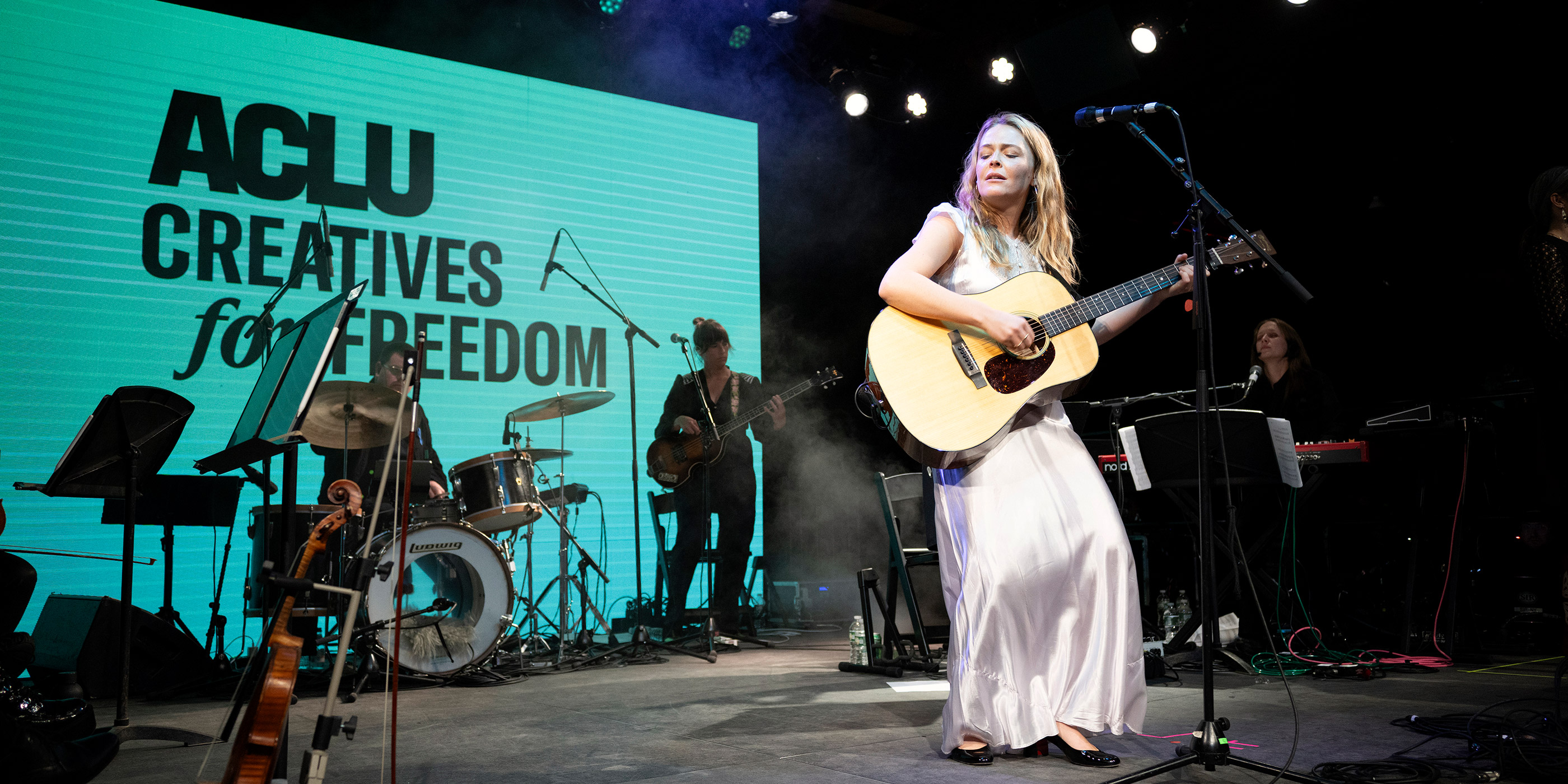
A photo of Maggie Rogers at the ACLU's Creatives For Freedom event.

Credit: Scout Tufankjian

Along with partners Ben & Jerry’s, YOLA Mezcal, and Gabriela Hearst, the ACLU hosted Creatives For Freedom at Pioneer Works in Brooklyn. The event brought together artists including Maggie Rogers, Sheryl Crow, St. Vincent, and Mark Ronson to celebrate the ACLU’s ongoing civil liberties initiatives and to urge attendees to get involved.


Published December 9, 2025 at 10:22PM
via ACLU https://ift.tt/sl8AxKv

ACLU: Through the Lens of Liberty: The ACLU’s Year in Photos

Through the Lens of Liberty: The ACLU’s Year in Photos

As Donald Trump started his second presidential term, 2025 began with a lot of uncertainty. However, the ACLU was ready to protect the civil liberties of individuals around the country, as we had done hundreds of times during Trump’s first term. This year saw many wins, setbacks, and enduring battles over issues like immigrants rights, trans justice, and the right to vote. As we look back on a pivotal year, join us in remembering the many moments captured on camera that defined 2025 at the ACLU.

January

A photo of Letters to America storyteller Jessica.

Credit: Adam Perez

Trump’s second administration immediately began targeting immigrant communities around the country by carrying out inhumane civilian seizures and pushing legislation that would strip individuals of their legal status. The ACLU’s “Letters to America” campaign aimed to spotlight that the individuals affected by these policies are regular people, parents and children seeking safety and opportunity.

More moments from the month: We kept individuals informed on the flurry of executive orders signed by the president during that time, as well as how they affect sex discrimination, DEI and accessibility efforts, and birthright citizenship.

February

Individuals at the ACLU's quilt making event at the Brooklyn Museum.

Credit: Scout Tufankjian

As part of our continued advocacy for trans rights amidst mounting political attacks, we commenced our Freedom To Be campaign, a multifaceted effort spotlighting trans joy along with trans and ally voices around the country. Among these efforts was the Freedom to Be monument, a quilt composed of hundreds of squares by artists celebrating trans resilience, community, and joy. Participants were welcome to join the ACLU at the Brooklyn Museum to craft their quilt panels and share stories.

More moments from the month: We showcased multiple immigrants’ rights activists in a web series combatting Trump’s anti-immigrant attacks.

March

A photo of the marsh during the Selma Jubilee.

Credit: Lynsey Weatherspoon

We sponsored and participated in this year’s Selma Jubilee, which celebrated the 1965 march from Selma to Montgomery, Alabama to support civil rights. Activists endured brutal attacks by law enforcement during the march, but the event helped introduce and usher along the passage of the Voting Rights Act of 1965. Since then, a similar march across the Edmund Pettus Bridge takes place annually to honor past civil rights trailblazers, especially as voting access faces continued legal attacks. We also helped to inform readers about Trump’s attacks on the Department of Education and emphasized the importance of state and local authorities in the fight for our civil liberties.

April

A photo of Mahmoud Khalil.

Credit: Scout Tufankjian

The Trump administration’s unconstitutional abduction and threats to deport several students for voicing their opinions was a blatant affront to our First Amendment freedoms. But the ACLU and partners fought back against these unlawful seizures in court and helped to ensure that these brave individuals — Mahmoud Khalil, Rümeysa Öztürk, and Mohsen Mahdawi — were released and reunited with their families.

More moments from the month: We spotlit volunteers who work to ensure that detained immigrants know their rights.

May

r Freedom To Be monument on the National Mall in Washington, D.C.

Credit: Allison Shelley

The ACLU unveiled its Freedom To Be monument on the National Mall in Washington, D.C. in May. Inspired by the AIDS Memorial Quilt, the sprawling installation, made up of hundreds of quilt squares, spelled out the words “Freedom To Be, and celebrated trans resilience. Observers were welcomed to wander along the mall, and admire the individual quilt squares made by trans artists, activists, and allies.

More moments from the month: We amplified the voices of undocumented immigrants around the country enduring attacks from the Trump administration, and highlighted key Supreme Court cases happening in the coming months.

June

New Yorkers gathered to protest the US Supreme Court's decision in the case United States v. Skrmetti, which upheld Tennessee's ban on gender-affirming care for trans youth.

Credit: Jordana Bermúdez

Pride Month and the consequential SCOTUS case U.S. v. Skrmetti put LGBTQ rights front and center. And though the decision on the case was a blow to gender-affirming care access, the ACLU remained steadfast in its support of trans rights through advocacy, court battles, and reflections on past legal battles that shaped LGBTQ rights.

July

A protest sign from a No Kings rally that says "Immigrants Make America."

Credit: Scout Tufankjian

Since his first day back in office, Trump has sought to end birthright citizenship — the constitutional right to citizenship of children born in the United States. The ACLU and partners swiftly sued to block Trump’s attempts, but the legal battle has continued throughout the year, and may soon be heading to the Supreme Court. During the summer, the ACLU continued to advocate for this legal right, by keeping supporters informed about the evolving issue, and filing a class action lawsuit.

August

A demonstration sign that says "Protect Immigrants, Protect Due Process."

Credit: Scout Tufankjian

The Trump administration continued its unprecedented aggression against immigrant communities, by creating several immigration detention facilities that fly in the face of proper approval channels and due process protocols. The ACLU quickly took action by highlighting the unconstitutionality of these widespread detention measures and making sure that the rights of U.S. immigrants remained on people’s minds.

September

A protest sign that says "No Troops In Our Streets."

Credit: Kohar Minassian

The president took further authoritarian action in September by deploying hundreds of D.C. National Guard troops federal law enforcement agents to patrol DC’s streets. The ACLU was quick to call out that federal troops do not belong on our streets and that their role isn’t to be Trump’s personal policing power.

More moments from the month: We spotlit the country’s spreading censorship problem and began a series celebrating books that help readers understand civil liberties and civil rights.

October

People gather in Chicago to join the nationwide wave of "No Kings" protests taking place on October 18.

Credit: Alex Garcia

For the second time this year, communities around the country took to the streets for No Kings National Day of Action to call out the Trump administration’s abuses of power and advocate for our inalienable rights. The ACLU was a crucial partner in these nationwide actions, providing live coverage throughout the day, and making sure that protestors knew their rights before taking action.

More moments from the month: We amplified that the mounting pressure and censorship of late night television hosts like Jimmy Kimmel are blatantly unconstitutional — and got a few friends to cosign.

November

A photo of Maggie Rogers at the ACLU's Creatives For Freedom event.

Credit: Scout Tufankjian

Along with partners Ben & Jerry’s, YOLA Mezcal, and Gabriela Hearst, the ACLU hosted Creatives For Freedom at Pioneer Works in Brooklyn. The event brought together artists including Maggie Rogers, Sheryl Crow, St. Vincent, and Mark Ronson to celebrate the ACLU’s ongoing civil liberties initiatives and to urge attendees to get involved.


Published December 9, 2025 at 04:52PM
via ACLU https://ift.tt/kJL3OlT

Monday, 8 December 2025

ACLU: Detained Immigrants Detail Physical Abuse and Inhumane Conditions at Largest Immigration Detention Center in the U.S.

Detained Immigrants Detail Physical Abuse and Inhumane Conditions at Largest Immigration Detention Center in the U.S.

At the largest immigration detention site in the country, officers beat up Samuel, a detained teenager who uses a pseudonym, so badly, he had to go to the hospital. His right front tooth broke, and he said one officer “grabbed my testicles and firmly crushed them,” while another “forced his fingers deep into my ears.” He added that weeks after the beating, damage to his left ear was so severe that he now has trouble hearing.

Samuel’s is just one of dozens of accounts of abuse from the immigration detention site at the Fort Bliss military base in El Paso, Texas. These accounts reveal an unfolding humanitarian crisis at the military base — one which may spread across the country as the Trump administration expands detention dangerously, recklessly and with unprecedented speed.

Human rights organizations, including the ACLU, sent a letter Monday to U.S. Immigration Customs and Enforcement (ICE) detailing accounts of violent assaults and sexual abuse by officers. It also reveals details of other forms of intimidation used to pressure detained immigrants into self-deporting or agreeing to removal to third countries where they have no ties. The findings are based on interviews with more than 45 people currently held at Fort Bliss, and the letter includes 16 signed declarations by people detained at the facility.

ICE began detaining people at Fort Bliss three months ago, while the site was still an active construction zone. Fort Bliss is the largest detention facility in the country, holding roughly 3,000 people, just a few thousand shy of its planned maximum capacity. Immigrants are housed in tent structures in the extreme El Paso heat. This tent camp, built on a former Japanese internment camp, marked the Trump administration's novel approach to expanding the immigration detention system in its second term. Fort Bliss is the administration’s first detention facility at a military base, but likely not the last. With a $1.2 billion price tag, the facility marks a pivotal point in the Trump administration’s effort to use the U.S. military, in this case its bases, as a central tool of immigration enforcement.


Detained Immigrants Describe Alarming Conditions at Fort Bliss

Since its opening, media reports and stories from people detained affirm the conditions, rights violations, and deliberate opacity the ACLU warned would follow the opening of this site. Recent reporting reveals alarming conditions at Fort Bliss. The site has already racked up 60 violations of federal detention standards within its first 50 days of operation.

Each pod holds 60–70 people who report chronic food shortages, with meals sufficient for only about 50 individuals. People are forced to ration food, skip meals, or take turns eating — and when food is available, it is often spoiled or partially frozen, causing widespread vomiting, diarrhea, and rapid weight loss. Basic hygiene supplies are scarce: pods receive only a handful of rolls of toilet paper, and people go days without soap, clean clothing, or access to functioning showers. Detainees describe tents and bathrooms flooded with foul water mixed with urine and feces, creating squalid and unsafe living conditions.

Access to medical care is equally alarming. Individuals with serious conditions report going days or weeks without prescribed medication or having medical requests ignored until someone collapses. They are named here using pseudonyms to protect their identities. Josefina, who has diabetes, describes receiving insulin at erratic intervals that cause dangerous spikes and crashes in her blood sugar. Fernando went 15 days without his prescribed blood pressure medication. Others, including Ignacio, who previously suffered a stroke, report blurry vision and other clear warning signs while officers fail to provide timely care. Detainees consistently say that staff do not respond to medical requests for days and that people must faint or bleed before receiving attention.

Extreme and unlawful use of force is also prominent at Fort Bliss. Several detained individuals have described violent assaults by officers, including sexual abuse. Ignacio, Samuel, and others report officers crushing their testicles during beatings — a tactic used while people were already restrained or after they refused coerced removal to Mexico. Abel, Benjamin, and Eduardo also reported being slammed, stomped on, or beaten when they expressed fear of being sent to Mexico or when they simply requested their medication. These are not isolated incidents; they reflect a pattern of brutality that violates even ICE’s minimal standards.

Access to counsel and legal services is similarly inadequate. When Fort Bliss opened, it relied almost entirely on tablets for visitation and attorney communication, offering no privacy for confidential legal calls. The facility has since modified its protocols, but legal service providers are now allowed to meet with only ten detainees per day — an impossible limitation for a population of roughly 3,000. Many still lack working PINs to call attorneys, and the so-called law library contains no legal materials.

These rights violations — layered on top of hazardous conditions such as leaking water, unstable infrastructure, filthy tents, and ongoing construction — paint a grim picture.


Fort Bliss Signals the Dangerous Future of Immigration Detention Under Trump

If this is the state of a brand-new, billion-dollar facility within its first 90 days, the outlook for the next wave of military-base detention centers is dire. As detention sites open every few weeks nationwide, the ACLU anticipates that Fort Dix in New Jersey will be the next military site the Trump administration will use for mass immigration detention. There have also been reports of ICE scouting a Coast Guard base in New York for immigration detention.

What we are witnessing at Fort Bliss is not an anomaly; it is a warning. The conditions at Fort Bliss reflect a broader pattern of ICE evading oversight and accountability. The facility is a failed experiment that exposes the dangers of rapidly expanding detention, minimal safeguards, limited transparency, and virtually no oversight.

Despite clear congressional authority to conduct announced or unannounced visits to ICE facilities, ICE continues to enforce a policy that requires congressional offices to give them a seven-day notice ahead of detention visits and routinely denies them access to Fort Bliss and other sites. During the recent government shutdown, ICE even classified its congressional relations staff as “non-essential” and furloughed them. As a result, ICE detention facilities turned into information blackout sites with no direct channels to learn about what was happening inside.

The grim reality unfolding at Fort Bliss should serve as a stark warning: the Trump administration’s mass detention surge is not just unsustainable, but fundamentally dangerous. What is happening at Fort Bliss today foreshadows the humanitarian crises that will follow at every new facility opened under this unchecked strategy. Unless policymakers, courts, and the public intervene now, Fort Bliss will not be an outlier; it will be remembered as the template. Congress must hold the Trump administration accountable and ensure ICE immediately halt detention at Fort Bliss, and cease expanding the use of military resources for immigration detention and enforcement.


Published December 9, 2025 at 02:44AM
via ACLU https://ift.tt/pfYhZwM

ACLU: Detained Immigrants Detail Physical Abuse and Inhumane Conditions at Largest Immigration Detention Center in the U.S.

Detained Immigrants Detail Physical Abuse and Inhumane Conditions at Largest Immigration Detention Center in the U.S.

At the largest immigration detention site in the country, officers beat up Samuel, a detained teenager who uses a pseudonym, so badly, he had to go to the hospital. His right front tooth broke, and he said one officer “grabbed my testicles and firmly crushed them,” while another “forced his fingers deep into my ears.” He added that weeks after the beating, damage to his left ear was so severe that he now has trouble hearing.

Samuel’s is just one of dozens of accounts of abuse from the immigration detention site at the Fort Bliss military base in El Paso, Texas. These accounts reveal an unfolding humanitarian crisis at the military base — one which may spread across the country as the Trump administration expands detention dangerously, recklessly and with unprecedented speed.

Human rights organizations, including the ACLU, sent a letter Monday to U.S. Immigration Customs and Enforcement (ICE) detailing accounts of violent assaults and sexual abuse by officers. It also reveals details of other forms of intimidation used to pressure detained immigrants into self-deporting or agreeing to removal to third countries where they have no ties. The findings are based on interviews with more than 45 people currently held at Fort Bliss, and the letter includes 16 signed declarations by people detained at the facility.

ICE began detaining people at Fort Bliss three months ago, while the site was still an active construction zone. Fort Bliss is the largest detention facility in the country, holding roughly 3,000 people, just a few thousand shy of its planned maximum capacity. Immigrants are housed in tent structures in the extreme El Paso heat. This tent camp, built on a former Japanese internment camp, marked the Trump administration's novel approach to expanding the immigration detention system in its second term. Fort Bliss is the administration’s first detention facility at a military base, but likely not the last. With a $1.2 billion price tag, the facility marks a pivotal point in the Trump administration’s effort to use the U.S. military, in this case its bases, as a central tool of immigration enforcement.


Detained Immigrants Describe Alarming Conditions at Fort Bliss

Since its opening, media reports and stories from people detained affirm the conditions, rights violations, and deliberate opacity the ACLU warned would follow the opening of this site. Recent reporting reveals alarming conditions at Fort Bliss. The site has already racked up 60 violations of federal detention standards within its first 50 days of operation.

Each pod holds 60–70 people who report chronic food shortages, with meals sufficient for only about 50 individuals. People are forced to ration food, skip meals, or take turns eating — and when food is available, it is often spoiled or partially frozen, causing widespread vomiting, diarrhea, and rapid weight loss. Basic hygiene supplies are scarce: pods receive only a handful of rolls of toilet paper, and people go days without soap, clean clothing, or access to functioning showers. Detainees describe tents and bathrooms flooded with foul water mixed with urine and feces, creating squalid and unsafe living conditions.

Access to medical care is equally alarming. Individuals with serious conditions report going days or weeks without prescribed medication or having medical requests ignored until someone collapses. They are named here using pseudonyms to protect their identities. Josefina, who has diabetes, describes receiving insulin at erratic intervals that cause dangerous spikes and crashes in her blood sugar. Fernando went 15 days without his prescribed blood pressure medication. Others, including Ignacio, who previously suffered a stroke, report blurry vision and other clear warning signs while officers fail to provide timely care. Detainees consistently say that staff do not respond to medical requests for days and that people must faint or bleed before receiving attention.

Extreme and unlawful use of force is also prominent at Fort Bliss. Several detained individuals have described violent assaults by officers, including sexual abuse. Ignacio, Samuel, and others report officers crushing their testicles during beatings — a tactic used while people were already restrained or after they refused coerced removal to Mexico. Abel, Benjamin, and Eduardo also reported being slammed, stomped on, or beaten when they expressed fear of being sent to Mexico or when they simply requested their medication. These are not isolated incidents; they reflect a pattern of brutality that violates even ICE’s minimal standards.

Access to counsel and legal services is similarly inadequate. When Fort Bliss opened, it relied almost entirely on tablets for visitation and attorney communication, offering no privacy for confidential legal calls. The facility has since modified its protocols, but legal service providers are now allowed to meet with only ten detainees per day — an impossible limitation for a population of roughly 3,000. Many still lack working PINs to call attorneys, and the so-called law library contains no legal materials.

These rights violations — layered on top of hazardous conditions such as leaking water, unstable infrastructure, filthy tents, and ongoing construction — paint a grim picture.


Fort Bliss Signals the Dangerous Future of Immigration Detention Under Trump

If this is the state of a brand-new, billion-dollar facility within its first 90 days, the outlook for the next wave of military-base detention centers is dire. As detention sites open every few weeks nationwide, the ACLU anticipates that Fort Dix in New Jersey will be the next military site the Trump administration will use for mass immigration detention. There have also been reports of ICE scouting a Coast Guard base in New York for immigration detention.

What we are witnessing at Fort Bliss is not an anomaly; it is a warning. The conditions at Fort Bliss reflect a broader pattern of ICE evading oversight and accountability. The facility is a failed experiment that exposes the dangers of rapidly expanding detention, minimal safeguards, limited transparency, and virtually no oversight.

Despite clear congressional authority to conduct announced or unannounced visits to ICE facilities, ICE continues to enforce a policy that requires congressional offices to give them a seven-day notice ahead of detention visits and routinely denies them access to Fort Bliss and other sites. During the recent government shutdown, ICE even classified its congressional relations staff as “non-essential” and furloughed them. As a result, ICE detention facilities turned into information blackout sites with no direct channels to learn about what was happening inside.

The grim reality unfolding at Fort Bliss should serve as a stark warning: the Trump administration’s mass detention surge is not just unsustainable, but fundamentally dangerous. What is happening at Fort Bliss today foreshadows the humanitarian crises that will follow at every new facility opened under this unchecked strategy. Unless policymakers, courts, and the public intervene now, Fort Bliss will not be an outlier; it will be remembered as the template. Congress must hold the Trump administration accountable and ensure ICE immediately halt detention at Fort Bliss, and cease expanding the use of military resources for immigration detention and enforcement.


Published December 8, 2025 at 09:14PM
via ACLU https://ift.tt/nL0FzfE

Wednesday, 3 December 2025

ACLU: AI is Infringing on Your Civil Rights. Here’s How We Can Stop That

AI is Infringing on Your Civil Rights. Here’s How We Can Stop That

Searching for an apartment online, applying for a loan, going through airport security, or looking up a question on a search engine – you might not think anything of these exchanges other than that they are mundane things you do, but, in many of these instances, you’re actually interacting with artificial intelligence (AI).

Avoiding AI in our quotidian activities feels impossible nowadays, especially when it is now used by public and private organizations to make decisions about us in hiring, housing, welfare, budgeting, and other high-stakes areas. While proponents of AI usage boast about how efficient the technology is, the decisions it makes about us are oftentimes uncontestable, discriminatory, and infringe on our civil rights.

However, inequity and injustice from artificial intelligence need not be our status quo. Senator Ed Markey and Congresswoman Yvette Clarke have just re-introduced the AI Civil Rights Act of 2025, which will help ensure AI developers and deployers do not violate our civil rights. The ACLU strongly urges Congress to pass this bill, so we can prevent AI systems from undermining the equal opportunities our civil rights gave us decades ago.


Why Do We Need the AI Civil Rights Act of 2025?

The AI Civil Rights Act shores up existing civil rights law so their protections now apply to artificial intelligence.

Whether you are looking at the Civil Rights Act of 1964, The Fair Housing Act, The Voting Rights Act, the Americans with Disabilities Act, or a multitude of other civil rights statutes, current civil rights laws may not be easily enforced against discriminatory AI. In many cases, individuals may not even know AI was used, deployers may not be aware of its discriminatory impact, and developers may not have tested the AI model for discriminatory harms. By covering AI harms in several consequential areas -- employment, education, housing, utilities, health care, financial services, insurance, criminal justice, identity verification, and government welfare benefits -- the AI Civil Rights Act provides interlocking protections against discrimination, testing protocols and notice requirements in numerous sectors for people who have their civil rights eroded by AI systems.


Ensuring AI Doesn't Become a Tool for Discrimination

One of the most important aspects of the AI Civil Rights Act is that it will allow us to better defend against discriminatory AI outputs. A decision from an AI model can often appear objective, but when you open up the algorithm, it can have a disparate impact on protected groups. Disparate impact, in the context of artificial intelligence, is a form of discrimination where an AI model disproportionately harms one group over another in its decision making and has been seen within healthcare, financial services, education, criminal justice, and other significant areas.

Unfortunately, disparate impact claims can be onerous to bring forward. For one, to prevail on a disparate impact claim, plaintiffs need to statistically demonstrate that an algorithm disproportionately harms a protected group and that a less discriminatory practice exists. However, the difficulty of meeting this burden can be exacerbated when AI companies refuse to disclose their algorithms for these evaluations by claiming they are "trade secrets." For another, not all civil rights laws give people the private right of action to file a disparate impact claim, and President Donald Trump is constantly rolling back the use of disparate impact in civil rights enforcement. This continual weakening of disparate impact protection makes it even more difficult to file AI-related discrimination claims.

To help with this, the AI Civil Rights Act addresses algorithmic discrimination by making it explicitly unlawful for AI developers or deployers to offer, license, promote, sell, or use an algorithm in critical life areas like housing and employment that causes or contributes to a disparate impact. Centering disparate impact in the AI Civil Rights Act ensures that concrete protections exist for individuals affected by discriminatory AI models.


Transparency and Accountability in AI Systems

Beyond safeguarding against AI-powered discrimination with disparate impact protections, the AI Civil Rights Act gives us the transparency we desperately need from AI developers and deployers. The AI Civil Rights Act requires developers, deployers, and independent auditors to conduct pre-deployment evaluations, impact assessments, and annual reviews of their algorithms. These evaluations will be critical in helping determine whether a model has harmful effects on people's civil rights and where, if at all, it can be deployed in a specific sector.

The AI Civil Rights Act also brings clarity to the long-debated question of who should be held accountable for the civil-rights harms caused by algorithmic systems. If passed, the AI Civil Rights Act will make developers and deployers the parties responsible for taking reasonable steps to ensure their AI models do not violate our civil rights. These steps can include documenting any harms that can arise from the model, being fully transparent with independent auditors, consulting with stakeholders who are impacted by AI models, guaranteeing that the benefits of using an algorithm outweigh the harms, and more. If developers and deployers are found violating the act, they risk facing civil penalties, fees, and other consequences at federal, state, and individual levels. The accountability mechanisms in the act are pivotal to empowering individuals against algorithmic harm while ensuring that AI developers and deployers understand that it is their duty to have low risk models.


What is Next?

If we want our AI systems to be safe, trustworthy, and non-discriminatory, the AI Civil Rights Act is how we start.

“AI is shaping access to opportunity across the country,” says Cody Venze, ACLU senior policy counsel. “‘Black box’ systems make decisions about who gets a loan, receives a job offer, or is eligible for parole, often with little understanding of how those decisions are made. The AI Civil Rights Act makes sure that AI systems are transparent and give everyone a fair chance to compete."


Published December 3, 2025 at 08:57PM
via ACLU https://ift.tt/osTQb2k

ACLU: AI is Infringing on Your Civil Rights. Here’s How We Can Stop That

AI is Infringing on Your Civil Rights. Here’s How We Can Stop That

Searching for an apartment online, applying for a loan, going through airport security, or looking up a question on a search engine – you might not think anything of these exchanges other than that they are mundane things you do, but, in many of these instances, you’re actually interacting with artificial intelligence (AI).

Avoiding AI in our quotidian activities feels impossible nowadays, especially when it is now used by public and private organizations to make decisions about us in hiring, housing, welfare, budgeting, and other high-stakes areas. While proponents of AI usage boast about how efficient the technology is, the decisions it makes about us are oftentimes uncontestable, discriminatory, and infringe on our civil rights.

However, inequity and injustice from artificial intelligence need not be our status quo. Senator Ed Markey and Congresswoman Yvette Clarke have just re-introduced the AI Civil Rights Act of 2025, which will help ensure AI developers and deployers do not violate our civil rights. The ACLU strongly urges Congress to pass this bill, so we can prevent AI systems from undermining the equal opportunities our civil rights gave us decades ago.


Why Do We Need the AI Civil Rights Act of 2025?

The AI Civil Rights Act shores up existing civil rights law so their protections now apply to artificial intelligence.

Whether you are looking at the Civil Rights Act of 1964, The Fair Housing Act, The Voting Rights Act, the Americans with Disabilities Act, or a multitude of other civil rights statutes, current civil rights laws may not be easily enforced against discriminatory AI. In many cases, individuals may not even know AI was used, deployers may not be aware of its discriminatory impact, and developers may not have tested the AI model for discriminatory harms. By covering AI harms in several consequential areas -- employment, education, housing, utilities, health care, financial services, insurance, criminal justice, identity verification, and government welfare benefits -- the AI Civil Rights Act provides interlocking protections against discrimination, testing protocols and notice requirements in numerous sectors for people who have their civil rights eroded by AI systems.


Ensuring AI Doesn't Become a Tool for Discrimination

One of the most important aspects of the AI Civil Rights Act is that it will allow us to better defend against discriminatory AI outputs. A decision from an AI model can often appear objective, but when you open up the algorithm, it can have a disparate impact on protected groups. Disparate impact, in the context of artificial intelligence, is a form of discrimination where an AI model disproportionately harms one group over another in its decision making and has been seen within healthcare, financial services, education, criminal justice, and other significant areas.

Unfortunately, disparate impact claims can be onerous to bring forward. For one, to prevail on a disparate impact claim, plaintiffs need to statistically demonstrate that an algorithm disproportionately harms a protected group and that a less discriminatory practice exists. However, the difficulty of meeting this burden can be exacerbated when AI companies refuse to disclose their algorithms for these evaluations by claiming they are "trade secrets." For another, not all civil rights laws give people the private right of action to file a disparate impact claim, and President Donald Trump is constantly rolling back the use of disparate impact in civil rights enforcement. This continual weakening of disparate impact protection makes it even more difficult to file AI-related discrimination claims.

To help with this, the AI Civil Rights Act addresses algorithmic discrimination by making it explicitly unlawful for AI developers or deployers to offer, license, promote, sell, or use an algorithm in critical life areas like housing and employment that causes or contributes to a disparate impact. Centering disparate impact in the AI Civil Rights Act ensures that concrete protections exist for individuals affected by discriminatory AI models.


Transparency and Accountability in AI Systems

Beyond safeguarding against AI-powered discrimination with disparate impact protections, the AI Civil Rights Act gives us the transparency we desperately need from AI developers and deployers. The AI Civil Rights Act requires developers, deployers, and independent auditors to conduct pre-deployment evaluations, impact assessments, and annual reviews of their algorithms. These evaluations will be critical in helping determine whether a model has harmful effects on people's civil rights and where, if at all, it can be deployed in a specific sector.

The AI Civil Rights Act also brings clarity to the long-debated question of who should be held accountable for the civil-rights harms caused by algorithmic systems. If passed, the AI Civil Rights Act will make developers and deployers the parties responsible for taking reasonable steps to ensure their AI models do not violate our civil rights. These steps can include documenting any harms that can arise from the model, being fully transparent with independent auditors, consulting with stakeholders who are impacted by AI models, guaranteeing that the benefits of using an algorithm outweigh the harms, and more. If developers and deployers are found violating the act, they risk facing civil penalties, fees, and other consequences at federal, state, and individual levels. The accountability mechanisms in the act are pivotal to empowering individuals against algorithmic harm while ensuring that AI developers and deployers understand that it is their duty to have low risk models.


What is Next?

If we want our AI systems to be safe, trustworthy, and non-discriminatory, the AI Civil Rights Act is how we start.

“AI is shaping access to opportunity across the country,” says Cody Venze, ACLU senior policy counsel. “‘Black box’ systems make decisions about who gets a loan, receives a job offer, or is eligible for parole, often with little understanding of how those decisions are made. The AI Civil Rights Act makes sure that AI systems are transparent and give everyone a fair chance to compete."


Published December 4, 2025 at 02:27AM
via ACLU https://ift.tt/sqeK2TL

ACLU: Your Questions Answered: How Jury Duty Protects Your Rights

Your Questions Answered: How Jury Duty Protects Your Rights

Jury service is a civic duty as important as voting, but receives far less attention from the everyday citizens who may be called to serve.

For many people, jury service is nothing more than something dramatized on TV. In fact, a jury summons is often a source of dread. But would people still groan at performing their civic duty if they thought about how jury service allows ordinary people to directly shape our justice system?

The right to a jury of one’s peers is enshrined in the U.S. Constitution and has always been a vital part of America’s system of checks and balances. Juries were designed to be a crucial check on government overreach. To this day, they ensure that people facing criminal or civil charges have their cases heard and decided by a group of their peers, not a few government actors.

Despite the important role that juries play in our criminal legal system, criminal case dockets have become so bloated that plea bargaining has become the default mechanism for resolving cases in many jurisdictions. More than 90 percent of criminal convictions in the United States are now resolved by guilty plea. That means that the vast majority of people accused of a crime are not getting the right to a trial by a jury of their peers.

We want to help you understand your rights and responsibilities as a juror, so we’ve invited ACLU experts to answer some of the most pressing questions about jury service.

What does a juror do?

There are two types of juries: grand juries and trial juries. Grand juries take place before a person is formally charged with a crime and are made up of 16 to 23 jurors. In these proceedings, jurors hear from the prosecution and determine if there is enough evidence to formally charge someone with a crime. Trial juries hear both criminal and civil cases and are tasked with rendering a verdict on the charges presented. A juror’s primary responsibilities are to:

  1. Determine whether the government met its burden of proof: A common misconception is that jurors judge the defendant’s guilt. In reality, they are tasked with judging whether the prosecution presented a legally sound case. To reach a grand jury indictment, a majority of jurors must agree that the government has shown probable cause that the accused committed the alleged crime. In a trial jury, 12 jurors must unanimously agree that the government has or has not shown proof “beyond a reasonable doubt” that the defendant committed the crime charged. Alabama and Florida, notably, are the only states that allow a non-unanimous jury decision for recommending the death penalty in sentencing.
  2. Render a verdict: As a grand juror, you will be asked to vote to indict or not indict a defendant. A grand jury indictment is required in order for the prosecution to bring charges for some categories of offenses. A non-indictment in a grand jury proceeding results in a dismissal of charges. In a criminal trial, you will be asked to return a verdict of guilty or not guilty on the charges the defendant faces. You may base your vote on the law, the weight of the evidence, as well as your own experience.

Your vote is your own, and no one can force you to vote a certain way. Judges, prosecutors, and your fellow jurors might encourage you one way or another, but no one can force you to change your vote.

- Kimberly Buddin, Senior Policy Counsel, Justice Division

What is a lower standard of proof and how does a lower standard of proof impact grand jury decisions?

The most recent data collected put federal indictment rates at 99 percent. Researchers found grand juries almost always vote to indict, with a notable exception for police officers charged with murder.

This constant stream of indictments could be attributed in part to the fact that grand jury proceedings favor the prosecution. The prosecution presents their case against the defendant to the grand jury. While the defendant is entitled to have a lawyer in the room, their lawyer cannot address the grand jury or even speak.

Another contributing factor to the alarming indictment rate could be the low standard of evidence — typically just probable cause. A conviction obtained after a grand jury indictment is most likely done so via plea bargaining, which means grand jury proceedings may be the first and last time the prosecution is held to any evidentiary standard in each case. Our current Grand jury system tends to automate approval of government prosecutions, but such deference is an affront to the spirit of the Constitution."

- Emily Reina Dindial, Senior Policy Counsel, Justice Division

Who can serve on serve on a jury?

In all states and in the federal system, citizens over 18 years old are eligible for jury service. However, more than 20 million people in the United States have had their right to serve on a jury taken away because of a felony conviction.

Discriminatory laws that exclude people with felony convictions from serving on a jury mean that even after someone who has committed a felony has rejoined community, in many states they still do not have the ability to exercise their full rights as a citizen. This results in skewed jury pools that do not represent the community. This is especially true in communities that have been over-policed and over-criminalized.

A jury should reflect the values and experiences of the community, including and especially people with personal experience in the criminal legal system. Until we restore jury service rights to all the nearly 20 million people in this country who have felony convictions, we cannot fully achieve the vision in the Constitution of a jury of our peers.

- Kimberly Buddin, Senior Policy Counsel, Justice Division

What happens if I am on a jury and we cannot make a unanimous decision?

A jury must come to a unanimous decision for either an acquittal or a conviction in a criminal case. However, that does not mean that every jury trial must result in an acquittal or a conviction.

A “hung jury” occurs when a jury is deadlocked and unable to reach a unanimous verdict. A judge may read you a statement known as an “Allen Charge,” which encourages the jury to continue deliberating until they reach a unanimous verdict. But even if the judge strongly implies that you must reach a unanimous verdict, they cannot force you to change your vote even if it leads to a hung jury.

Negotiating charges for the sake of unanimity compromises the integrity of the conviction. Jurors are obligated to vote not guilty or decline to indict if they do not believe the prosecution met the burden of proof even if they are the sole vote.

- Emily Reina Dindial, Senior Policy Counsel, Justice Division


Jury service is far more than just something shown on TV. Juries empower people to protect fellow civilians from immoral, discriminatory, or unjust laws and prosecutions. We need an educated and engaged pool of eligible jurors in order to preserve the right to a jury trial and our democracy.


Published December 3, 2025 at 11:07PM
via ACLU https://ift.tt/8S6NygY

ACLU: Your Questions Answered: How Jury Duty Protects Your Rights

Your Questions Answered: How Jury Duty Protects Your Rights

Jury service is a civic duty as important as voting, but receives far less attention from the everyday citizens who may be called to serve.

For many people, jury service is nothing more than something dramatized on TV. In fact, a jury summons is often a source of dread. But would people still groan at performing their civic duty if they thought about how jury service allows ordinary people to directly shape our justice system?

The right to a jury of one’s peers is enshrined in the U.S. Constitution and has always been a vital part of America’s system of checks and balances. Juries were designed to be a crucial check on government overreach. To this day, they ensure that people facing criminal or civil charges have their cases heard and decided by a group of their peers, not a few government actors.

Despite the important role that juries play in our criminal legal system, criminal case dockets have become so bloated that plea bargaining has become the default mechanism for resolving cases in many jurisdictions. More than 90 percent of criminal convictions in the United States are now resolved by guilty plea. That means that the vast majority of people accused of a crime are not getting the right to a trial by a jury of their peers.

We want to help you understand your rights and responsibilities as a juror, so we’ve invited ACLU experts to answer some of the most pressing questions about jury service.

What does a juror do?

There are two types of juries: grand juries and trial juries. Grand juries take place before a person is formally charged with a crime and are made up of 16 to 23 jurors. In these proceedings, jurors hear from the prosecution and determine if there is enough evidence to formally charge someone with a crime. Trial juries hear both criminal and civil cases and are tasked with rendering a verdict on the charges presented. A juror’s primary responsibilities are to:

  1. Determine whether the government met its burden of proof: A common misconception is that jurors judge the defendant’s guilt. In reality, they are tasked with judging whether the prosecution presented a legally sound case. To reach a grand jury indictment, a majority of jurors must agree that the government has shown probable cause that the accused committed the alleged crime. In a trial jury, 12 jurors must unanimously agree that the government has or has not shown proof “beyond a reasonable doubt” that the defendant committed the crime charged. Alabama and Florida, notably, are the only states that allow a non-unanimous jury decision for recommending the death penalty in sentencing.
  2. Render a verdict: As a grand juror, you will be asked to vote to indict or not indict a defendant. A grand jury indictment is required in order for the prosecution to bring charges for some categories of offenses. A non-indictment in a grand jury proceeding results in a dismissal of charges. In a criminal trial, you will be asked to return a verdict of guilty or not guilty on the charges the defendant faces. You may base your vote on the law, the weight of the evidence, as well as your own experience.

Your vote is your own, and no one can force you to vote a certain way. Judges, prosecutors, and your fellow jurors might encourage you one way or another, but no one can force you to change your vote.

- Kimberly Buddin, Senior Policy Counsel, Justice Division

What is a lower standard of proof and how does a lower standard of proof impact grand jury decisions?

The most recent data collected put federal indictment rates at 99 percent. Researchers found grand juries almost always vote to indict, with a notable exception for police officers charged with murder.

This constant stream of indictments could be attributed in part to the fact that grand jury proceedings favor the prosecution. The prosecution presents their case against the defendant to the grand jury. While the defendant is entitled to have a lawyer in the room, their lawyer cannot address the grand jury or even speak.

Another contributing factor to the alarming indictment rate could be the low standard of evidence — typically just probable cause. A conviction obtained after a grand jury indictment is most likely done so via plea bargaining, which means grand jury proceedings may be the first and last time the prosecution is held to any evidentiary standard in each case. Our current Grand jury system tends to automate approval of government prosecutions, but such deference is an affront to the spirit of the Constitution."

- Emily Reina Dindial, Senior Policy Counsel, Justice Division

Who can serve on serve on a jury?

In all states and in the federal system, citizens over 18 years old are eligible for jury service. However, more than 20 million people in the United States have had their right to serve on a jury taken away because of a felony conviction.

Discriminatory laws that exclude people with felony convictions from serving on a jury mean that even after someone who has committed a felony has rejoined community, in many states they still do not have the ability to exercise their full rights as a citizen. This results in skewed jury pools that do not represent the community. This is especially true in communities that have been over-policed and over-criminalized.

A jury should reflect the values and experiences of the community, including and especially people with personal experience in the criminal legal system. Until we restore jury service rights to all the nearly 20 million people in this country who have felony convictions, we cannot fully achieve the vision in the Constitution of a jury of our peers.

- Kimberly Buddin, Senior Policy Counsel, Justice Division

What happens if I am on a jury and we cannot make a unanimous decision?

A jury must come to a unanimous decision for either an acquittal or a conviction in a criminal case. However, that does not mean that every jury trial must result in an acquittal or a conviction.

A “hung jury” occurs when a jury is deadlocked and unable to reach a unanimous verdict. A judge may read you a statement known as an “Allen Charge,” which encourages the jury to continue deliberating until they reach a unanimous verdict. But even if the judge strongly implies that you must reach a unanimous verdict, they cannot force you to change your vote even if it leads to a hung jury.

Negotiating charges for the sake of unanimity compromises the integrity of the conviction. Jurors are obligated to vote not guilty or decline to indict if they do not believe the prosecution met the burden of proof even if they are the sole vote.

- Emily Reina Dindial, Senior Policy Counsel, Justice Division


Jury service is far more than just something shown on TV. Juries empower people to protect fellow civilians from immoral, discriminatory, or unjust laws and prosecutions. We need an educated and engaged pool of eligible jurors in order to preserve the right to a jury trial and our democracy.


Published December 3, 2025 at 05:37PM
via ACLU https://ift.tt/JnxeW4S