Thursday, 2 July 2020

ACLU: How State Governments Across the Country Failed to Protect Our Communities From COVID-19

How State Governments Across the Country Failed to Protect Our Communities From COVID-19

Since the inception of this pandemic, it has been clear that incarcerated people are particularly at risk from COVID-19. In addition to the clear, consistent guidance from public health experts, incarcerated families, corrections staff, and data scientists urged states to take action to prevent tragedy.
 
Unfortunately, states failed to heed these warnings and have failed to protect incarcerated people, facility staff, and communities at large from the looming threat of COVID-19.
 
This is the core finding of a new ACLU report: “Failing Grades: States’ Responses to COVID-19 in Jails & Prisons,” co-authored with Prison Policy Initiative. The report evaluated states based on four criteria:
 
●       Testing all staff and incarcerated people, and making sure everyone had access to personal protective equipment;
●       Whether the governor issued an executive order to stop the churn of people coming into jails, and to immediately get people out of jails and prisons;
●       Sharing data, disaggregated by race, so the public has insight into how the crisis is unfolding and being addressed; and
●       Actually reducing the number of people in jails and prisons — the most important step any state can take in this moment.
 
There is no doubt that the responsibility to respond to this crisis falls heavily on states: Of the 2.3 million people incarcerated in this country, over 1.9 million people are in state prisons or local jails. These facilities are cramped, unhygienic, and designed to inhibit a person’s ability to protect themselves. Social distancing is impossible. Human contact is unavoidable. Soap and medical attention are prohibitively expensive, while hand sanitizer is often regarded as contraband. And unfettered access to open air and outdoor spaces is essentially nonexistent.
 
The results of states’ failure to respond are therefore as tragic as they were predictable. Jails and prisons have become the epicenter of this pandemic. Most of the largest COVID-19 clusters are in jails and prisons, and the largest hotspot in most states is inside a jail or prison. Moreover, to date, over 600 incarcerated people and over 50 staff have died. These numbers will only increase as COVID-19 continues to run rampant in these facilities.
 
This impacts all of us. Not forcefully confronting COVID-19 in jails and prisons will have deep reverberations in neighboring communities. Just as importantly, this travesty exacerbates the racial inequities that define mass incarceration. We know that the egregious harm created by our carceral systems has always been deliberately concentrated in Black and Brown communities. A similar disparity has played out in the COVID-19 pandemic — a product of generational underinvestment in the housing, health care, and other resources that communities depend on for protection in moments like this.
 
Yet it is not too late to change course. It is not too late for leadership. This report offers more than an evaluation of what has not happened; it also offers some ideas and a blueprint for what must happen now. The lives lost cannot be brought back, but other lives can still be saved. People can still be allowed to go home. Corrections staff can work without fear of carrying a virus back to their families. And we can actually combat this pandemic while caring for and centering people’s humanity and dignity.


Published July 2, 2020 at 03:27PM
via ACLU https://ift.tt/3iniSWZ

ACLU: The Federal Government’s Decision to Proceed with Executions During the Pandemic Puts Me in an Impossible Position

The Federal Government’s Decision to Proceed with Executions During the Pandemic Puts Me in an Impossible Position

As a Buddhist priest to a man on death row, I have prepared myself for the difficult, yet necessary role of attending the execution of a man I’ve been advising for 11 years in order to provide support as he crosses over from this life. I want nothing more than to fulfill my priestly duty to Wes Purkey, but because of the Federal Bureau of Prison’s decision to schedule his execution during a pandemic, I feel substantial pressure to abandon my religious commitments to him. I’m being asked to make an impossible decision — violate my religious beliefs or risk my health and life by attending an execution that could become a “super-spreader” event for COVID-19.

I first met Wes  in 2009. As a Zen Buddhist, Wes sought my spiritual guidance to answer questions and share religious insights about life and death. While I knew Wes would eventually be executed, I was shocked and horrified when he finally received an execution date. That date was originally set for December of last year, but was postponed. His new execution date is just days away, and remains in place despite posing significant risks to the health of all involved due to COVID-19. 

Much of the country is still sheltering in place and practicing social distancing. Even the Federal Bureau of Prisons has taken extraordinary preventative measures, suspending all visitation nationwide, even with attorneys,  due to what BOP officials have called the “unprecedented world-wide public health emergency.” As such, Wes and I have only communicated through letters since March. Due to my age and history of lung illnesses, which make me highly vulnerable to the virus, I have altered my everyday life and habits. I’ve stopped going to places I used to frequent on a near-daily basis, such as coffee shops and the library, and I do not currently attend services at my temple. These are necessary adjustments to avoid contracting and spreading COVID-19.   

I know from my experiences visiting Wes in prison that normal security protocol would not allow me to follow the CDC-recommended safety guidelines, even those for people without medical vulnerabilities. During regular visits to Wes’s prison, I routinely came into close contact with corrections officers and other visitors. In the waiting room, for example, other visitors often sit in cramped rows of chairs for up to 90 minutes at a time. It is impossible to social distance as recommended by public health officials. I expect that security protocol will be even more stringent on the day of Wes’s execution and will require more contact with correctional staff and other attendees of the execution — reporters, witnesses, the victim’s family, and others. The number of people in attendance is projected to be in the hundreds, and many will have traveled from around the country.  Moreover, it has been reported that the Terre Haute, Indiana, prison where Wes is housed and where he will be executed is currently experiencing a COVID-19 outbreak.

As a Zen Buddhist, I believe that one’s state of mind must be at peace at the moment of death in order to release one’s attachment to this life with minimal distress. It’s vital that I be there, as Wes’s priest, to ensure this peaceful transition from life to death during his most dire moment of distress —his ultimate crisis — as he sits at the threshold of death. I will chant from behind a plexiglass barrier to ensure his peace of mind while passing and, through my physical presence, serve as a spiritual reminder to Wes of all the religious lessons I have taught him as he passes on from this life. This is my sacred duty.

The federal government’s decision to proceed with Wes’s execution burdens my religious freedom by forcing me to choose between performing my religious duties as a priest, and protecting my own life. Although Trump officials have repeatedly claimed the mantle of guardians of religious liberty, too often their commitment wavers when it is inconvenient for their political agenda. This appears to be one of those times.

While I am religiously obligated as Wes’s priest to provide him spiritual guidance and comfort as he leaves this life, none of this dismisses his responsibility for his actions. I do not intend to gloss over the gravity of his past errors and the tremendous suffering they caused for others. Many will argue that Wes should be denied his right to my presence at his execution due to his crimes. I understand this position — people have a right to feel outraged by any harm he has caused. But is the answer really to rob him — and me — of our religious liberty? We must ask ourselves how much we are willing to sacrifice to enable the government to perpetuate a cycle of killing.


Published July 2, 2020 at 03:05PM
via ACLU https://ift.tt/2YSI2VS

Republic of Poland : Technical Assistance Report-Progress Report on Budget System Reform–Developing a Standard Chart of Accounts and a Medium-term Budget Framework

Republic of Poland : Technical Assistance Report-Progress Report on Budget System Reform–Developing a Standard Chart of Accounts and a Medium-term Budget Framework
Published July 02, 2020 at 05:00PM
Read more at imf.org

Wednesday, 1 July 2020

ACLU: The Racist History of Abortion and Midwifery Bans

The Racist History of Abortion and Midwifery Bans

In 1851, Sojourner Truth delivered a speech best known as“Ain’t I A Woman?” to a crowded audience at the Women’s Convention in Akron, Ohio. At the time, slavery remained in full force, a vibrant enterprise that fueled the American economy. Various laws protected that system, including the Fugitive Slave Act, which resulted in the abduction of “free” Black children, women, and men as well as those who had miraculously escaped to northern cities like Boston or Philadelphia. Bounty hunters then sold their prey to Southern plantation owners. The law denied basic protections for Black people caught in the greed-filled grasps of slavery.
 
Ms. Truth condemned this disgraceful enterprise, which thrived off not only uncompensated labor, but also physical and psychological terror. Most will remember Ms. Truth’s oration for its vivid descriptions regarding physical labor; Black women were forced to plough, plant, herd, and build — just as men. Yet far too little attention centers on her condemnation of that system, which made sexual chattel of Black women, and then cruelly sold off Black children. This was human trafficking in the American form, and it lasted for centuries. Ms. Truth pleaded:
 
“I have borne 13 children, and seen most all sold off to slavery, and when I cried out with my mother’s grief, none but Jesus heard me! And ain’t I a woman?”
 
Following the Supreme Court’s decision in June Medical Services v. Russo this week, it is worth reflecting on the racist origins of the anti-abortion movement in the United States, which date back to the ideologies of slavery. Just like slavery, anti-abortion efforts are rooted in white supremacy, the exploitation of Black women, and placing women’s bodies in service to men. Just like slavery, maximizing wealth and consolidating power motivated the anti-abortion enterprise. Then, just as now, anti-abortion efforts have nothing to do with saving women’s lives or protecting the interests of children. Today, a person is 14 times more likely to die by carrying a pregnancy to term than by having an abortion, and medical evidence has shown for decades that an abortion is as safe as a penicillin shot—and yet abortion remains heavily restricted in states across the country.
 
Prior to the Civil War, abortion and contraceptives were legal in the U.S., used by Indigenous women as well as those who sailed to these lands from Europe. For the most part, the persons who performed all manner of reproductive health care were women — female midwives. Midwifery was interracial; half of the women who provided reproductive health care were Black women. Other midwives were Indigenous and white.
 
However, in the wake of slavery’s end, skilled Black midwives represented both real competition for white men who sought to enter the practice of child delivery, and a threat to how obstetricians viewed themselves. Male gynecologists claimed midwifery was a degrading means of obstetrical care. They viewed themselves as elite members of a trained profession with tools such as forceps and other technologies, and the modern convenience of hospitals, which excluded Black and Indigenous women from practice within their institutions.

History would later reveal that it was literally on the backs of Black women’s bodies that such tools were developed. Dr. Marion Sims famously wrote about his insomniac-induced “epiphanies” that stirred him to experiment on enslaved Black women, lacerating, suturing, and cutting, providing no anesthesia or pain relief. Only recently have the terrors that Black women endured through nonconsensual experimentation by gynecologists of the 19th and 20th centuries been acknowledged.
 
Successful racist and misogynistic smear campaigns, cleverly designed for political persuasion and to achieve legal reform, described Black midwives as unhygienic, barbarous, ineffective, non-scientific, dangerous, and unprofessional. Dr. Joseph DeLee, a preeminent 20th century obstetrician and fervent opponent to midwifery, stated in a much-quoted 1915 speech, “Progress Toward Ideal Obstetrics”:

The midwife is a relic of barbarism. In civilized countries the midwife is wrong, has always been wrong … The midwife has been a drag on the progress of the science and art of obstetrics. Her existence stunts the one and degrades the other. For many centuries she perverted obstetrics from obtaining any standing at all among the science of medicine … Even after midwifery was practiced by some of the most brilliant men in the profession, such practice was held opprobrious and degraded.

At the root of these stereotypes were explicit efforts to destroy midwifery and promote white supremacy. As the surge of lynchings, “separate but equal” laws, police violence, and the decimation of successful Black communities during Jim Crow revealed, Black Americans post slavery suffered greatly due to white supremacy, as did Chinese and Japanese workers and their families. Indeed, the racist campaigns launched by doctors against Black midwives extended to anti-immigration legislative platforms targeted at Chinese and Japanese workers. The Page Act, which restricted Chinese women from entering the United States, is a part of this shameful legacy. This broader 20th century anti-Chinese campaign became known as “yellow peril.” DeLee and Horatio Storer urged white women to “spread their loins” across the nation,  a dog whistle about the threat of too many Blacks and Asians in the U.S. 
 
Gynecologists explicitly revealed their motivations in undermining midwifery: They desired financial gains, recognition, and a monopoly. As Dr. DeLee wrote in a 1916 article published in the American Journal of Obstetrics & Disease of Women & Children, “There is high art in obstetrics and that it must pay as well for it as for surgery. I will not admit that this is a sordid impulse. It is only common justice to labor, self-sacrifice, and skill.” They believed that men should be paid, but not women — particularly not Black women.
 
To better understand racial injustice in the anti-abortion movement, remember that American hospitals barred the admission of African Americans both in terms of practice and as patients. And, the American Medical Association (AMA) barred women and Black people from membership. The AMA, founded in 1847, refused to admit Black doctors, informing them, “You come from groups and schools that admit women and that admit irregular practitioners.” For this reason, Black doctors formed the National Medical Association in 1895.
 
In 2008, the organization issued a public apology for its active campaigns to close Black medical schools, deny Blacks membership, and other efforts to marginalize Black patients and practitioners. 
 
Gynecologists pushed women out of the field of reproductive health by lobbying state legislatures to ban midwifery and prohibit abortions. Doing so not only undercut women’s reproductive health, but also drove qualified Black women out of medical services. For these groups, there was no meaningful path to the formalized skill set DeLee claimed necessary.
 
Abortion was an expedient way to frame their campaign to create monopolies on women’s bodies for male doctors. The American Medical Association explicitly contributed to this cause through its exclusion of women and Black people.
 
Today, as people debate whether anti-abortion platforms benefit Black women, the clear answer is no. The U.S. leads the developed world in maternal and infant mortality. The U.S. ranks around 50th in the world for maternal safety. Nationally, for Black women, the maternal death rate is nearly four times that of white women, and 10 to 17 times worse in some states.
 
In the wake of both Whole Woman’s Health and June Medical Services v. Russo, keep in mind that both Texas and Louisiana, where these cases originated, are considered the deadliest in the developed world for a woman to give birth.
 
Sadly, pregnancy has become a death sentence for many in the very places that make reproductive health care access the most fraught and hard to reach. Many of these states (though not all) are former slave states, such as Texas, Louisiana, Mississippi, Alabama, and Arkansas. As Black people in these states continue to fight for equal access the reproductive care they need, Sojourner Truth’s 1851 speech continues to resonate. And as the Supreme Court demonstrated this week, the fight for justice in reproductive health care and equality in abortion access is far from over. The decision does not advance the equality of poor Black women — it maintains all other burdensome restrictions already in place. We have much more work to do such that not only DeLee’s words, but also his racist and exploitative viewpoints, are relegated to history.


Published July 2, 2020 at 03:01AM
via ACLU https://ift.tt/31MYvwT

ACLU: The Racist History of Abortion and Midwifery Bans

The Racist History of Abortion and Midwifery Bans

In 1851, Sojourner Truth delivered a speech best known as“Ain’t I A Woman?” to a crowded audience at the Women’s Convention in Akron, Ohio. At the time, slavery remained in full force, a vibrant enterprise that fueled the American economy. Various laws protected that system, including the Fugitive Slave Act, which resulted in the abduction of “free” Black children, women, and men as well as those who had miraculously escaped to northern cities like Boston or Philadelphia. Bounty hunters then sold their prey to Southern plantation owners. The law denied basic protections for Black people caught in the greed-filled grasps of slavery.
 
Ms. Truth condemned this disgraceful enterprise, which thrived off not only uncompensated labor, but also physical and psychological terror. Most will remember Ms. Truth’s oration for its vivid descriptions regarding physical labor; Black women were forced to plough, plant, herd, and build — just as men. Yet far too little attention centers on her condemnation of that system, which made sexual chattel of Black women, and then cruelly sold off Black children. This was human trafficking in the American form, and it lasted for centuries. Ms. Truth pleaded:
 
“I have borne 13 children, and seen most all sold off to slavery, and when I cried out with my mother’s grief, none but Jesus heard me! And ain’t I a woman?”
 
Following the Supreme Court’s decision in June Medical Services v. Russo this week, it is worth reflecting on the racist origins of the anti-abortion movement in the United States, which date back to the ideologies of slavery. Just like slavery, anti-abortion efforts are rooted in white supremacy, the exploitation of Black women, and placing women’s bodies in service to men. Just like slavery, maximizing wealth and consolidating power motivated the anti-abortion enterprise. Then, just as now, anti-abortion efforts have nothing to do with saving women’s lives or protecting the interests of children. Today, a person is 14 times more likely to die by carrying a pregnancy to term than by having an abortion, and medical evidence has shown for decades that an abortion is as safe as a penicillin shot—and yet abortion remains heavily restricted in states across the country.
 
Prior to the Civil War, abortion and contraceptives were legal in the U.S., used by Indigenous women as well as those who sailed to these lands from Europe. For the most part, the persons who performed all manner of reproductive health care were women — female midwives. Midwifery was interracial; half of the women who provided reproductive health care were Black women. Other midwives were Indigenous and white.
 
However, in the wake of slavery’s end, skilled Black midwives represented both real competition for white men who sought to enter the practice of child delivery, and a threat to how obstetricians viewed themselves. Male gynecologists claimed midwifery was a degrading means of obstetrical care. They viewed themselves as elite members of a trained profession with tools such as forceps and other technologies, and the modern convenience of hospitals, which excluded Black and Indigenous women from practice within their institutions.

History would later reveal that it was literally on the backs of Black women’s bodies that such tools were developed. Dr. Marion Sims famously wrote about his insomniac-induced “epiphanies” that stirred him to experiment on enslaved Black women, lacerating, suturing, and cutting, providing no anesthesia or pain relief. Only recently have the terrors that Black women endured through nonconsensual experimentation by gynecologists of the 19th and 20th centuries been acknowledged.
 
Successful racist and misogynistic smear campaigns, cleverly designed for political persuasion and to achieve legal reform, described Black midwives as unhygienic, barbarous, ineffective, non-scientific, dangerous, and unprofessional. Dr. Joseph DeLee, a preeminent 20th century obstetrician and fervent opponent to midwifery, stated in a much-quoted 1915 speech, “Progress Toward Ideal Obstetrics”:

The midwife is a relic of barbarism. In civilized countries the midwife is wrong, has always been wrong … The midwife has been a drag on the progress of the science and art of obstetrics. Her existence stunts the one and degrades the other. For many centuries she perverted obstetrics from obtaining any standing at all among the science of medicine … Even after midwifery was practiced by some of the most brilliant men in the profession, such practice was held opprobrious and degraded.

At the root of these stereotypes were explicit efforts to destroy midwifery and promote white supremacy. As the surge of lynchings, “separate but equal” laws, police violence, and the decimation of successful Black communities during Jim Crow revealed, Black Americans post slavery suffered greatly due to white supremacy, as did Chinese and Japanese workers and their families. Indeed, the racist campaigns launched by doctors against Black midwives extended to anti-immigration legislative platforms targeted at Chinese and Japanese workers. The Page Act, which restricted Chinese women from entering the United States, is a part of this shameful legacy. This broader 20th century anti-Chinese campaign became known as “yellow peril.” DeLee and Horatio Storer urged white women to “spread their loins” across the nation,  a dog whistle about the threat of too many Blacks and Asians in the U.S. 
 
Gynecologists explicitly revealed their motivations in undermining midwifery: They desired financial gains, recognition, and a monopoly. As Dr. DeLee wrote in a 1916 article published in the American Journal of Obstetrics & Disease of Women & Children, “There is high art in obstetrics and that it must pay as well for it as for surgery. I will not admit that this is a sordid impulse. It is only common justice to labor, self-sacrifice, and skill.” They believed that men should be paid, but not women — particularly not Black women.
 
To better understand racial injustice in the anti-abortion movement, remember that American hospitals barred the admission of African Americans both in terms of practice and as patients. And, the American Medical Association (AMA) barred women and Black people from membership. The AMA, founded in 1847, refused to admit Black doctors, informing them, “You come from groups and schools that admit women and that admit irregular practitioners.” For this reason, Black doctors formed the National Medical Association in 1895.
 
In 2008, the organization issued a public apology for its active campaigns to close Black medical schools, deny Blacks membership, and other efforts to marginalize Black patients and practitioners. 
 
Gynecologists pushed women out of the field of reproductive health by lobbying state legislatures to ban midwifery and prohibit abortions. Doing so not only undercut women’s reproductive health, but also drove qualified Black women out of medical services. For these groups, there was no meaningful path to the formalized skill set DeLee claimed necessary.
 
Abortion was an expedient way to frame their campaign to create monopolies on women’s bodies for male doctors. The American Medical Association explicitly contributed to this cause through its exclusion of women and Black people.
 
Today, as people debate whether anti-abortion platforms benefit Black women, the clear answer is no. The U.S. leads the developed world in maternal and infant mortality. The U.S. ranks around 50th in the world for maternal safety. Nationally, for Black women, the maternal death rate is nearly four times that of white women, and 10 to 17 times worse in some states.
 
In the wake of both Whole Woman’s Health and June Medical Services v. Russo, keep in mind that both Texas and Louisiana, where these cases originated, are considered the deadliest in the developed world for a woman to give birth.
 
Sadly, pregnancy has become a death sentence for many in the very places that make reproductive health care access the most fraught and hard to reach. Many of these states (though not all) are former slave states, such as Texas, Louisiana, Mississippi, Alabama, and Arkansas. As Black people in these states continue to fight for equal access the reproductive care they need, Sojourner Truth’s 1851 speech continues to resonate. And as the Supreme Court demonstrated this week, the fight for justice in reproductive health care and equality in abortion access is far from over. The decision does not advance the equality of poor Black women — it maintains all other burdensome restrictions already in place. We have much more work to do such that not only DeLee’s words, but also his racist and exploitative viewpoints, are relegated to history.


Published July 1, 2020 at 10:31PM
via ACLU https://ift.tt/31MYvwT
ACLU: How Nursing Homes Got Away With Hiding Bodies During the COVID-19 Outbreak

How Nursing Homes Got Away With Hiding Bodies During the COVID-19 Outbreak

When COVID-19 first reached the U.S., the epicenter was a single nursing home in Washington State, where 45 people died. That nursing home outbreak was a precursor of what was to come. Ever since, the virus has been devastating nursing homes across the country, due in part to systemic mismanagement and discrimination against the people who live and work inside.

To date, deaths in nursing homes and other congregate care facilities account for almost half of all COVID-19 deaths in the country, despite these groups making up less than 1 percent of the population. Residents of these congregate facilities are dying from COVID-19 at 8.6 times the rate of the overall 75+ population.
 
If current trends hold, that means nearly 90,000 people living in nursing homes and other congregate care settings could die by October 1.

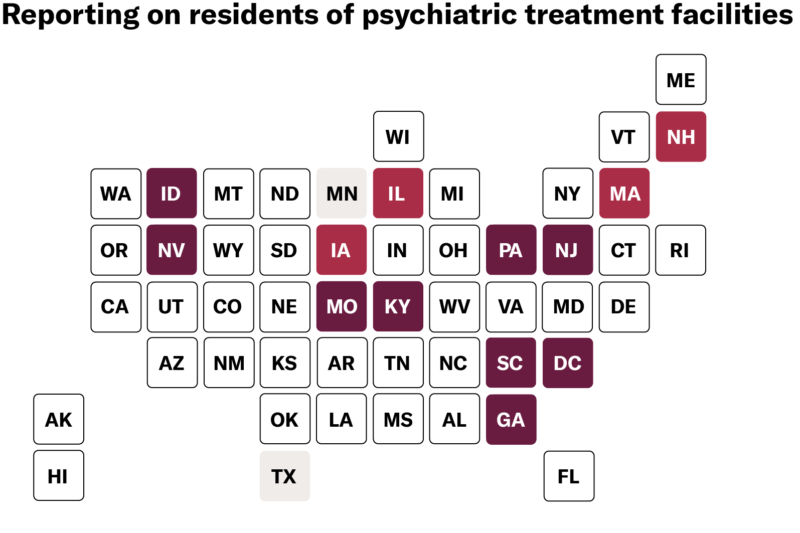
Grim as this projection is, the actual death toll to date is likely much higher than currently reported. It took the Department of Health and Human Services (HHS) months after declaring COVID-19 a national emergency to start requiring nursing homes to report deaths and infections despite ample evidence that these facilities were at high risk. Even now, nursing homes are only required to report data from May 8 onward. HHS doesn’t require other congregate settings for people with disabilities, such as psychiatric homes, to report at all. This lack of transparency, in addition to the government’s systemic mismanagement of nursing homes and other congregate settings, has helped create the crisis we see today.

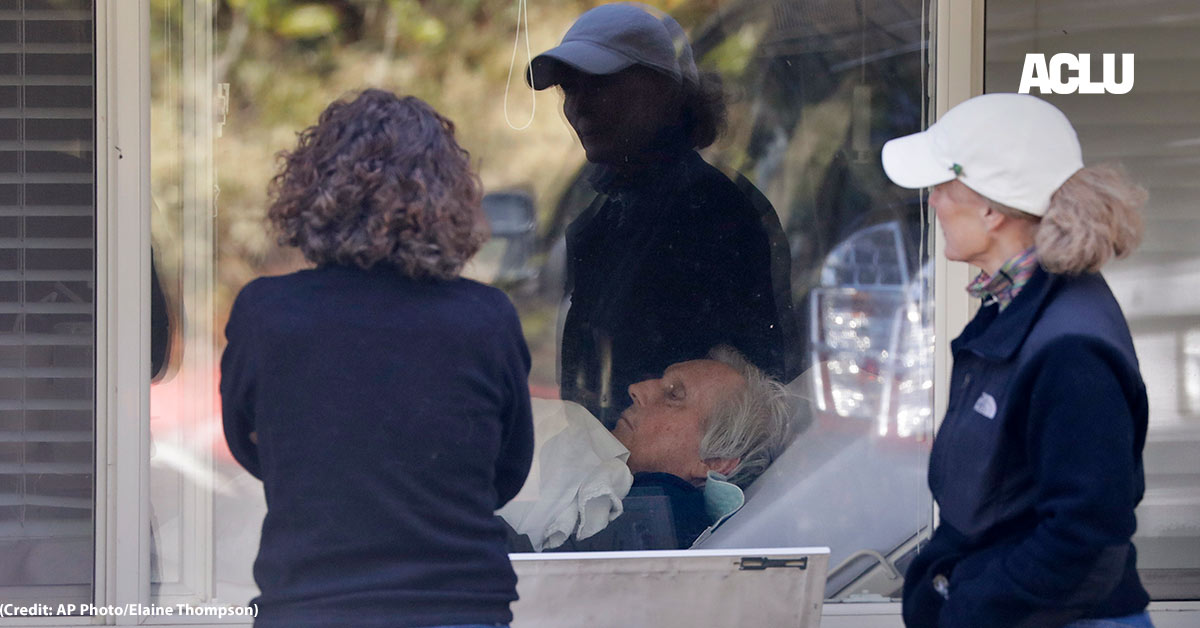
In some cases, facilities have not only failed to report, but have actively hidden deaths from residents, families, and the government. For example, a nursing home in the Harlem neighborhood of New York City hid 26 COVID-related deaths from the state by covertly shipping bodies out of the facility. At a nursing home in New Jersey, 17 bodies were packed into a shed and later crowded into a morgue meant to house only four bodies. Other stories emerged of residents’ families being left in the dark about whether loved ones were dead or alive.
 
While HHS has lagged in collecting data, states can independently choose to require reporting and publicize this information. But too often, states are slow to report, and the data is often piecemeal and insufficient for analyzing the full scale of the pandemic.

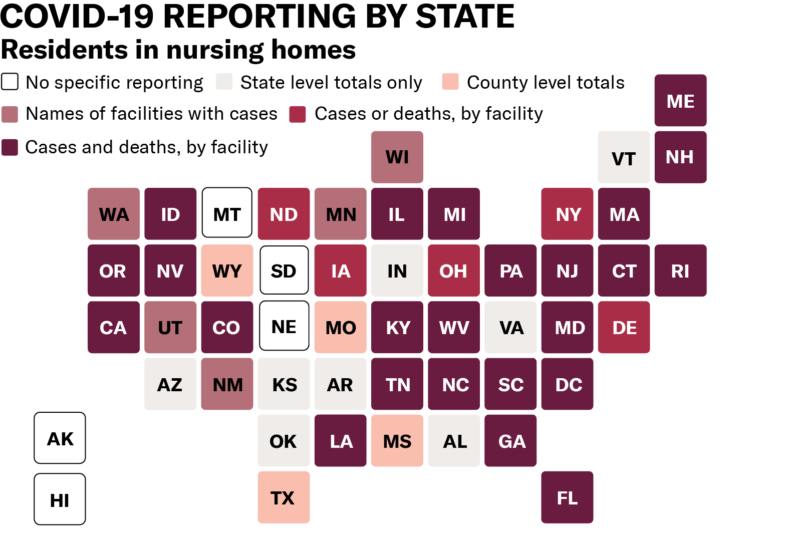
As of June 4, only 41 states report deaths in nursing homes, and the level of detail varies from state to state. Some states offer only state or county totals (such as Arkansas, Indiana, Vermont, and others) while others break down data by facility (including North Carolina, West Virginia, and Nevada). Only 13 states go as far as naming facilities and disaggregating data between residents and staff. Disaggregating data in this manner allows us to more accurately measure the impact on various groups of people. Residents are mostly seniors and all are people with disabilities. Staff are disproportionately people of color, women, and low-income. All of these demographic variables are relevant and integral to any adequate public health response.  

Even when states do report deaths and infections in nursing homes, most do not offer critical demographic data. This information is essential for assessing the impact of COVID-19 on different communities and demographic groups and facilitating our response. Yet only two states — Mississippi and Iowa — report the demographics of residents or staff who have tested positive or died.

People with disabilities and the people who care for them deserve to be counted. States can and should modify current policies to collect and publicize vital data while maintaining privacy standards. Last week, the ACLU filed a petition calling on HHS to do its job to address this crisis — and its job includes collecting and reporting full data from facilities that receive Medicaid or Medicare dollars.

The government needs good data to adequately respond to COVID-19. Data helps to inform where to investigate, where to channel resources, and what policies and practices to adopt. At the individual level, data helps people decide which facilities to live in and which to avoid. And in the long run, data can propel change to ensure this crisis never happens again.
 
The first step to change the system is to get to the truth. HHS must tell the truth about what is happening in the nursing homes and other congregate settings for people with disabilities that it oversees and funds with our taxpayer dollars.

Maps reflect public data reporting as of 06/29/2020. Links to state-level data sources available here.

This piece is part of a series, read the previous entry here:


Published July 1, 2020 at 08:57PM
via ACLU https://ift.tt/2BSByxl

ACLU: How Nursing Homes Got Away With Hiding Bodies During the COVID-19 Outbreak

How Nursing Homes Got Away With Hiding Bodies During the COVID-19 Outbreak

When COVID-19 first reached the U.S., the epicenter was a single nursing home in Washington State, where 45 people died. That nursing home outbreak was a precursor of what was to come. Ever since, the virus has been devastating nursing homes across the country, due in part to systemic mismanagement and discrimination against the people who live and work inside.

To date, deaths in nursing homes and other congregate care facilities account for almost half of all COVID-19 deaths in the country, despite these groups making up less than 1 percent of the population. Residents of these congregate facilities are dying from COVID-19 at 8.6 times the rate of the overall 75+ population.
 
If current trends hold, that means nearly 90,000 people living in nursing homes and other congregate care settings could die by October 1.

Grim as this projection is, the actual death toll to date is likely much higher than currently reported. It took the Department of Health and Human Services (HHS) months after declaring COVID-19 a national emergency to start requiring nursing homes to report deaths and infections despite ample evidence that these facilities were at high risk. Even now, nursing homes are only required to report data from May 8 onward. HHS doesn’t require other congregate settings for people with disabilities, such as psychiatric homes, to report at all. This lack of transparency, in addition to the government’s systemic mismanagement of nursing homes and other congregate settings, has helped create the crisis we see today.

In some cases, facilities have not only failed to report, but have actively hidden deaths from residents, families, and the government. For example, a nursing home in the Harlem neighborhood of New York City hid 26 COVID-related deaths from the state by covertly shipping bodies out of the facility. At a nursing home in New Jersey, 17 bodies were packed into a shed and later crowded into a morgue meant to house only four bodies. Other stories emerged of residents’ families being left in the dark about whether loved ones were dead or alive.
 
While HHS has lagged in collecting data, states can independently choose to require reporting and publicize this information. But too often, states are slow to report, and the data is often piecemeal and insufficient for analyzing the full scale of the pandemic.

As of June 4, only 41 states report deaths in nursing homes, and the level of detail varies from state to state. Some states offer only state or county totals (such as Arkansas, Indiana, Vermont, and others) while others break down data by facility (including North Carolina, West Virginia, and Nevada). Only 13 states go as far as naming facilities and disaggregating data between residents and staff. Disaggregating data in this manner allows us to more accurately measure the impact on various groups of people. Residents are mostly seniors and all are people with disabilities. Staff are disproportionately people of color, women, and low-income. All of these demographic variables are relevant and integral to any adequate public health response.  

Even when states do report deaths and infections in nursing homes, most do not offer critical demographic data. This information is essential for assessing the impact of COVID-19 on different communities and demographic groups and facilitating our response. Yet only two states — Mississippi and Iowa — report the demographics of residents or staff who have tested positive or died.

People with disabilities and the people who care for them deserve to be counted. States can and should modify current policies to collect and publicize vital data while maintaining privacy standards. Last week, the ACLU filed a petition calling on HHS to do its job to address this crisis — and its job includes collecting and reporting full data from facilities that receive Medicaid or Medicare dollars.

The government needs good data to adequately respond to COVID-19. Data helps to inform where to investigate, where to channel resources, and what policies and practices to adopt. At the individual level, data helps people decide which facilities to live in and which to avoid. And in the long run, data can propel change to ensure this crisis never happens again.
 
The first step to change the system is to get to the truth. HHS must tell the truth about what is happening in the nursing homes and other congregate settings for people with disabilities that it oversees and funds with our taxpayer dollars.

Maps reflect public data reporting as of 06/29/2020. Links to state-level data sources available here.

This piece is part of a series, read the previous entry here:


Published July 1, 2020 at 04:27PM
via ACLU https://ift.tt/2BSByxl