Republic of Armenia: First Review Under the Stand-By Arrangement and Request for Modifications of Performance Criteria and Monetary Policy Consultation Clause-Press Release; Staff Report
Published June 13, 2023 at 07:00AM Read more at imf.org
Core First Amendment Rights are Implicated in This Supreme Court Case about True Threats
The internet is full of strong, impassioned, sometimes offensive language. In response to an activist’s post about being choked by a sheriff’s deputy, someone posted to Facebook, “Wow, brother they wanna hit our general. It’s time to strike back. Let’s burn this motherfucker’s house down.” And someone listening to music posted lyrics about “student bodies lying dead in the halls, a blood splattered treatise of hate.”
While this speech might be offensive — or even feel threatening — to some people, to others it is an expression of a political opinion, an unfiltered reaction to a recent event, or an attempt to rally support for a cause. The freedom to share provocative ideas and spark robust debate about political issues is essential to democracy, social justice, and progress. Our right to free speech generally protects such communications.
The freedom to share provocative ideas and spark robust debate about political issues is essential to democracy, social justice, and progress.
However, “true threats” are not protected by the First Amendment. The government can prosecute someone who intentionally threatens another person with death or serious bodily harm, and whose language is reasonably perceived as threatening. But can a speaker be convicted of making a true threat solely because some people could reasonably perceive it as threatening, regardless of the speaker’s intent? That’s the question before the Supreme Court in Counterman v. Colorado.
The ACLU and its coalition partners filed an amicus brief arguing that the First Amendment requires “subjective intent to threaten” as a necessary element of a true threat. In other words, to meet the legal threshold for a “true threat,” the speaker’s own intent must be taken into account. This would allow a jury to consider the speaker’s state of mind when the threat was made, and ensure that speakers aren’t criminally convicted for failures to predict how people might interpret their speech.
If a person could be convicted for any statement that could reasonably be perceived as threatening, regardless of whether they understood or intended the speech to be threatening, people would need to constantly monitor and tailor their speech to avoid potentially sparking fear in anyone who might foreseeably hear or read it. When people post on social media platforms, they would have to accurately predict how people with vastly different life experiences and perspectives might view their speech, or risk criminal prosecution.
The ACLU and its coalition partners filed an amicus brief arguing that the First Amendment requires “subjective intent to threaten” as a necessary element of a true threat.
Consider the Facebook poster saying “Let’s burn this motherfucker’s house down.” Some might reasonably believe the poster will set fire to the target’s house. But if the poster intended only to hyperbolically express outrage over an injustice, their speech shouldn’t be labeled as an unprotected “true threat.” Or consider a politician who says that if her opponent is elected, people might resort to “Second Amendment remedies.” Some might reasonably interpret her language as a threat to her opponent’s life, even if she intended it only as an appeal for votes.
Charged speech, however, is not an internet-era phenomenon. In 1969, a racial justice activist organizing a boycott of white-owned businesses spoke to a crowd of several hundred people and said, “If we catch any of you going in any of them racist stores, we’re gonna break your damn neck.” Today, an activist might tweet the same, intending only to garner solidarity. To criminally charge that person would silence them and chill those who similarly advocate for change.
Of course, even unintentionally threatening language can cause real harm. In Counterman v. Colorado, Billy Raymond Counterman sent C.W., a Colorado musician, a series of direct Facebook messages over a two-year period that made C.W. wonder if he was following her. Counterman, who is mentally ill, sent C.W. messages like “Was that you in the white Jeep?” and “I’d like to talk directly to U, I feel neglected” and “five years on FB. I miss you, only a couple physical sightings.” C.W. didn’t respond and blocked Counterman multiple times. Each time Counterman would create a new account and message C.W. again, saying, for example: “Your arrogance offends existence of anyone in my position” and “Your not being good for human relations. Die, don’t need you.” C.W. obtained a protective order and canceled some of her performances out of fear that Counterman might attend.
C.W., like many people who have been sent frightening messages online, reasonably feared for her safety. In addition to posing safety concerns, threatening language is often misogynistic, racist, or homophobic. This kind of speech causes real emotional and psychological harm. Victims, fearful of more abuse, often self-censor, leaving online spaces that once brought community and well-being.
It is essential for the government to vigorously enforce restrictions on unlawful conduct, such as prohibitions on stalking and harassment, as well as restraining order violations. But expanding the definition of “true threats” to cover speech that was never intended to threaten brings its own dangers. For example, movements for gender and racial justice often use heated rhetoric to rally support. If this speech is misunderstood as threatening and marked as a “true threat,” then activists would have to choose between risking conviction every time they say something that could be misinterpreted, and self-censoring. The fight for progress will slowly find itself silenced out of fear. This expansion could also impinge the freedom of the press. A broader legal definition of a “true threat” could come to encompass and stifle basic functions of journalism — from quoting people who hold offensive views, to publishing political cartoons, to pressing a reluctant source for comment.
As the ACLU explains in our brief, a subjective intent to threaten requirement is necessary to protect speakers from being convicted of a felony simply because someone scrolling Twitter, with a different perspective and different background, might reasonably perceive their language as threatening. We hope the court will recognize the implications of its decision for advocates, protestors, and journalists, and preserve the right to speak without fear of conviction for unintentionally threatening speech.
Core First Amendment Rights are Implicated in This Supreme Court Case about True Threats
The internet is full of strong, impassioned, sometimes offensive language. In response to an activist’s post about being choked by a sheriff’s deputy, someone posted to Facebook, “Wow, brother they wanna hit our general. It’s time to strike back. Let’s burn this motherfucker’s house down.” And someone listening to music posted lyrics about “student bodies lying dead in the halls, a blood splattered treatise of hate.”
While this speech might be offensive — or even feel threatening — to some people, to others it is an expression of a political opinion, an unfiltered reaction to a recent event, or an attempt to rally support for a cause. The freedom to share provocative ideas and spark robust debate about political issues is essential to democracy, social justice, and progress. Our right to free speech generally protects such communications.
The freedom to share provocative ideas and spark robust debate about political issues is essential to democracy, social justice, and progress.
However, “true threats” are not protected by the First Amendment. The government can prosecute someone who intentionally threatens another person with death or serious bodily harm, and whose language is reasonably perceived as threatening. But can a speaker be convicted of making a true threat solely because some people could reasonably perceive it as threatening, regardless of the speaker’s intent? That’s the question before the Supreme Court in Counterman v. Colorado.
The ACLU and its coalition partners filed an amicus brief arguing that the First Amendment requires “subjective intent to threaten” as a necessary element of a true threat. In other words, to meet the legal threshold for a “true threat,” the speaker’s own intent must be taken into account. This would allow a jury to consider the speaker’s state of mind when the threat was made, and ensure that speakers aren’t criminally convicted for failures to predict how people might interpret their speech.
If a person could be convicted for any statement that could reasonably be perceived as threatening, regardless of whether they understood or intended the speech to be threatening, people would need to constantly monitor and tailor their speech to avoid potentially sparking fear in anyone who might foreseeably hear or read it. When people post on social media platforms, they would have to accurately predict how people with vastly different life experiences and perspectives might view their speech, or risk criminal prosecution.
The ACLU and its coalition partners filed an amicus brief arguing that the First Amendment requires “subjective intent to threaten” as a necessary element of a true threat.
Consider the Facebook poster saying “Let’s burn this motherfucker’s house down.” Some might reasonably believe the poster will set fire to the target’s house. But if the poster intended only to hyperbolically express outrage over an injustice, their speech shouldn’t be labeled as an unprotected “true threat.” Or consider a politician who says that if her opponent is elected, people might resort to “Second Amendment remedies.” Some might reasonably interpret her language as a threat to her opponent’s life, even if she intended it only as an appeal for votes.
Charged speech, however, is not an internet-era phenomenon. In 1969, a racial justice activist organizing a boycott of white-owned businesses spoke to a crowd of several hundred people and said, “If we catch any of you going in any of them racist stores, we’re gonna break your damn neck.” Today, an activist might tweet the same, intending only to garner solidarity. To criminally charge that person would silence them and chill those who similarly advocate for change.
Of course, even unintentionally threatening language can cause real harm. In Counterman v. Colorado, Billy Raymond Counterman sent C.W., a Colorado musician, a series of direct Facebook messages over a two-year period that made C.W. wonder if he was following her. Counterman, who is mentally ill, sent C.W. messages like “Was that you in the white Jeep?” and “I’d like to talk directly to U, I feel neglected” and “five years on FB. I miss you, only a couple physical sightings.” C.W. didn’t respond and blocked Counterman multiple times. Each time Counterman would create a new account and message C.W. again, saying, for example: “Your arrogance offends existence of anyone in my position” and “Your not being good for human relations. Die, don’t need you.” C.W. obtained a protective order and canceled some of her performances out of fear that Counterman might attend.
C.W., like many people who have been sent frightening messages online, reasonably feared for her safety. In addition to posing safety concerns, threatening language is often misogynistic, racist, or homophobic. This kind of speech causes real emotional and psychological harm. Victims, fearful of more abuse, often self-censor, leaving online spaces that once brought community and well-being.
It is essential for the government to vigorously enforce restrictions on unlawful conduct, such as prohibitions on stalking and harassment, as well as restraining order violations. But expanding the definition of “true threats” to cover speech that was never intended to threaten brings its own dangers. For example, movements for gender and racial justice often use heated rhetoric to rally support. If this speech is misunderstood as threatening and marked as a “true threat,” then activists would have to choose between risking conviction every time they say something that could be misinterpreted, and self-censoring. The fight for progress will slowly find itself silenced out of fear. This expansion could also impinge the freedom of the press. A broader legal definition of a “true threat” could come to encompass and stifle basic functions of journalism — from quoting people who hold offensive views, to publishing political cartoons, to pressing a reluctant source for comment.
As the ACLU explains in our brief, a subjective intent to threaten requirement is necessary to protect speakers from being convicted of a felony simply because someone scrolling Twitter, with a different perspective and different background, might reasonably perceive their language as threatening. We hope the court will recognize the implications of its decision for advocates, protestors, and journalists, and preserve the right to speak without fear of conviction for unintentionally threatening speech.
Côte d'Ivoire: Requests for an Extended Arrangement Under the Extended Fund Facility and a 40-Month Arrangement Under the Extended Credit Facility-Press Release; Staff Report; and Statement by the Executive Director for Côte d'Ivoire
Published June 12, 2023 at 07:00AM Read more at imf.org
Will Customs and Border Protection's Revised Vehicle Pursuit Policy Make Us Safer?
The United States’ border region has always borne the brunt of our most aggressive immigration enforcement efforts, including dangerous high-speed vehicle pursuits by Border Patrol agents that far too often end in serious injuries and deaths.
After years of public outcry from advocates, victims, and borderland residents, U.S. Customs and Border Protection (CBP) announced a revised vehicle pursuit policy earlier this year. This new policy, which took effect this month after a delay, includes measures that we believe can be important for safeguarding the lives of everyone in our communities. But serious questions remain about the implementation, training, and enforcement of the new policy that will be critical for its success.
Our extensive concerns about CBP’s vehicle pursuit policy reflect a tragically long and growing list of pursuits that have ended in deaths or serious injuries. The ACLU of Texas’ Fatal Encounters tracker has tallied dozens of deaths from CBP vehicle pursuits over the past decade.
In one pursuit near Deming, New Mexico last year, a Border Patrol agent conducted a dangerous and unauthorized maneuver to block the path of a vehicle on the highway. The vehicle being pursued rolled over and burst into flames, killing two and severely injuring eight others.
As one of the Border Patrol agents on the scene of the crash callously put it, “They were all thrown everywhere, bro.”
Several deadly pursuits have also taken place in Texas. In January 2020, a Border Patrol chase resulted in a fatal crash near downtown El Paso and in June that same year, another Border Patrol vehicle pursuit led to a crash, killing several people in the same location.
In the vast majority of these vehicle pursuit cases, the risk taken and harm caused by the pursuit is completely out of proportion with any suspected criminal activity.
While the revisions to CBP’s vehicle pursuit policy represent a significant improvement and an important step forward for our border communities, history suggests that robust training, oversight, and accountability will be essential to ensure compliance with this new policy.
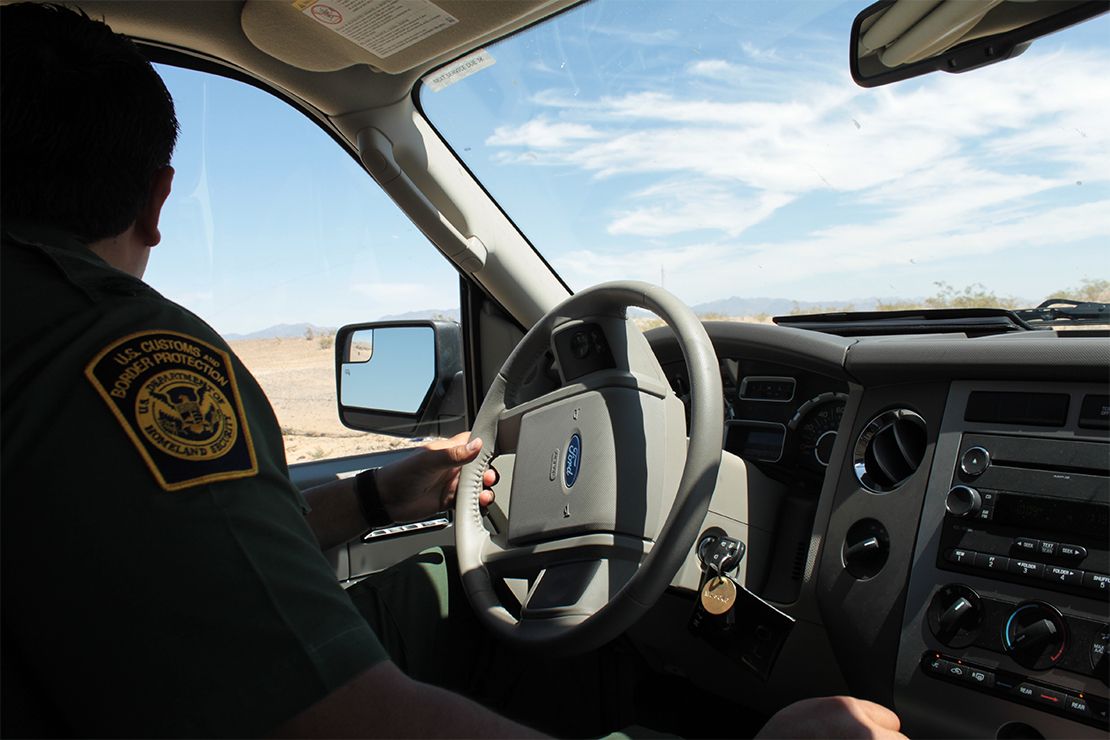
Something catches the eye of a Customs and Border Protection agent while on patrol.
Rebekah Zemansky / Shuttterstock.com
What’s in the New Policy?
A critical change in the revised policy is the adoption of an “objective reasonableness” standard, meaning agents will have to consider the actual need to apprehend someone as well as the potential risk not only to the public and law enforcement but also to the occupants of the subject vehicle.
Officers and agents must now consider the government’s interest in immediately apprehending an individual, including the severity of the crime at issue and the level of threat posed by the individual.
The policy prohibits officers and agents from starting or continuing a pursuit of a vehicle that is exceeding the speed limit and appears to be overloaded, unless they have probable cause that a felony involving the use, or threatened use, of physical force or violence that poses an imminent threat has been or is about to be committed, and a reasonable belief that the immediate need to apprehend clearly outweighs the risks.
This probable-cause standard also applies to pursuits that take place in or near schools that may be in session and other areas where, because of population density or the nature of the residential or commercial structures nearby, a pursuit would put the public at increased risk.
Officers and agents are also now specifically prohibited from engaging in extremely dangerous efforts to stop a vehicle such as “pursuit immobilization techniques” maneuvers, in which a government vehicle makes intentional contact with the vehicle being pursued to cause it to spin out and stop.
Finally, the policy, which includes additional restrictions on when and how high-speed pursuits can be carried out, also creates a new review structure for vehicle pursuits, which we explore in depth in our full policy brief.
Concerns About Implementation and Open Questions
While the new policy advances key, common-sense reforms, important questions remain about how CBP will operationalize this revised policy and ensure compliance and transparency.
We urge CBP to mandate that training for authorized officers, agents, and supervisors on the revised policy be taught by skilled instructors, using effective learning techniques, to ensure that officers, agents, and supervisors are sufficiently informed of the policy revisions.
The training curriculum on the revised vehicle pursuit policy should also provide clarifications about key aspects of how the policy will be operationalized, including how “objective reasonableness” is assessed by officers and agents in the field, and how the policy relates to the agency’s existing Use of Force Policy. Additionally, the agency should take steps to ensure that the revised policy clearly sets forth the minimum required standards for officers and agents, regardless of whether any other law enforcement agencies are involved in a pursuit.
It’s also critical that CBP invest in robust data collection and analysis capabilities, and that the newly created Vehicular Pursuits Review Committee accounts for key lessons and concerns raised by incidents that result in injury or death.
Our full policy brief provides additional recommendations on the agency’s review processes. Vigorous oversight and accountability measures will be essential to ensuring that CBP’s revised vehicle pursuit policy is not merely a piece of paper, but rather a robust tool to protect and preserve human life.
As CBP Acting Commissioner Troy Miller acknowledged, vehicle pursuits “pose inherent risks.” Here in the borderlands, our communities have been living and suffering with those risks for far too long, and we are committed to reducing the harm caused by these and other aggressive immigration enforcement tactics.
The ACLU of New Mexico has further recommendations for the implementation of the revised policyavailable here.
Will Customs and Border Protection's Revised Vehicle Pursuit Policy Make Us Safer?
The United States’ border region has always borne the brunt of our most aggressive immigration enforcement efforts, including dangerous high-speed vehicle pursuits by Border Patrol agents that far too often end in serious injuries and deaths.
After years of public outcry from advocates, victims, and borderland residents, U.S. Customs and Border Protection (CBP) announced a revised vehicle pursuit policy earlier this year. This new policy, which took effect this month after a delay, includes measures that we believe can be important for safeguarding the lives of everyone in our communities. But serious questions remain about the implementation, training, and enforcement of the new policy that will be critical for its success.
Our extensive concerns about CBP’s vehicle pursuit policy reflect a tragically long and growing list of pursuits that have ended in deaths or serious injuries. The ACLU of Texas’ Fatal Encounters tracker has tallied dozens of deaths from CBP vehicle pursuits over the past decade.
In one pursuit near Deming, New Mexico last year, a Border Patrol agent conducted a dangerous and unauthorized maneuver to block the path of a vehicle on the highway. The vehicle being pursued rolled over and burst into flames, killing two and severely injuring eight others.
As one of the Border Patrol agents on the scene of the crash callously put it, “They were all thrown everywhere, bro.”
Several deadly pursuits have also taken place in Texas. In January 2020, a Border Patrol chase resulted in a fatal crash near downtown El Paso and in June that same year, another Border Patrol vehicle pursuit led to a crash, killing several people in the same location.
In the vast majority of these vehicle pursuit cases, the risk taken and harm caused by the pursuit is completely out of proportion with any suspected criminal activity.
While the revisions to CBP’s vehicle pursuit policy represent a significant improvement and an important step forward for our border communities, history suggests that robust training, oversight, and accountability will be essential to ensure compliance with this new policy.
Something catches the eye of a Customs and Border Protection agent while on patrol.
Rebekah Zemansky / Shuttterstock.com
What’s in the New Policy?
A critical change in the revised policy is the adoption of an “objective reasonableness” standard, meaning agents will have to consider the actual need to apprehend someone as well as the potential risk not only to the public and law enforcement but also to the occupants of the subject vehicle.
Officers and agents must now consider the government’s interest in immediately apprehending an individual, including the severity of the crime at issue and the level of threat posed by the individual.
The policy prohibits officers and agents from starting or continuing a pursuit of a vehicle that is exceeding the speed limit and appears to be overloaded, unless they have probable cause that a felony involving the use, or threatened use, of physical force or violence that poses an imminent threat has been or is about to be committed, and a reasonable belief that the immediate need to apprehend clearly outweighs the risks.
This probable-cause standard also applies to pursuits that take place in or near schools that may be in session and other areas where, because of population density or the nature of the residential or commercial structures nearby, a pursuit would put the public at increased risk.
Officers and agents are also now specifically prohibited from engaging in extremely dangerous efforts to stop a vehicle such as “pursuit immobilization techniques” maneuvers, in which a government vehicle makes intentional contact with the vehicle being pursued to cause it to spin out and stop.
Finally, the policy, which includes additional restrictions on when and how high-speed pursuits can be carried out, also creates a new review structure for vehicle pursuits, which we explore in depth in our full policy brief.
Concerns About Implementation and Open Questions
While the new policy advances key, common-sense reforms, important questions remain about how CBP will operationalize this revised policy and ensure compliance and transparency.
We urge CBP to mandate that training for authorized officers, agents, and supervisors on the revised policy be taught by skilled instructors, using effective learning techniques, to ensure that officers, agents, and supervisors are sufficiently informed of the policy revisions.
The training curriculum on the revised vehicle pursuit policy should also provide clarifications about key aspects of how the policy will be operationalized, including how “objective reasonableness” is assessed by officers and agents in the field, and how the policy relates to the agency’s existing Use of Force Policy. Additionally, the agency should take steps to ensure that the revised policy clearly sets forth the minimum required standards for officers and agents, regardless of whether any other law enforcement agencies are involved in a pursuit.
It’s also critical that CBP invest in robust data collection and analysis capabilities, and that the newly created Vehicular Pursuits Review Committee accounts for key lessons and concerns raised by incidents that result in injury or death.
Our full policy brief provides additional recommendations on the agency’s review processes. Vigorous oversight and accountability measures will be essential to ensuring that CBP’s revised vehicle pursuit policy is not merely a piece of paper, but rather a robust tool to protect and preserve human life.
As CBP Acting Commissioner Troy Miller acknowledged, vehicle pursuits “pose inherent risks.” Here in the borderlands, our communities have been living and suffering with those risks for far too long, and we are committed to reducing the harm caused by these and other aggressive immigration enforcement tactics.
The ACLU of New Mexico has further recommendations for the implementation of the revised policyavailable here.
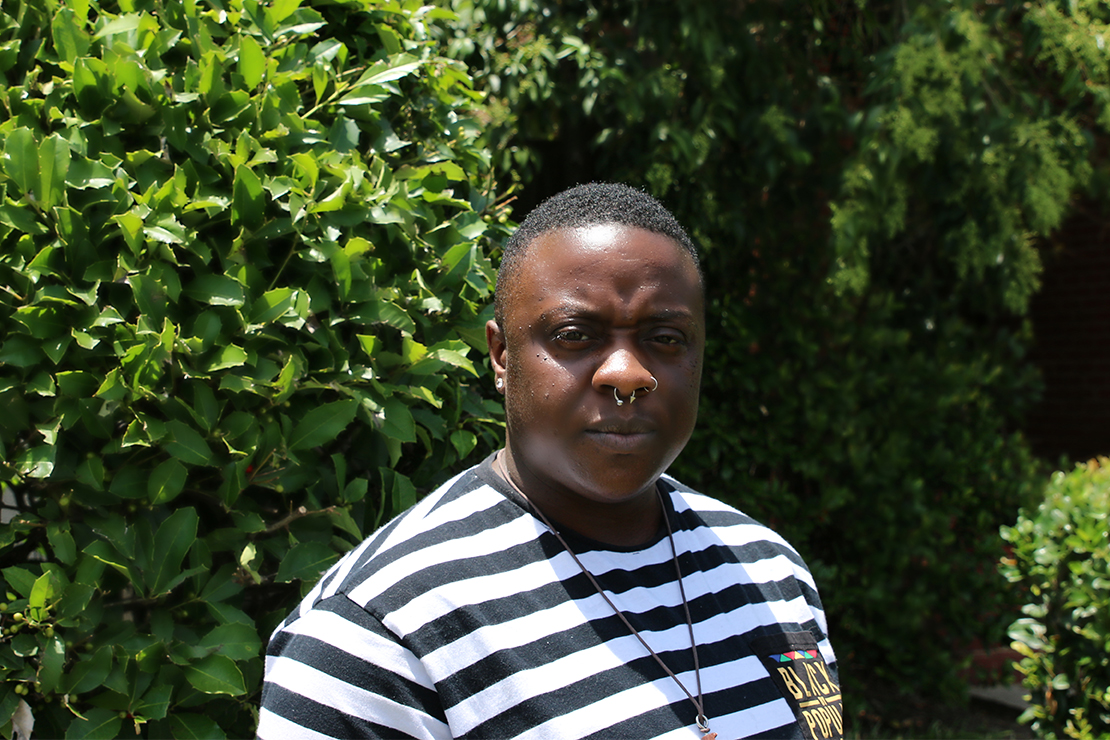
In 2022, Alabama lawmakers passed anti-trans legislation that criminalized gender-affirming care and banned K-12 students from using restrooms consistent with their gender identity. LGBTQ+ organizers from across the state rallied for many years against these harmful bills and are still fighting to this day.
Throughout this stressful time, national press discussed the tragedy of being trans in Alabama and told us that the future, for most queer folks, would be of suffering and sadness. We also watched the media interview (mostly) white parents of trans youth, even though we know many Black trans folks are integral to community building in Alabama.
This gap in storytelling brought about Black Trans Futures, an exhibit and storytelling project. In the wake of hate legislation, the ACLU of Alabama and the Knights & Orchids Society (one of the only Black, trans-led healthcare organizations in the country) came together to highlight the futures being built between Black, trans folks. Queer youth and their mentors discussed what keeps us safe, who we show up for, and how we make a road to a Black Trans Future. Here is what they shared:
Ro
Ro Robinson
Credit: Jose Vazquez
“I love my journey. I’m not a man, I’m a trans man and that holds so much power. I can still nurse life and nurture life and at the same time, be masculine. Like, you couldn’t mix that together and duplicate that if you tried. There’s only one Ro and that Ro is special.”
Ro
TC
TC Caldwell
Credit: Jose Vazquez
”[Keeping each other safe] looks like communities showing up in the ways that we should and the ways that we need…from mental health services to fun parties to, simply asking ‘have you eaten today?’ to ‘what can I take off your plate?’”
TC
Peyton
Peyton Fullilove
Credit: Jose Vazquez
“I love everything about myself. I have come to a point in my life where I can just accept myself for who I am, accept all my physical flaws, my emotional flaws, my mental flaws. But I especially love my hair.”
Peyton
Along with this storytelling project, we created the Black Trans Futures Organizing School — a month-long intensive program with Black, queer youth from across Alabama. These 10 individuals met weekly to develop their practices of protest, resilience, storytelling, and rest.
For the culmination of this project, all the photographs and interviews were transformed into a one-night only art exhibit at the Montgomery Museum of Fine Arts. This was the first event of its kind at the museum. Trans youth saw themselves on museum walls and shared excitement about the history they’re currently making and the futures they’re building while revering the elders that made it possible.
So what is a Black Trans Future? It’s assuring that all needs are met for the community. It’s helping trans youth step into their power. It’s a liberated future free of harm, full of love, and forever beautiful.