Wednesday, 6 March 2024

ACLU: Supreme Court Signals that Institutions Can Keep Designing Programs to Foster Diversity, After Affirmative Action Ruling

Supreme Court Signals that Institutions Can Keep Designing Programs to Foster Diversity, After Affirmative Action Ruling

Since the Supreme Court struck down longstanding affirmative action admissions policies this past summer in SFFA v. Harvard/UNC, institutions from a variety of sectors have grappled with how to stay true to their commitments to equal opportunity in light of the court’s ruling. But this week, the Supreme Court did something noteworthy: it refused to hear a challenge to a high school admissions policy designed to eliminate unfair barriers for students of color. In doing so, the justices sent a signal that institutions can continue to find innovative ways to ensure equal opportunity for all within the parameters of their relatively narrow decision on affirmative action.

The admissions policy at issue in Coalition for TJ v. Fairfax County School Board, is just that — a thoughtful approach to ensuring that highly qualified students from all backgrounds have a fair shot at getting into Thomas Jefferson High School (TJ), the top public high school in Virginia. Recognizing the importance of a diverse student body, TJ removed arbitrary and unfair barriers to eligible Black, Latine and lower-income students of all races and ethnicities. Instead of relying only on standardized tests, which can exclude well-qualified candidates of color, the new process considers a broad range of factors, including performance on a problem-solving essay. The school also adopted a percentage plan that guarantees seats to the most competitive candidates from all eligible middle schools — not just select “feeder” schools in wealthy neighborhoods. By declining to take up the case, the Supreme Court has effectively let this policy stand.

And earlier this month, the court reinforced that its decision in SFFA was a narrow one, allowing West Point and the U.S. Naval Academy to continue their race-based affirmative action programs, while challenges proceed in the lower courts. Although the court did not explore the constitutionality of these programs, by declining to hear these challenges, it is leaving the door open for institutions to design creative solutions for expanding opportunity and fostering diversity.
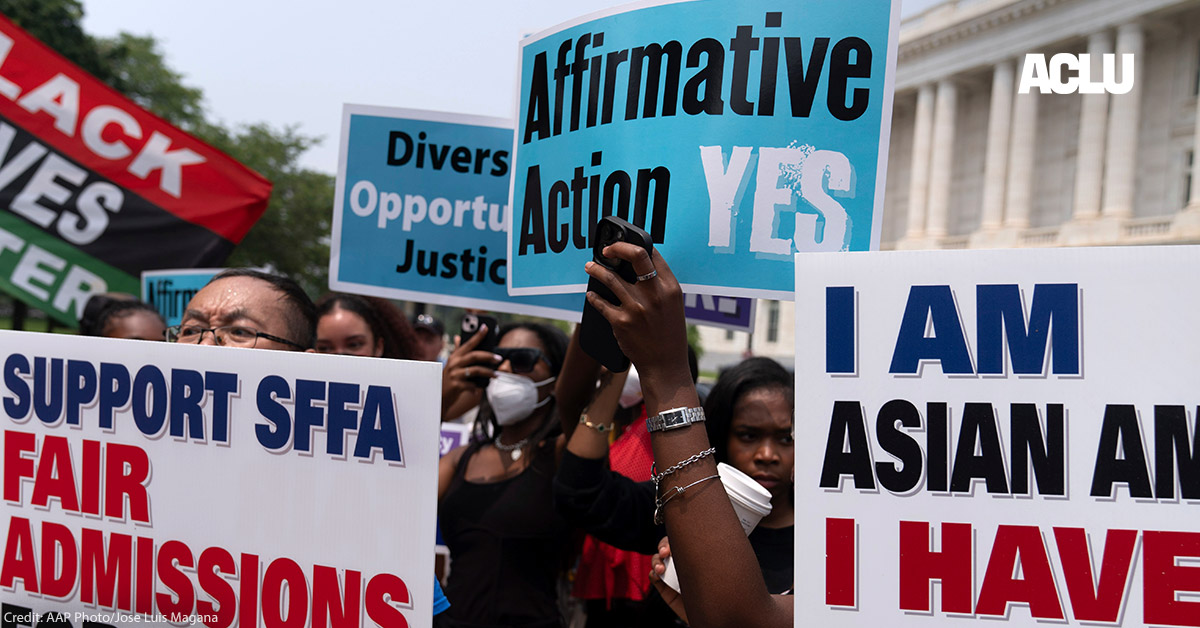
This mission is more critical now than ever. Discrimination and deep-seated racial inequities that so many educational institutions, businesses, and other entities are working to address remain critical challenges. Since the 1990s, public education in the U.S. has grown significantly more segregated by race. Black and Brown students are more likely to attend schools that are doubly segregated: racially isolated and with fewer resources but higher needs. In the employment sector, Black workers face persistent gaps in promotion, pay, and opportunity. The Black-white wage gap was larger in 2020 than it was in 1970. Black, Latina, and Native women make less than 65 cents for every dollar earned by a white man, a differential that adds up to nearly a million dollars lost over the course of a woman’s career.

This reality was not lost on the Supreme Court. Even in its decision to strike down Harvard and UNC’s affirmative action policies, the court reaffirmed that the pursuit of diversity is a “commendable goals”. In his concurrence, Justice Brett Kavanaugh stressed that schools “can, of course, act to undo the effects of past discrimination in many permissible ways.”

That said, under the new legal landscape we face, opening the doors of opportunity will require careful construction, clarity of conviction, and steadfast commitment in the face of a well-resourced movement against progress. In designing programs to foster principles of fairness and equality, institutions need to be mindful that courts will pay more exacting scrutiny to programs that consider an individual’s race. Further, institutions need to be prepared to face highly organized attacks, including “warning” letters and legal challenges blatantly distorting the state of the law. These attacks have created a culture of fear and legal uncertainty specifically intended to coerce institutions into abandoning their commitments to equal opportunity — in some cases, successfully.

We cannot let this happen. Proactive efforts to ensure full and equal opportunity are more, not less, urgent in light of the Supreme Court’s decision. Institutions should examine their admissions, scholarship and fellowship programs, as well as recruitment and hiring practices, to ensure that they expand pipelines of opportunity for all. Schools, businesses, and others must not shy away from their DEI efforts, offices, and trainings, but instead should double down on the many lawful and effective approaches that remain. Schools and workplaces should take steps to foster a climate in which people of all races and ethnicities belong and can meet their full potential. And institutions must still comply with anti-discrimination laws, including those that prohibit unnecessary barriers to opportunity for people based on race or ethnicity. As the values of diversity and equal opportunity are themselves under attack, we must continue to push even harder for progress. It is not only the right thing to do, but what the law both permits and requires.

We need you with us to keep fighting
Donate today

Published March 6, 2024 at 09:59PM
via ACLU https://ift.tt/k05MWve

ACLU: Supreme Court Signals that Institutions Can Keep Designing Programs to Foster Diversity, After Affirmative Action Ruling

Supreme Court Signals that Institutions Can Keep Designing Programs to Foster Diversity, After Affirmative Action Ruling

Since the Supreme Court struck down longstanding affirmative action admissions policies this past summer in SFFA v. Harvard/UNC, institutions from a variety of sectors have grappled with how to stay true to their commitments to equal opportunity in light of the court’s ruling. But this week, the Supreme Court did something noteworthy: it refused to hear a challenge to a high school admissions policy designed to eliminate unfair barriers for students of color. In doing so, the justices sent a signal that institutions can continue to find innovative ways to ensure equal opportunity for all within the parameters of their relatively narrow decision on affirmative action.

The admissions policy at issue in Coalition for TJ v. Fairfax County School Board, is just that — a thoughtful approach to ensuring that highly qualified students from all backgrounds have a fair shot at getting into Thomas Jefferson High School (TJ), the top public high school in Virginia. Recognizing the importance of a diverse student body, TJ removed arbitrary and unfair barriers to eligible Black, Latine and lower-income students of all races and ethnicities. Instead of relying only on standardized tests, which can exclude well-qualified candidates of color, the new process considers a broad range of factors, including performance on a problem-solving essay. The school also adopted a percentage plan that guarantees seats to the most competitive candidates from all eligible middle schools — not just select “feeder” schools in wealthy neighborhoods. By declining to take up the case, the Supreme Court has effectively let this policy stand.

And earlier this month, the court reinforced that its decision in SFFA was a narrow one, allowing West Point and the U.S. Naval Academy to continue their race-based affirmative action programs, while challenges proceed in the lower courts. Although the court did not explore the constitutionality of these programs, by declining to hear these challenges, it is leaving the door open for institutions to design creative solutions for expanding opportunity and fostering diversity.

This mission is more critical now than ever. Discrimination and deep-seated racial inequities that so many educational institutions, businesses, and other entities are working to address remain critical challenges. Since the 1990s, public education in the U.S. has grown significantly more segregated by race. Black and Brown students are more likely to attend schools that are doubly segregated: racially isolated and with fewer resources but higher needs. In the employment sector, Black workers face persistent gaps in promotion, pay, and opportunity. The Black-white wage gap was larger in 2020 than it was in 1970. Black, Latina, and Native women make less than 65 cents for every dollar earned by a white man, a differential that adds up to nearly a million dollars lost over the course of a woman’s career.

This reality was not lost on the Supreme Court. Even in its decision to strike down Harvard and UNC’s affirmative action policies, the court reaffirmed that the pursuit of diversity is a “commendable goals”. In his concurrence, Justice Brett Kavanaugh stressed that schools “can, of course, act to undo the effects of past discrimination in many permissible ways.”

That said, under the new legal landscape we face, opening the doors of opportunity will require careful construction, clarity of conviction, and steadfast commitment in the face of a well-resourced movement against progress. In designing programs to foster principles of fairness and equality, institutions need to be mindful that courts will pay more exacting scrutiny to programs that consider an individual’s race. Further, institutions need to be prepared to face highly organized attacks, including “warning” letters and legal challenges blatantly distorting the state of the law. These attacks have created a culture of fear and legal uncertainty specifically intended to coerce institutions into abandoning their commitments to equal opportunity — in some cases, successfully.

We cannot let this happen. Proactive efforts to ensure full and equal opportunity are more, not less, urgent in light of the Supreme Court’s decision. Institutions should examine their admissions, scholarship and fellowship programs, as well as recruitment and hiring practices, to ensure that they expand pipelines of opportunity for all. Schools, businesses, and others must not shy away from their DEI efforts, offices, and trainings, but instead should double down on the many lawful and effective approaches that remain. Schools and workplaces should take steps to foster a climate in which people of all races and ethnicities belong and can meet their full potential. And institutions must still comply with anti-discrimination laws, including those that prohibit unnecessary barriers to opportunity for people based on race or ethnicity. As the values of diversity and equal opportunity are themselves under attack, we must continue to push even harder for progress. It is not only the right thing to do, but what the law both permits and requires.

We need you with us to keep fighting
Donate today

Published March 7, 2024 at 03:29AM
via ACLU https://ift.tt/a7UhQfW

Principality of Andorra: Selected Issues

Principality of Andorra: Selected Issues
Published March 06, 2024 at 08:00AM
Read more at imf.org

ACLU: Despair and Resignation Are Not A Strategy: How to Fight Back In A Second Trump Term.

Despair and Resignation Are Not A Strategy: How to Fight Back In A Second Trump Term.

Many polls suggest if the presidential election were held today, Donald Trump could return to the White House. Fears of irreparable threats to our democracy and freedoms are neither abstract nor hyperbolic.

We must believe Trump when he reveals his authoritarian plans for a second term and take these threats seriously. He has made clear he intends to deploy the military to crush protests; activate state national guards to deport millions of immigrants; build on his legacy of gutting reproductive freedoms by implementing a nationwide abortion ban; create a police state in which anyone who he views as an “enemy” is surveilled and our law enforcement are further empowered to use lethal force; and undermine the integrity of our elections.

Terrifying as these threats are, despair and resignation are not a strategy. and our allies are prepared to fight back, informed by our experiences in his first term.


A Nimble Legal Strategy to Combat Every New Threat and Prevent Harm

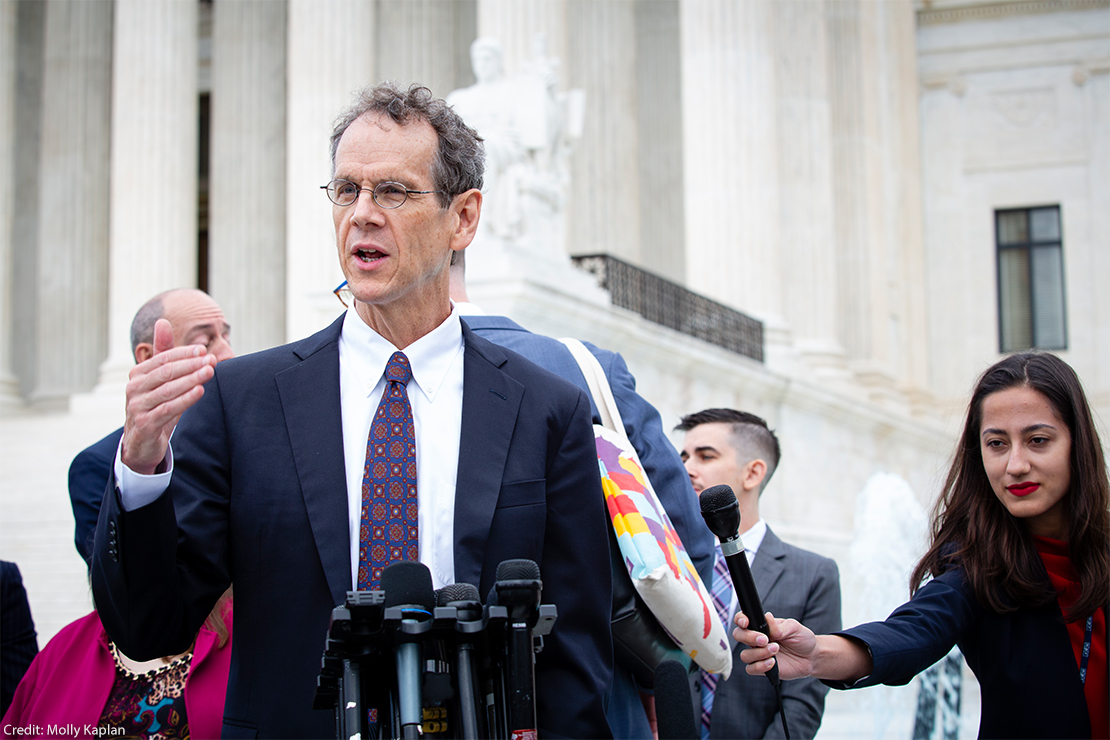
ACLU attorney speaking in front of the Supreme Court.

Molly Kaplan

The ACLU filed 434 legal actions against the Trump administration, and hundreds of other lawsuits were filed by sister organizations, state attorneys general and even private citizens.

We turned to the courts during Trump’s first week in office when we, with the International Refugee Assistance Project and other partners, filed the first lawsuit challenging Trump’s Muslim ban. We got our first win the day after Trump’s executive order was signed. As the administration pivoted to “perfect” its unconstitutional ban, we fought every subsequent version. Along with our allies, we defeated the first two iterations of the ban, and ramped up pressure for President Biden to revoke the third and final ban on day one of his presidency.

We employed a similar strategy when the administration started forcibly separating families at the southern border. Initially, we only wanted to reunite one mother and her daughter, but subsequently learned that the government had codified this horrific practice into standard policy. We quickly expanded our suit and did everything possible to have the full extent of this tragedy revealed to the public. We, Kids in Need of Defense, the Women’s Refugee Commission and Justice in Motion mobilized thousands of people to march in opposition. Under significant, sustained public and legal pressure, the administration finally reversed their family separation policy, with our lawsuit helping reunite approximately 3,200 families.

Litigation remains a powerful tool even in the face of Trump’s 245 judicial appointments. Much to his chagrin, many of his appointees proved willing to buck his agenda as Trump-appointed judges stood up nearly en masse for the rule of law and civil liberties in response to attempts to overturn the 2020 election results. Trump appointees also ruled against the administration’s anti-immigrant policies around Title 42 and the third-country transit ban.


Organizing Communities in the Streets

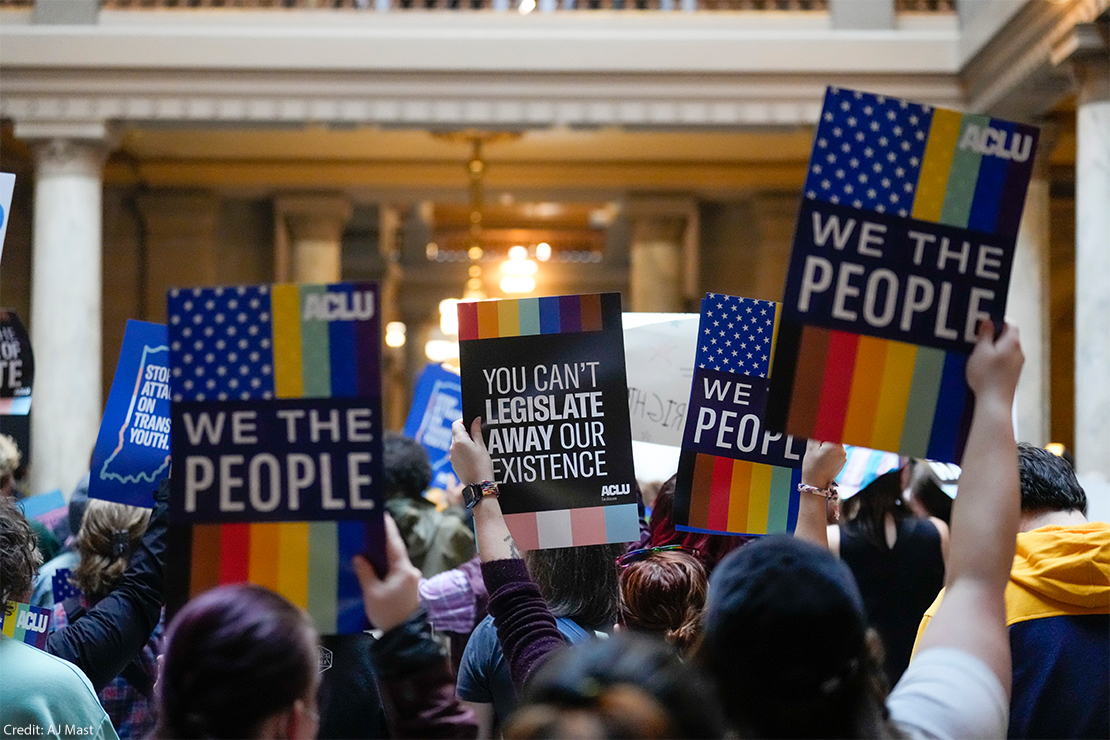
ACLU Supporters carrying signs with the ACLU logo reading" We The People."

ACLU supporters demanding justice.

AJ Mast

Should Trump return to the White House, advocacy organizations will need to come together like never before. No single organization will be able to stop the power of the federal government at Trump’s disposal. If he unleashes a deportation force to remove 13 million immigrants or deploys the National Guard to crack down on demonstrations, we and our partners will be in court daily challenging these unconstitutional and immoral policies. But that’s not enough.

Even more so than the first, the second resistance will be one of the people, not just lawyers. We will activate our 6.5 million supporters and our 54 affiliates in every state and territory. In partnership with grassroots organizations, labor unions, religious congregations and community leaders, we will exercise our First Amendment rights to mobilize the people in the streets, lobby in their statehouses, and advocate for local leaders to resist. General strikes, economic boycotts, and worker walk-outs will be critical tools to demonstrate that Americans will not sit idly by while a constitutional crisis is perpetrated.


Fighting Back in Congress, State Legislatures, and on the Ballot

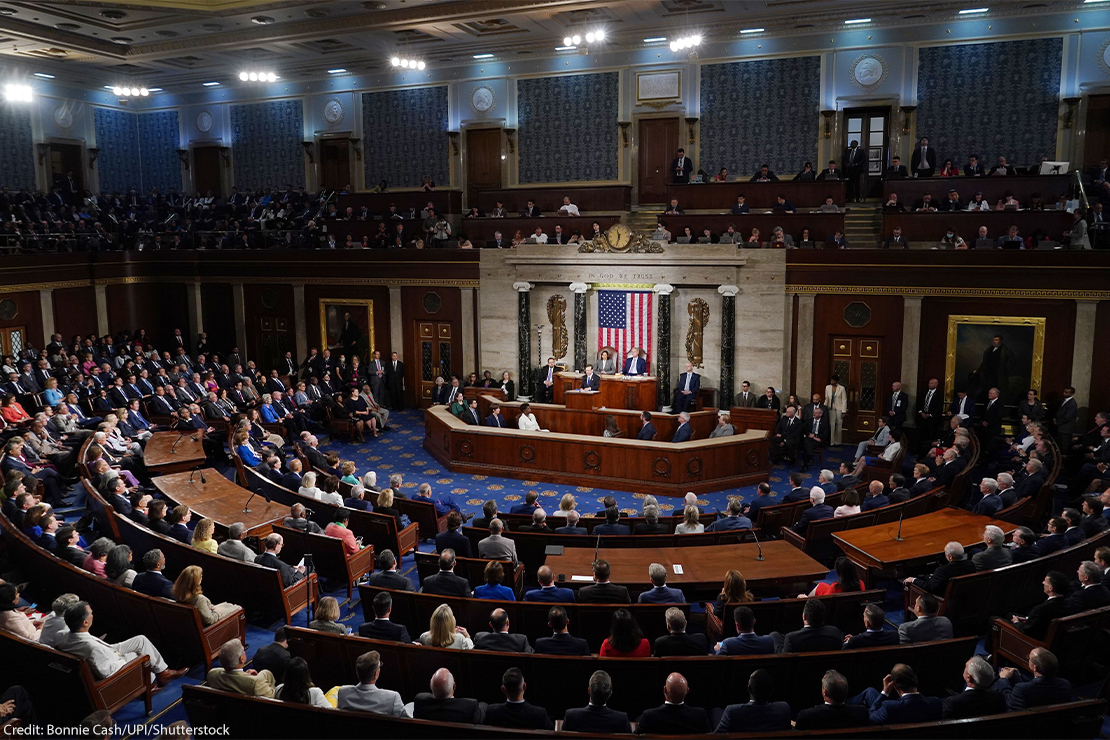
Congress in a joint meeting at the Capitol Building.

Congress in a joint meeting at the Capitol Building.

Bonnie Cash/UPI/Shutterstock

In a second Trump administration, the public must force Congress to serve as a co-equal branch of government, not the lap-dog of the executive branch. We have to hold Congress accountable to do its job—keeping the pressure on through calls, lobbying, and grassroots visits, reminding them they work for us.

But fixing a broken Congress can’t just come from the Democratic Party. With the future of our democracy at stake, we need a bipartisan commitment to govern. We’ve seen glimmers of it. If a group of bipartisan Senators found common ground to reform the antiquated Electoral Count Act—which would now prevent Donald Trump, or any president, from pressuring their vice president to refuse certifying election results—surely they can agree to update the two-centuries old Insurrection Act and ensure its not abused by President Trump to shut down legitimate forms of dissent and debate.

As we ramp up the pressure on our representatives, the ballot box is where the people will get the final say. The Supreme Court’s Dobbs decision overturning Roe v. Wade—all thanks to a new Trump majority on the bench—illustrated the extent to which states are our last line of defense to bring forth the will of the people on issues such as abortion. And wherever reproductive freedom has been on the ballot since, we’ve won. Since Dobbs, we spent more than $23 million in key elections to protect abortion rights. This year, that playing field has significantly expanded: there are abortion ballot measures under consideration in Arizona, Colorado, Florida, Missouri, Maryland, New York, Montana, Nebraska, and Nevada.

Admittedly, ballot initiatives won’t be enough if Trump enacts a nationwide ban that restricts abortion services everywhere. But direct democracy efforts, through state constitutional amendments and local elections, will send strong signals that a power grab by the federal government will not be tolerated, and help make a case on states’ rights and federalism that might convince even conservative judges to limit these power grabs.

Trump and his allies have spent the last four years plotting his return and revenge. They will be more organized, deliberate, and aggressive. But if Trump does return to the Oval Office, the first “resistance” will look tame by comparison. Trump’s anti-liberty and fundamentally anti-American policies will assuredly be met with the full firepower of the ACLU, the might of our allies, and the commitment of the American people.

We need you with us to keep fighting
Donate today

Published March 6, 2024 at 06:57PM
via ACLU https://ift.tt/CFIqLkJ

ACLU: Despair and Resignation Are Not A Strategy: How to Fight Back In A Second Trump Term.

Despair and Resignation Are Not A Strategy: How to Fight Back In A Second Trump Term.

Many polls suggest if the presidential election were held today, Donald Trump could return to the White House. Fears of irreparable threats to our democracy and freedoms are neither abstract nor hyperbolic.

We must believe Trump when he reveals his authoritarian plans for a second term and take these threats seriously. He has made clear he intends to deploy the military to crush protests; activate state national guards to deport millions of immigrants; build on his legacy of gutting reproductive freedoms by implementing a nationwide abortion ban; create a police state in which anyone who he views as an “enemy” is surveilled and our law enforcement are further empowered to use lethal force; and undermine the integrity of our elections.

Terrifying as these threats are, despair and resignation are not a strategy. and our allies are prepared to fight back, informed by our experiences in his first term.


A Nimble Legal Strategy to Combat Every New Threat and Prevent Harm

The ACLU filed 434 legal actions against the Trump administration, and hundreds of other lawsuits were filed by sister organizations, state attorneys general and even private citizens.

We turned to the courts during Trump’s first week in office when we, with the International Refugee Assistance Project and other partners, filed the first lawsuit challenging Trump’s Muslim ban. We got our first win the day after Trump’s executive order was signed. As the administration pivoted to “perfect” its unconstitutional ban, we fought every subsequent version. Along with our allies, we defeated the first two iterations of the ban, and ramped up pressure for President Biden to revoke the third and final ban on day one of his presidency.

We employed a similar strategy when the administration started forcibly separating families at the southern border. Initially, we only wanted to reunite one mother and her daughter, but subsequently learned that the government had codified this horrific practice into standard policy. We quickly expanded our suit and did everything possible to have the full extent of this tragedy revealed to the public. We, Kids in Need of Defense, the Women’s Refugee Commission and Justice in Motion mobilized thousands of people to march in opposition. Under significant, sustained public and legal pressure, the administration finally reversed their family separation policy, with our lawsuit helping reunite approximately 3,200 families.

Litigation remains a powerful tool even in the face of Trump’s 245 judicial appointments. Much to his chagrin, many of his appointees proved willing to buck his agenda as Trump-appointed judges stood up nearly en masse for the rule of law and civil liberties in response to attempts to overturn the 2020 election results. Trump appointees also ruled against the administration’s anti-immigrant policies around Title 42 and the third-country transit ban.


Organizing Communities in the Streets

Should Trump return to the White House, advocacy organizations will need to come together like never before. No single organization will be able to stop the power of the federal government at Trump’s disposal. If he unleashes a deportation force to remove 13 million immigrants or deploys the National Guard to crack down on demonstrations, we and our partners will be in court daily challenging these unconstitutional and immoral policies. But that’s not enough.

Even more so than the first, the second resistance will be one of the people, not just lawyers. We will activate our 6.5 million supporters and our 54 affiliates in every state and territory. In partnership with grassroots organizations, labor unions, religious congregations and community leaders, we will exercise our First Amendment rights to mobilize the people in the streets, lobby in their statehouses, and advocate for local leaders to resist. General strikes, economic boycotts, and worker walk-outs will be critical tools to demonstrate that Americans will not sit idly by while a constitutional crisis is perpetrated.


Fighting Back in Congress, State Legislatures, and on the Ballot

In a second Trump administration, the public must force Congress to serve as a co-equal branch of government, not the lap-dog of the executive branch. We have to hold Congress accountable to do its job—keeping the pressure on through calls, lobbying, and grassroots visits, reminding them they work for us.

But fixing a broken Congress can’t just come from the Democratic Party. With the future of our democracy at stake, we need a bipartisan commitment to govern. We’ve seen glimmers of it. If a group of bipartisan Senators found common ground to reform the antiquated Electoral Count Act—which would now prevent Donald Trump, or any president, from pressuring their vice president to refuse certifying election results—surely they can agree to update the two-centuries old Insurrection Act and ensure its not abused by President Trump to shut down legitimate forms of dissent and debate.

As we ramp up the pressure on our representatives, the ballot box is where the people will get the final say. The Supreme Court’s Dobbs decision overturning Roe v. Wade—all thanks to a new Trump majority on the bench—illustrated the extent to which states are our last line of defense to bring forth the will of the people on issues such as abortion. And wherever reproductive freedom has been on the ballot since, we’ve won. Since Dobbs, we spent more than $23 million in key elections to protect abortion rights. This year, that playing field has significantly expanded: there are abortion ballot measures under consideration in Arizona, Colorado, Florida, Missouri, Maryland, New York, Montana, Nebraska, and Nevada.

Admittedly, ballot initiatives won’t be enough if Trump enacts a nationwide ban that restricts abortion services everywhere. But direct democracy efforts, through state constitutional amendments and local elections, will send strong signals that a power grab by the federal government will not be tolerated, and help make a case on states’ rights and federalism that might convince even conservative judges to limit these power grabs.

Trump and his allies have spent the last four years plotting his return and revenge. They will be more organized, deliberate, and aggressive. But if Trump does return to the Oval Office, the first “resistance” will look tame by comparison. Trump’s anti-liberty and fundamentally anti-American policies will assuredly be met with the full firepower of the ACLU, the might of our allies, and the commitment of the American people.

We need you with us to keep fighting
Donate today

Published March 7, 2024 at 12:27AM
via ACLU https://ift.tt/6sqxoKC