Friday, 1 November 2024

ACLU: We're Fighting for our Freedoms -- No Matter Who is President

We're Fighting for our Freedoms -- No Matter Who is President

As we near Election Day, the ACLU is in conversation with state and local activists about how to prepare for, and respond to, the election outcome. Many people we spoke with are grappling with how they can best protect their communities and fight back against unprecedented attempts to restrict our rights. Right now, there’s real concern about how to combat the dystopian, authoritarian vision for America that Project 2025 and other extremist figures have promised.

Many ACLU supporters also tell us that it already feels like Project 2025 is in operation in their community. They are living with state-level bans on abortion, ideological purges in their schools, and intimidation and harassment from anti-civil rights law enforcement officials and threats by vigilante groups. No matter who wins the White House, they will continue to live with attempts to impose an extreme, anti-civil liberties agenda on their communities.

The gravity of this moment is clear to all of us. We need to come together now to prepare a sustained and coordinated advocacy campaign for civil liberties and civil rights protections where we live. We need a firewall for freedom: a barrier that stops the fiery spread of constant attacks on our civil liberties and civil rights.

How to Build a Firewall for Freedom

Without the assistance of state and local government agencies, a presidential administration will find it much harder to act on its worst threats, such as mass deportations. That is why we are calling on state governments to ensure a firewall between state and local personnel, resources or data and federal or out-of-state law enforcement agencies that attempt to violate our constitutional freedoms. When federal or out-of-state law enforcement agencies request information or assistance they could use to undermine the civil rights of residents, state agencies can and should decline to provide it. We urge state legislatures to pass measures that affirm and enforce this firewall for freedom.

We also urge state and local leaders to pass laws, issue directives and reaffirm state constitutional protections for the right to protest, data privacy, and student non-discrimination. This support is vital to educators, health care providers and families who may face attacks or harassment from either a turbocharged federal law enforcement or another state’s prosecutors.

At the local level, we urge mayors and city councils to come together to protect and support families who could be targeted by mass deportation efforts, attempts to criminalize gender non-conformity and other anti-trans discrimination, and other attacks. We will also urge state and local leaders to move forward on racial and criminal justice in a climate that will remain challenging no matter who wins the presidency.

How We Speak Out for Our Freedoms

Even in legislatures and city councils where they are in the minority, individual elected leaders have powerful voices. We urge them to stand alongside impacted community members, bear witness to abuses, and speak out. This will be vital to pushing back on the xenophobia, racism, and bigotry that we have unfortunately seen in far too many of our communities.

Trump has threatened to use the military and federal law enforcement agencies to go after his political opponents. Sadly, we have already seen similar action from state and local law enforcement. For example, state police in Florida accosted voters and the Texas attorney general attacked faith-based communities, voting rights protections organizations, immigrant communities, and reproductive health nonprofits. It is vital for state and local elected leaders to present a counternarrative to such attacks, and an alternative vision of governance built on freedom and rights.

How We’re Fighting Back

The ACLU has challenged unlawful attacks on our rights and freedoms for more than 100 years. We know that states are the frontlines in this fight for justice. They have the power to build the firewall we described that will protect our communities. We are prepared to use every tool at our disposal to continue this fight — no matter who wins the presidential election — and we have a plan.

For months, the ACLU’s legal and advocacy experts have been developing a roadmap to work with Congress and in statehouses to protect and expand abortion access, pass nondiscrimination laws, and more in the event of Kamala Harris or Donald Trump presidency. This plan is outlined in 13 memos addressing the key policy concerns of either candidate. In the coming months, our affiliates throughout the country will lead the charge to enact state firewalls to protect residents and push back on any unconstitutional tactics, whether pursued by a president or other states.

This important work starts now, and it starts with you. Join us in the fight for our freedoms. Let’s get to work.


Published November 1, 2024 at 02:55PM
via ACLU https://ift.tt/VHMrL5Z

ACLU: We're Fighting for our Freedoms -- No Matter Who is President

We're Fighting for our Freedoms -- No Matter Who is President

As we near Election Day, the ACLU is in conversation with state and local activists about how to prepare for, and respond to, the election outcome. Many people we spoke with are grappling with how they can best protect their communities and fight back against unprecedented attempts to restrict our rights. Right now, there’s real concern about how to combat the dystopian, authoritarian vision for America that Project 2025 and other extremist figures have promised.

Many ACLU supporters also tell us that it already feels like Project 2025 is in operation in their community. They are living with state-level bans on abortion, ideological purges in their schools, and intimidation and harassment from anti-civil rights law enforcement officials and threats by vigilante groups. No matter who wins the White House, they will continue to live with attempts to impose an extreme, anti-civil liberties agenda on their communities.

The gravity of this moment is clear to all of us. We need to come together now to prepare a sustained and coordinated advocacy campaign for civil liberties and civil rights protections where we live. We need a firewall for freedom: a barrier that stops the fiery spread of constant attacks on our civil liberties and civil rights.

How to Build a Firewall for Freedom

Without the assistance of state and local government agencies, a presidential administration will find it much harder to act on its worst threats, such as mass deportations. That is why we are calling on state governments to ensure a firewall between state and local personnel, resources or data and federal or out-of-state law enforcement agencies that attempt to violate our constitutional freedoms. When federal or out-of-state law enforcement agencies request information or assistance they could use to undermine the civil rights of residents, state agencies can and should decline to provide it. We urge state legislatures to pass measures that affirm and enforce this firewall for freedom.

We also urge state and local leaders to pass laws, issue directives and reaffirm state constitutional protections for the right to protest, data privacy, and student non-discrimination. This support is vital to educators, health care providers and families who may face attacks or harassment from either a turbocharged federal law enforcement or another state’s prosecutors.

At the local level, we urge mayors and city councils to come together to protect and support families who could be targeted by mass deportation efforts, attempts to criminalize gender non-conformity and other anti-trans discrimination, and other attacks. We will also urge state and local leaders to move forward on racial and criminal justice in a climate that will remain challenging no matter who wins the presidency.

How We Speak Out for Our Freedoms

Even in legislatures and city councils where they are in the minority, individual elected leaders have powerful voices. We urge them to stand alongside impacted community members, bear witness to abuses, and speak out. This will be vital to pushing back on the xenophobia, racism, and bigotry that we have unfortunately seen in far too many of our communities.

Trump has threatened to use the military and federal law enforcement agencies to go after his political opponents. Sadly, we have already seen similar action from state and local law enforcement. For example, state police in Florida accosted voters and the Texas attorney general attacked faith-based communities, voting rights protections organizations, immigrant communities, and reproductive health nonprofits. It is vital for state and local elected leaders to present a counternarrative to such attacks, and an alternative vision of governance built on freedom and rights.

How We’re Fighting Back

The ACLU has challenged unlawful attacks on our rights and freedoms for more than 100 years. We know that states are the frontlines in this fight for justice. They have the power to build the firewall we described that will protect our communities. We are prepared to use every tool at our disposal to continue this fight — no matter who wins the presidential election — and we have a plan.

For months, the ACLU’s legal and advocacy experts have been developing a roadmap to work with Congress and in statehouses to protect and expand abortion access, pass nondiscrimination laws, and more in the event of Kamala Harris or Donald Trump presidency. This plan is outlined in 13 memos addressing the key policy concerns of either candidate. In the coming months, our affiliates throughout the country will lead the charge to enact state firewalls to protect residents and push back on any unconstitutional tactics, whether pursued by a president or other states.

This important work starts now, and it starts with you. Join us in the fight for our freedoms. Let’s get to work.


Published November 1, 2024 at 08:25PM
via ACLU https://ift.tt/xfMQOGH

Thursday, 31 October 2024

ACLU: Anti-Immigrant Extremists Want to Use this 226-Year-Old Law to Implement a Mass Deportation Program

Anti-Immigrant Extremists Want to Use this 226-Year-Old Law to Implement a Mass Deportation Program

Anti-immigrant extremists have repeatedly used “invasion” rhetoric to divide our communities and advance their anti-immigrant agenda. Donald Trump has promised to “carry out the largest domestic deportation operation in American history” and, at recent campaign rallies, gone so far as to pledge that, if re-elected, he will invoke the Alien Enemies Act of 1798 to facilitate a draconian mass deportation program. Though Trump made similar promises when in office, we know that his administration would be far more aggressive in its efforts to use this colonial-era law to deport millions. Below, we breakdown what this means for our communities.

What is the Alien Enemies Act?

The Alien Enemies Act of 1798 was passed as part of the infamous Alien and Sedition Acts, which were a series of laws passed by a Federalist-led Congress to address fears about an impending war with France. While the other three laws have since expired or been repealed, the Alien Enemies Act remains active.

The law has not changed much since it was passed in 1798. Right now, it permits the president to apprehend, restrain, and remove noncitizens during a “declared war” or if the U.S. faces an “invasion or predatory incursion” by another country or foreign government. The law applies to “natives” of another country, which potentially includes people who were born abroad, but who are long-term residents of the U.S. Past presidents have detained or deported noncitizens with legal status and noncitizens raised in the United States. While the government has never sought to use the Act to detain citizens, we have ample reason to fear that Trump would seek to break that norm.

Many fear that a second Trump administration would seek to use this law to justify indefinite detention and remove people from the country swiftly and without judicial review. Historically, people have been subject to removal under the Act without any fundamental due process safeguards, which makes it ripe for civil liberties abuses. For example, the Act’s text does not require that noncitizens receive a hearing prior to detention or removal, and the government has read it to provide limited opportunities for administrative or judicial review.

There is also a real risk that the Trump administration’s rhetoric and its mass deportation agenda will lead to racial profiling by federal, state, and local law enforcement. The rhetoric surrounding the Alien Enemies Act could embolden law enforcement agents to act on their perceptions of a person’s ancestry or nationality, leading to wrongful arrest, detention, and deportation, including of U.S. citizens.

The Alien Enemies Act Has a Sordid Past

Throughout this country’s history, the Act has been used to target people merely on the basis of their ancestry or nationality. The act was first used during the War of 1812 against British nationals, and later used by President Woodrow Wilson during World War I against nationals of the German Empire, Austria-Hungary, and other foreign nations. The last time this wartime authority was invoked, during World War II, lead to the incarceration of noncitizens of primarily Japanese descent – the precursor to the internment program targeting Japanese Americans – that marked one of the most shameful moments in American history. In 1988, when Congress apologized and provided reparations for Japanese internment, it acknowledged the application of the law lead to fundamental violations of the civil liberties and constitutional rights of individuals of Japanese ancestry, and that the government’s actions were motivated largely by “racial prejudice” and “a failure of political leadership.”

The Law Hinges on the Idea of an Invasion or Predatory Incursion

Historically, the Act has been used only when Congress has declared war, and Supreme Court precedent has acknowledged that the law may only be used as a wartime authority. But its text also includes actual or threatened “invasion or predatory incursion” by a foreign nation or government. There is, of course, no military invasion or incursion occurring in the United States, so it would be unlawful for Trump to invoke the Act.

Nonetheless, invasion rhetoric has been a lynchpin of Trump’s presidential campaign. During a nomination acceptance speech at the Republican National Convention, Trump falsely claimed that the “greatest invasion in history” was happening at the southern U.S. border with Mexico, and such rhetoric has been used to justify his extreme anti-immigrant stances and policy proposals. Increasingly, we’ve seen other anti-immigrant extremists use “invasion” theory to facilitate their illegal actions. In Texas, Governor Greg Abbott has repeatedly claimed an invasion at the U.S.-Mexico border to show just cause for the entirety of Operation Lone Star, an anti-immigrant border enforcement scheme that allows for the arrest of U.S. citizens and others far from the southwest border. Abbott has even used it to justify the construction of a 1,000-foot barrier in the Rio Grande River.

The consequences of allowing this kind of fearmongering to trigger the Act would be staggering. Take, for example, Trump’s claim of an “invasion” of immigrants from Mexico. If courts were to accept that baseless claim, the result could be presidential authority to deport all Mexican nationals — even lawful permanent residents who have lived in this country for decades, raising families that include U.S. citizen children and building their lives in our communities.

The Time for States to Act is Now

The Alien Enemies Act’s history reminds us that presidents can invoke vague and overbroad emergency powers to unfairly and wrongly target people based on political ideology, ancestry, or nationality. Trump’s pledge to invoke this outdated law is a harrowing call to action to ensure our government does not repeat the mistakes of the past.

Elected leaders need to be vigilant and speak out now against mass deportations, including the potential invocation of the Alien Enemies Act. While Trump and his surrogates are couching their claims in terms of crime, drugs, and cartels, it is all too clear that their mass deportation agenda extends to millions of our loved ones, neighbors, and co-workers.

That’s why the ACLU is calling on state and local government leaders to create a firewall to ensure that no state and local personnel or resources are tapped by the federal government to enact mass deportations and any other civil liberties violations. At the local level, we will urge mayors and city councils to come together to protect and support families targeted by Trump’s mass deportation drive and other attacks.

The bottom line is that a president cannot unilaterally make good on threats to conduct the largest deportation drive in our nation’s history, or to do so using the Alien Enemies Act and other legal authorities. Without the assistance of state and local government agencies, a second Trump administration will find it much harder to identify, arrest, and detain our immigrant neighbors and loved ones. The ACLU – and our more than 4 million members – are prepared to fight alongside states to combat any attacks on people who are immigrants and ensure that mass deportations never take root in our communities.


Published November 1, 2024 at 02:27AM
via ACLU https://ift.tt/1AQrMz2

ACLU: Anti-Immigrant Extremists Want to Use this 226-Year-Old Law to Implement a Mass Deportation Program

Anti-Immigrant Extremists Want to Use this 226-Year-Old Law to Implement a Mass Deportation Program

Anti-immigrant extremists have repeatedly used “invasion” rhetoric to divide our communities and advance their anti-immigrant agenda. Donald Trump has promised to “carry out the largest domestic deportation operation in American history” and, at recent campaign rallies, gone so far as to pledge that, if re-elected, he will invoke the Alien Enemies Act of 1798 to facilitate a draconian mass deportation program. Though Trump made similar promises when in office, we know that his administration would be far more aggressive in its efforts to use this colonial-era law to deport millions. Below, we breakdown what this means for our communities.

What is the Alien Enemies Act?

The Alien Enemies Act of 1798 was passed as part of the infamous Alien and Sedition Acts, which were a series of laws passed by a Federalist-led Congress to address fears about an impending war with France. While the other three laws have since expired or been repealed, the Alien Enemies Act remains active.

The law has not changed much since it was passed in 1798. Right now, it permits the president to apprehend, restrain, and remove noncitizens during a “declared war” or if the U.S. faces an “invasion or predatory incursion” by another country or foreign government. The law applies to “natives” of another country, which potentially includes people who were born abroad, but who are long-term residents of the U.S. Past presidents have detained or deported noncitizens with legal status and noncitizens raised in the United States. While the government has never sought to use the Act to detain citizens, we have ample reason to fear that Trump would seek to break that norm.

Many fear that a second Trump administration would seek to use this law to justify indefinite detention and remove people from the country swiftly and without judicial review. Historically, people have been subject to removal under the Act without any fundamental due process safeguards, which makes it ripe for civil liberties abuses. For example, the Act’s text does not require that noncitizens receive a hearing prior to detention or removal, and the government has read it to provide limited opportunities for administrative or judicial review.

There is also a real risk that the Trump administration’s rhetoric and its mass deportation agenda will lead to racial profiling by federal, state, and local law enforcement. The rhetoric surrounding the Alien Enemies Act could embolden law enforcement agents to act on their perceptions of a person’s ancestry or nationality, leading to wrongful arrest, detention, and deportation, including of U.S. citizens.

The Alien Enemies Act Has a Sordid Past

Throughout this country’s history, the Act has been used to target people merely on the basis of their ancestry or nationality. The act was first used during the War of 1812 against British nationals, and later used by President Woodrow Wilson during World War I against nationals of the German Empire, Austria-Hungary, and other foreign nations. The last time this wartime authority was invoked, during World War II, lead to the incarceration of noncitizens of primarily Japanese descent – the precursor to the internment program targeting Japanese Americans – that marked one of the most shameful moments in American history. In 1988, when Congress apologized and provided reparations for Japanese internment, it acknowledged the application of the law lead to fundamental violations of the civil liberties and constitutional rights of individuals of Japanese ancestry, and that the government’s actions were motivated largely by “racial prejudice” and “a failure of political leadership.”

The Law Hinges on the Idea of an Invasion or Predatory Incursion

Historically, the Act has been used only when Congress has declared war, and Supreme Court precedent has acknowledged that the law may only be used as a wartime authority. But its text also includes actual or threatened “invasion or predatory incursion” by a foreign nation or government. There is, of course, no military invasion or incursion occurring in the United States, so it would be unlawful for Trump to invoke the Act.

Nonetheless, invasion rhetoric has been a lynchpin of Trump’s presidential campaign. During a nomination acceptance speech at the Republican National Convention, Trump falsely claimed that the “greatest invasion in history” was happening at the southern U.S. border with Mexico, and such rhetoric has been used to justify his extreme anti-immigrant stances and policy proposals. Increasingly, we’ve seen other anti-immigrant extremists use “invasion” theory to facilitate their illegal actions. In Texas, Governor Greg Abbott has repeatedly claimed an invasion at the U.S.-Mexico border to show just cause for the entirety of Operation Lone Star, an anti-immigrant border enforcement scheme that allows for the arrest of U.S. citizens and others far from the southwest border. Abbott has even used it to justify the construction of a 1,000-foot barrier in the Rio Grande River.

The consequences of allowing this kind of fearmongering to trigger the Act would be staggering. Take, for example, Trump’s claim of an “invasion” of immigrants from Mexico. If courts were to accept that baseless claim, the result could be presidential authority to deport all Mexican nationals — even lawful permanent residents who have lived in this country for decades, raising families that include U.S. citizen children and building their lives in our communities.

The Time for States to Act is Now

The Alien Enemies Act’s history reminds us that presidents can invoke vague and overbroad emergency powers to unfairly and wrongly target people based on political ideology, ancestry, or nationality. Trump’s pledge to invoke this outdated law is a harrowing call to action to ensure our government does not repeat the mistakes of the past.

Elected leaders need to be vigilant and speak out now against mass deportations, including the potential invocation of the Alien Enemies Act. While Trump and his surrogates are couching their claims in terms of crime, drugs, and cartels, it is all too clear that their mass deportation agenda extends to millions of our loved ones, neighbors, and co-workers.

That’s why the ACLU is calling on state and local government leaders to create a firewall to ensure that no state and local personnel or resources are tapped by the federal government to enact mass deportations and any other civil liberties violations. At the local level, we will urge mayors and city councils to come together to protect and support families targeted by Trump’s mass deportation drive and other attacks.

The bottom line is that a president cannot unilaterally make good on threats to conduct the largest deportation drive in our nation’s history, or to do so using the Alien Enemies Act and other legal authorities. Without the assistance of state and local government agencies, a second Trump administration will find it much harder to identify, arrest, and detain our immigrant neighbors and loved ones. The ACLU – and our more than 4 million members – are prepared to fight alongside states to combat any attacks on people who are immigrants and ensure that mass deportations never take root in our communities.


Published October 31, 2024 at 08:57PM
via ACLU https://ift.tt/dws2qQk

Wednesday, 23 October 2024

ACLU: Three Ways the ACLU is Protecting Our Right Vote

Three Ways the ACLU is Protecting Our Right Vote

Election Day is less than two weeks away. Right now, the race remains tight and, while we may have a clear winner on November 6th, that day could also mark the start of a prolonged period of uncertainty while votes are counted, recounted, contested and certified.

At the ACLU, we know that our country was built on the freedom to vote and elect leaders who govern in our name. Right now, however, certain politicians are spreading lies and putting in place deliberate barriers to voting. We’re dedicated to ensuring that every voter is able to cast a ballot that is both counted and respected.

Our elections have built-in checks for accuracy. Teams of people from both parties work together at every step of the voting, counting, and reporting process to ensure that results are verified before they are officially certified. We take pride in having held reliable elections through times of war, economic depression, and social unrest. Today, the ACLU is in the courts and on the ground to ensure that every voter's voice is heard, every ballot is counted, and the elections are certified accurately.

Georgia Hand-Counting Rule Blocked

Georgia, where early voting began in record numbers this month, is one of seven battleground states likely to determine the presidential race.

In Georgia, the ACLU and its partners successfully argued before the courts to permanently block the Georgia State Election Board’s new rule requiring the hand counting of ballots in the upcoming November election.

We argued that the rule would invite error and cause delays, making it much harder for the state to meet the certification deadline and risking uncounted votes. A state trial court not only blocked this disruptive rule, it also blocked several other unlawful changes to election rules that were recently adopted by the Georgia State Election Board. While the case is on appeal, the Georgia Supreme Court denied an attempt to put these rules back in place before the November election. This is a huge victory for Georgia voters who can now turn their focus to casting a ballot in this election.

Election Official in Michigan Promises to Certify Vote

The ACLU and the ACLU of Michigan filed a lawsuit against Kalamazoo County Board of Canvasser Robert Froman, who, in a Detroit News article, reportedly indicated that he would refuse to certify the election if it unfolded in the same way as the 2020 election.

The Michigan Constitution and a state statute require canvassers to certify election results within 14 days after the election based solely on the total number of votes reported from each location within their jurisdiction. The law does not allow them to withhold certification.

Although he told the ACLU that he didn’t make the statements attributed to him in the Detroit News article, Froman refused to contact the paper and request a retraction. With the paper standing by its story, the ACLU filed suit to ensure election law would be followed. In September, Froman signed a sworn affidavit stating that he will certify the November presidential election results.

In filing this lawsuit, the ACLU was not only seeking to ensure Froman lawfully performed his duties, it was also sending an important warning to election officials throughout the state that the civil rights group and other pro-democracy organizations will take immediate action if it appears voters’ rights will be violated. Froman’s alleged statements were in line with a widely reported anti-democratic trend of election denialism in which local officials in Michigan and throughout the country have threatened to interfere with the election certification process. Concerns about potential refusals to certify election results have also been reported in swing states such as Nevada, Colorado, Georgia, and Arizona.

Nebraska Restores Voting Rights to Individuals with Past Felony Convictions

This month, the Nebraska Supreme Court ruled that Nebraskans with past felony convictions can vote.

The ACLU and its partners represented individual Nebraskans and Civic Nebraska in challenging a directive issued by Nebraska Secretary of State Robert Evnen that ordered county elections officials to defy state law by refusing to register Nebraskans with past felony convictions. The state’s highest court ordered Evnen and all county officials to comply with state laws and give those with previous felony convictions access to the ballot.

For nearly 20 years, Nebraskans with past felony convictions had been able to register to vote and vote two years after completing all terms of their sentence, including probation and parole. This April, an overwhelming bipartisan majority of state senators ended the two-year waiting period. Today, all Nebraskans can register and vote upon completion of their felony sentence.

As Election Day draws near, we must continue to condemn and challenge efforts to overthrow the will of the people — from threats against election workers to baseless claims used to deny the true winners from taking office and block our freedom to vote. At the ACLU, we will fight any efforts to intimidate or silence voters through legal maneuvers or violent acts. We will expose these lies and demand that every vote be counted and every validated result be certified to protect our freedoms.


Published October 24, 2024 at 02:28AM
via ACLU https://ift.tt/zrQUP0B

ACLU: Three Ways the ACLU is Protecting Our Right Vote

Three Ways the ACLU is Protecting Our Right Vote

Election Day is less than two weeks away. Right now, the race remains tight and, while we may have a clear winner on November 6th, that day could also mark the start of a prolonged period of uncertainty while votes are counted, recounted, contested and certified.

At the ACLU, we know that our country was built on the freedom to vote and elect leaders who govern in our name. Right now, however, certain politicians are spreading lies and putting in place deliberate barriers to voting. We’re dedicated to ensuring that every voter is able to cast a ballot that is both counted and respected.

Our elections have built-in checks for accuracy. Teams of people from both parties work together at every step of the voting, counting, and reporting process to ensure that results are verified before they are officially certified. We take pride in having held reliable elections through times of war, economic depression, and social unrest. Today, the ACLU is in the courts and on the ground to ensure that every voter's voice is heard, every ballot is counted, and the elections are certified accurately.

Georgia Hand-Counting Rule Blocked

Georgia, where early voting began in record numbers this month, is one of seven battleground states likely to determine the presidential race.

In Georgia, the ACLU and its partners successfully argued before the courts to permanently block the Georgia State Election Board’s new rule requiring the hand counting of ballots in the upcoming November election.

We argued that the rule would invite error and cause delays, making it much harder for the state to meet the certification deadline and risking uncounted votes. A state trial court not only blocked this disruptive rule, it also blocked several other unlawful changes to election rules that were recently adopted by the Georgia State Election Board. While the case is on appeal, the Georgia Supreme Court denied an attempt to put these rules back in place before the November election. This is a huge victory for Georgia voters who can now turn their focus to casting a ballot in this election.

Election Official in Michigan Promises to Certify Vote

The ACLU and the ACLU of Michigan filed a lawsuit against Kalamazoo County Board of Canvasser Robert Froman, who, in a Detroit News article, reportedly indicated that he would refuse to certify the election if it unfolded in the same way as the 2020 election.

The Michigan Constitution and a state statute require canvassers to certify election results within 14 days after the election based solely on the total number of votes reported from each location within their jurisdiction. The law does not allow them to withhold certification.

Although he told the ACLU that he didn’t make the statements attributed to him in the Detroit News article, Froman refused to contact the paper and request a retraction. With the paper standing by its story, the ACLU filed suit to ensure election law would be followed. In September, Froman signed a sworn affidavit stating that he will certify the November presidential election results.

In filing this lawsuit, the ACLU was not only seeking to ensure Froman lawfully performed his duties, it was also sending an important warning to election officials throughout the state that the civil rights group and other pro-democracy organizations will take immediate action if it appears voters’ rights will be violated. Froman’s alleged statements were in line with a widely reported anti-democratic trend of election denialism in which local officials in Michigan and throughout the country have threatened to interfere with the election certification process. Concerns about potential refusals to certify election results have also been reported in swing states such as Nevada, Colorado, Georgia, and Arizona.

Nebraska Restores Voting Rights to Individuals with Past Felony Convictions

This month, the Nebraska Supreme Court ruled that Nebraskans with past felony convictions can vote.

The ACLU and its partners represented individual Nebraskans and Civic Nebraska in challenging a directive issued by Nebraska Secretary of State Robert Evnen that ordered county elections officials to defy state law by refusing to register Nebraskans with past felony convictions. The state’s highest court ordered Evnen and all county officials to comply with state laws and give those with previous felony convictions access to the ballot.

For nearly 20 years, Nebraskans with past felony convictions had been able to register to vote and vote two years after completing all terms of their sentence, including probation and parole. This April, an overwhelming bipartisan majority of state senators ended the two-year waiting period. Today, all Nebraskans can register and vote upon completion of their felony sentence.

As Election Day draws near, we must continue to condemn and challenge efforts to overthrow the will of the people — from threats against election workers to baseless claims used to deny the true winners from taking office and block our freedom to vote. At the ACLU, we will fight any efforts to intimidate or silence voters through legal maneuvers or violent acts. We will expose these lies and demand that every vote be counted and every validated result be certified to protect our freedoms.


Published October 23, 2024 at 09:58PM
via ACLU https://ift.tt/ZhzNIdG

Thursday, 17 October 2024

ACLU: How Ballot Initiatives Will Shape the Abortion Rights Fight

How Ballot Initiatives Will Shape the Abortion Rights Fight

This year, the presidential race has been all consuming. Less than 20 days before Election Day, practically everyone has something to say about the candidates. The ACLU has also spent time analyzing the policies and actions both Donald Trump and Kamala Harris might take if they win the White House. But, the presidential race isn’t the only important election on the ballot. That’s particularly true when it comes to abortion rights.

After Roe v. Wade was overturned, the right to abortion access was left up to each state, which allowed states to ban abortion, or allowed existing abortion bans to become law, in places where Roe previously protected our rights. So, while the outcome of the presidential race could have a serious impact on abortion rights nationally, state candidates and ballot initiatives will also have a major influence over abortion access in specific states.

The ACLU is nonpartisan — we don’t tell voters who to vote for — but part of our mandate is to inform voters about electoral issues. Here’s a quick snapshot of what’s at stake for your abortion rights at the ballot box.

Ballot Initiatives Can Still Create a Firewall to Protect Abortion Rights

Since Roe v. Wade was overturned, abortion rights have prevailed in every ballot measure that has been put before voters. At the ACLU, we are working to see this trend continue.

Starting in Missouri, we’re working with our partners at Missourians for Constitutional Freedom to pass Amendment 3. If passed, this amendment would end the state's total abortion ban, which is one of the strictest in the country and includes no exceptions for rape or incest. Amendment 3 would ensure decisions about Missourians’ reproductive health care — including abortion, birth control, and miscarriage care — can be made by patients and their health care providers without interference from politicians.

In Montana, the ACLU and our allies at Montanans Securing Reproductive Right are working to pass CI-128 to keep the government out of Montanans’ personal lives and secure reproductive rights, including the right to abortion, in the state constitution. In Colorado, Amendment 79, supported by the Coloradans for Protecting Reproductive Freedom, would also ensure people enrolled in state health insurance plans — like state employees and Medicaid enrollees — have coverage for abortion care just like everyone else. And in Nevada, working with Nevadans for Reproductive Freedom, we support Question 6, which would be a first step toward enshrining the right to reproductive freedom, including abortion, in the state’s constitution.

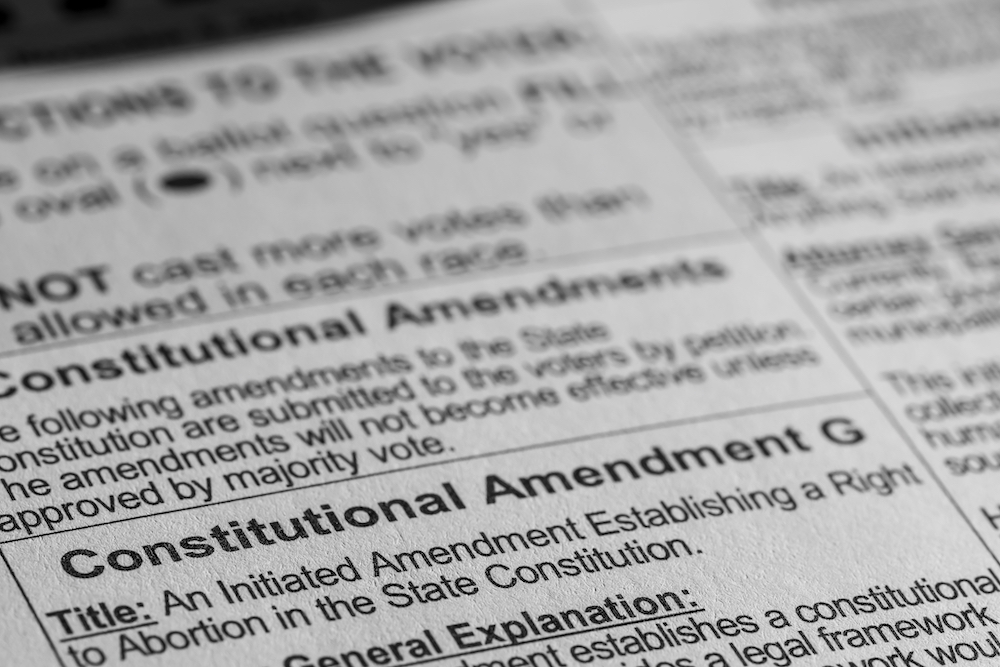
A ballot with an abortion-related initiative.

Credit: Lost_in_the_Midwest/ Shutterstock

In Arizona, we’re working with the Abortion Access coalition to establish a fundamental right to abortion and end the state’s dangerous abortion ban through Proposition 139. Back east, in Florida, we’re working with Floridians Protecting Freedom fighting to pass Amendment 4 to stop the state's devastating abortion ban and protect Floridians' freedom to make their own personal medical decisions without government interference.

If these ballot measures pass, nearly 45 million people will feel the impact of having abortion access restored or protected. But we’re not stopping there.

State Supreme Courts Play An Outsize Role in Abortion Rights

While ballot measures are an important part of our strategy, elected officials at all levels of government have a hand in either protecting or restricting abortion access. We’re engaging in key races that will impact this right. State supreme court justices can and often do find that state constitutions protect more rights than the U.S. Constitution, making them a powerful backstop against the attacks of radical, anti-abortion minorities. Even in states that have already passed ballot measures to protect abortion rights, like Michigan and Ohio, state supreme courts have a lot of power to interpret these measures.

With our Voter Education Fund, we’re focused on state supreme court races in Michigan and Montana where we’re raising awareness about the candidates’ abortion rights positions. We also have conducted voter education on reproductive rights in North Carolina’s state supreme court race.

State Legislatures Are Still Key in Protecting Abortion Rights

While some state legislatures have been heavily gerrymandered to prevent laws that actually represent the will of the people, state lawmakers can still be vital in blocking abortion bans from moving forward.

In Michigan, we're working in six state house district races to educate voters on reproductive rights in the legislature and protect the hard-won rights we secured for abortion access in 2022 using ballot measures. Also, in Wisconsin, we’re educating voters on abortion rights in six legislative races. In Montana and Kansas legislatures, our focus is building a larger pro-civil rights minority that can block bans. We and the ACLU Voter Education Fund are also working in important state legislative races in North Carolina and Georgia to educate on candidate positions in those races.

This election, we are working hard to make sure you’re able to protect your rights beyond just the presidential race. Now that you know what’s at stake this cycle, find out how you can get involved by visiting aclu.org/vote. There you’ll be able to find ways to volunteer, conversation guides to share with friends and family, graphics to share on social media and merchandise to get you excited for Election Day. See you at the polls!

Paid Pol. Adv. Paid for by American Civil Liberties Union, Inc., Anthony Romero Executive Director, 125 Broad St. New York, New York 10004, in coordination with Arizona for Abortion Access, Coloradans for Protecting Reproductive Freedom, Floridians Protecting Freedom, Montanans Securing Reproductive Rights, Nevadans for Reproductive Freedom, and authorized by Missourians for Constitutional Freedom. Registered agent: Anthony Romero.

Paid for by ACLU Voter Education Fund, 212-549-2500, not authorized by a candidate or candidate’s committee.


Published October 17, 2024 at 05:08PM
via ACLU https://ift.tt/BlziF5V