Tuesday, 12 November 2024

ACLU: In Trump Country, Ballot Measures Safeguard Abortion Rights

In Trump Country, Ballot Measures Safeguard Abortion Rights

In the final weeks of the election, Vice President Kamala Harris and the Democratic Party focused their campaign efforts on abortion rights, particularly in key swing states. While those efforts did not secure Harris a win, in the 10 states where abortion rights were on the ballot, seven voted to safeguard abortion rights in their state constitutions.

Among those seven states, in Arizona, Missouri, Nevada and Montana — where President-elect Donald Trump won — abortion ballot measures definitively passed. In many cases, the ballot measures were more popular than Trump. While these red state wins indicate just how popular abortion rights are among even conservative-leaning voters, wins in blue and purple states, including Maryland, Colorado and New York, show that reproductive freedom continues to be an issue that defies party lines.

Abortion Rights Win in Trump Country
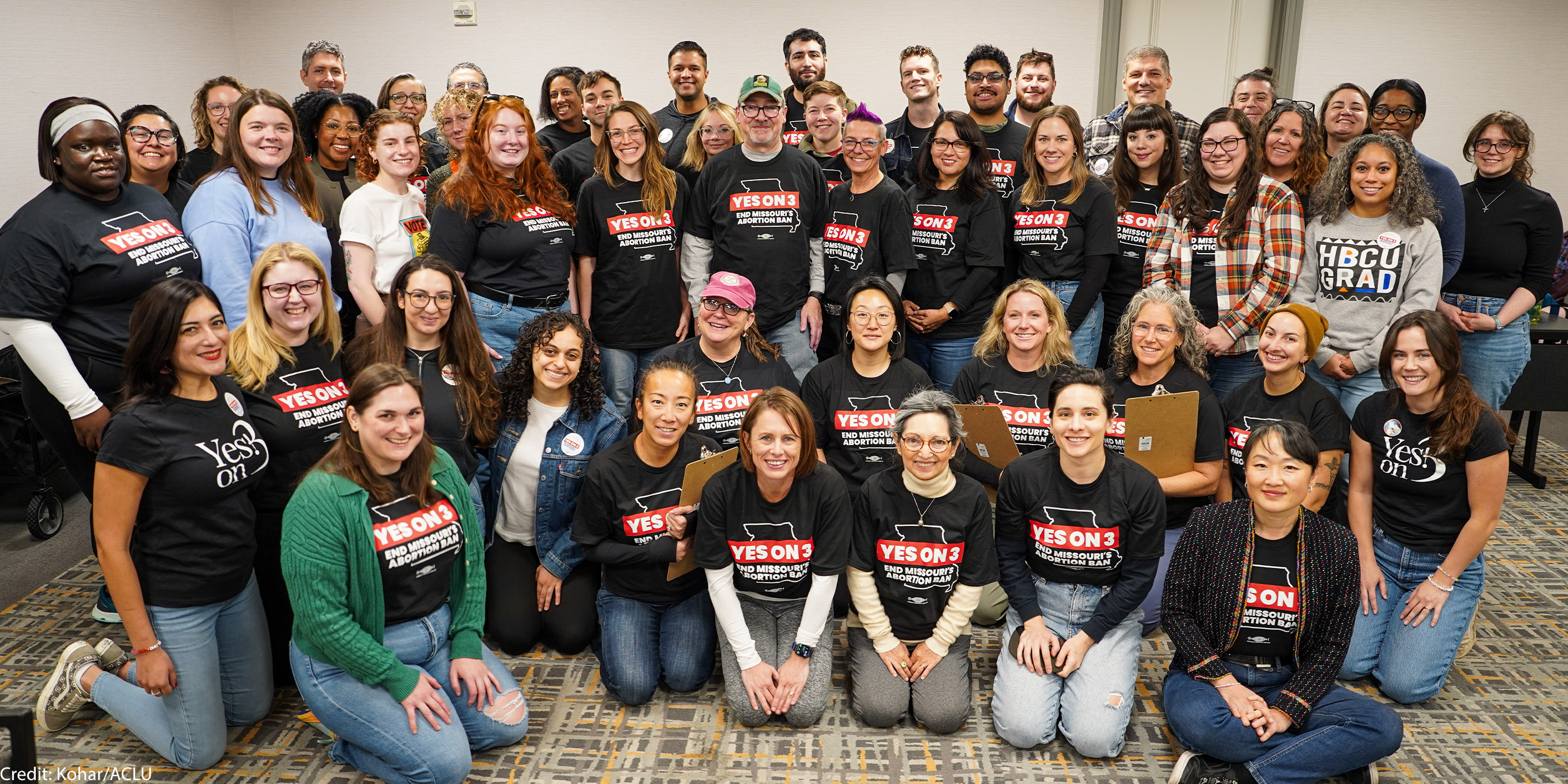
ACLU volunteers for reproductive rights in Missouri.

Kohar/ACLU

Thirteen states currently have total abortion bans in effect, but Missouri was the first state to enforce its ban, taking action mere minutes after the fall of Roe v. Wade. Missourians, who voted for Trump in 2016, 2020 and in 2024, this year passed Amendment 3 to end the state's total abortion ban, which was one of the strictest in the country. Amendment 3 ensures that decisions about Missourians’ reproductive health care — including abortion, birth control, and miscarriage care — can be made by patients with their health care providers, not politicians.

The ACLU, ACLU of Missouri and its partners led this ballot measure and, the day after it passed, we again joined with partners to file a lawsuit on behalf of Planned Parenthood to implement the amendment and urgently restore access to care in the state. Krysten Vaughn, the community engagement associate at the ACLU of Missouri, saw firsthand just how popular abortion rights are in her red state. While canvassing for Amendment 3, she spoke to a mother who was thrilled that she and her husband could vote for Amendment 3 to protect their family.

She also knocked on the door of an elderly man who said his wife had waited an hour in line to vote yes on the amendment. “He was very enthusiastic and even said ‘bless you all for the work you’ve been doing,’” Vaughn said.

Like Missouri, Montana voters have supported Trump in the past three elections. Montana’s Supreme Court, however, has a strong precedent protecting abortion rights. As we saw with the U.S. Supreme Court’s decision in Roe, court opinions can change if the court’s makeup changes. That’s why, this election cycle, voters chose to safeguard an explicit right to abortion in their constitution and passed Constitutional Initiative 128 by more than 15 points. This initiative permanently secures the right to make and carry out decisions about pregnancy and abortion in the state constitution. The ACLU of Montana was a driving force behind the ballot measure, uplifting the overwhelming support for abortion rights in deep Trump country.

Khadija Davis, a political strategist with the ACLU of Montana, spoke to Montanans about why this ballot measure was personal. Davis saw people drive hundreds of miles, endure tough weather, spend long hours volunteering, and make phone calls to mobilize their communities to vote for their reproductive rights. While phone banking, Davis met women who shared their experiences from decades ago, before Roe, who said they refused to go back – they were voting for a better future for their children.

“You could feel the passion and compassion people had for one another, and this campaign,” Davis said. “When I was at the rally in Helena, people were crying, hugging, and sharing joy. They made signs, dressed in matching shirts, and came out to build community around hope.

The ACLU and the ACLU of Montana not only supported the ballot measure, we also invested in Montana’s Supreme Court race to educate voters on candidate positions on civil liberties and rights. As a result, the pro-civil liberty majority was preserved on the state Supreme Court. The state Supreme Court will now determine how the ballot measure is implemented and the ACLU will work to hold it accountable for enforcing this vital protection.

Red State Near Misses and Purple State Wins Show Power of Abortion at the Polls

In the Southwest, Arizona has also aggressively restricted abortion access for decades, imposing a 15-week ban on abortion after Roe was overturned and almost reinstating an 1864 total abortion ban. Given the opportunity to change this, a majority of voters — almost 62 percent — voted yes on Proposition 139, which enshrined the right to abortion in the state’s constitution. With more than half the vote, the ballot measure passed with a wider margin than Trump’s win.

Harrison Redmond, a community organizer at the ACLU or Arizona, was proud to have the opportunity to work on this ballot measure so that all Arizonans, including his younger sister, can live in a state that respects their civil rights and liberties. Redmond spoke with countless volunteers and supporters over the last year who wanted the same thing as him: equal rights for the people in their lives who can become pregnant.

“Arizonans made it clear that they don’t want the government interfering with important, personal health care decisions about abortion. Passing Prop. 139 is a huge step that will ensure people in our community get the care they need,” Redmond said.

In the East, while the abortion ballot measure didn’t win in Florida, it came close with 57 percent of voters supporting Amendment 4, which would have prohibited laws restricting abortion before fetal viability or when necessary to protect a pregnant person’s health. Unfortunately, the state’s undemocratic 60 percent threshold for passing a ballot initiative kept this vital right from being restored. That barrier, combined with deceptive tactics from Gov. Ron DeSantis, including a state-run, taxpayer-funded campaign to deceive voters as well as threats to petition signers and TV stations, proved too much to overcome.

Blue States Lead on Securing Abortion Rights in the Absence of Federal Protections

Trump lost some blue states, like Massachusetts, by much smaller margins than he did in 2016 or 2020, indicating a shift in voter preferences in so-called Democratic strongholds. Despite these shifts, two blue states, New York and Maryland, voted to enshrine abortion rights into state law.

In New York, the Equal Rights Amendment, or Prop 1, passed with 62 percent of the vote. The amendment protects against unequal treatment based on ethnicity, national origin, age, disability, and sex, including sexual orientation, gender identity, pregnancy, and reproductive healthcare and autonomy.

In Maryland, 75 percent of voters said yes to Question 1, which confirms an individual’s fundamental right to reproductive freedom. While both Maryland and New York already had abortion rights’ protections in state statute, Prop 1 and Question 1 add another layer of more durable protections.

Across the Country, the Fight Continues

The ACLU is building a firewall for freedom to help state and local governments protect our rights always, especially in the face of federal abuses. Our reproductive freedom firewall work includes continuing to work with local partners on abortion rights ballot measures since the fall of Roe v. Wade. But we know passing these ballot initiatives are just the first step.

In 2022, the ACLU was a driving force behind the successful abortion rights measure in Michigan. As a next step, just as we have in Montana, we wanted to make sure that the will of the people was effectively carried out through judicial interpretation of the measure, which often falls to the highest court in the state. To bolster that abortion rights victory, in 2024, the ACLU Voter Education Fund spent $2 million on voter education around Michigan’s Supreme Court candidates to help educate voters on the role of the court on this issue.

While we are very encouraged by the successes we’ve seen, passing ballot measures to ensure reproductive rights is not a holistic solution. Only half of the states even allow citizen-initiated ballot measures. And, across the country, one in three women of reproductive age currently live in states where abortion is banned. We need a nationwide solution to this public health crisis, including federal-level protections for abortion and reproductive health care.

The voters have spoken loud and clear. Across the country, Americans do not want to see abortion banned. At the ACLU we’re ready to fight to protect the will of the people. Already, we’ve vowed to block any attempts by the upcoming Trump administration to weaponize the Comstock Act to effectively ban abortion nationwide or to take medication abortion off the market. And we won’t stop there. Any attempt to restrict our reproductive freedom will be met with the full force of the ACLU.


Published November 13, 2024 at 03:16AM
via ACLU https://ift.tt/vBUxP46

ACLU: In Trump Country, Ballot Measures Safeguard Abortion Rights

In Trump Country, Ballot Measures Safeguard Abortion Rights

In the final weeks of the election, Vice President Kamala Harris and the Democratic Party focused their campaign efforts on abortion rights, particularly in key swing states. While those efforts did not secure Harris a win, in the 10 states where abortion rights were on the ballot, seven voted to safeguard abortion rights in their state constitutions.

Among those seven states, in Arizona, Missouri, Nevada and Montana — where President-elect Donald Trump won — abortion ballot measures definitively passed. In many cases, the ballot measures were more popular than Trump. While these red state wins indicate just how popular abortion rights are among even conservative-leaning voters, wins in blue and purple states, including Maryland, Colorado and New York, show that reproductive freedom continues to be an issue that defies party lines.

Abortion Rights Win in Trump Country

ACLU volunteers for reproductive rights in Missouri.

Kohar/ACLU

Thirteen states currently have total abortion bans in effect, but Missouri was the first state to enforce its ban, taking action mere minutes after the fall of Roe v. Wade. Missourians, who voted for Trump in 2016, 2020 and in 2024, this year passed Amendment 3 to end the state's total abortion ban, which was one of the strictest in the country. Amendment 3 ensures that decisions about Missourians’ reproductive health care — including abortion, birth control, and miscarriage care — can be made by patients with their health care providers, not politicians.

The ACLU, ACLU of Missouri and its partners led this ballot measure and, the day after it passed, we again joined with partners to file a lawsuit on behalf of Planned Parenthood to implement the amendment and urgently restore access to care in the state. Krysten Vaughn, the community engagement associate at the ACLU of Missouri, saw firsthand just how popular abortion rights are in her red state. While canvassing for Amendment 3, she spoke to a mother who was thrilled that she and her husband could vote for Amendment 3 to protect their family.

She also knocked on the door of an elderly man who said his wife had waited an hour in line to vote yes on the amendment. “He was very enthusiastic and even said ‘bless you all for the work you’ve been doing,’” Vaughn said.

Like Missouri, Montana voters have supported Trump in the past three elections. Montana’s Supreme Court, however, has a strong precedent protecting abortion rights. As we saw with the U.S. Supreme Court’s decision in Roe, court opinions can change if the court’s makeup changes. That’s why, this election cycle, voters chose to safeguard an explicit right to abortion in their constitution and passed Constitutional Initiative 128 by more than 15 points. This initiative permanently secures the right to make and carry out decisions about pregnancy and abortion in the state constitution. The ACLU of Montana was a driving force behind the ballot measure, uplifting the overwhelming support for abortion rights in deep Trump country.

Khadija Davis, a political strategist with the ACLU of Montana, spoke to Montanans about why this ballot measure was personal. Davis saw people drive hundreds of miles, endure tough weather, spend long hours volunteering, and make phone calls to mobilize their communities to vote for their reproductive rights. While phone banking, Davis met women who shared their experiences from decades ago, before Roe, who said they refused to go back – they were voting for a better future for their children.

“You could feel the passion and compassion people had for one another, and this campaign,” Davis said. “When I was at the rally in Helena, people were crying, hugging, and sharing joy. They made signs, dressed in matching shirts, and came out to build community around hope.

The ACLU and the ACLU of Montana not only supported the ballot measure, we also invested in Montana’s Supreme Court race to educate voters on candidate positions on civil liberties and rights. As a result, the pro-civil liberty majority was preserved on the state Supreme Court. The state Supreme Court will now determine how the ballot measure is implemented and the ACLU will work to hold it accountable for enforcing this vital protection.

Red State Near Misses and Purple State Wins Show Power of Abortion at the Polls

In the Southwest, Arizona has also aggressively restricted abortion access for decades, imposing a 15-week ban on abortion after Roe was overturned and almost reinstating an 1864 total abortion ban. Given the opportunity to change this, a majority of voters — almost 62 percent — voted yes on Proposition 139, which enshrined the right to abortion in the state’s constitution. With more than half the vote, the ballot measure passed with a wider margin than Trump’s win.

Harrison Redmond, a community organizer at the ACLU or Arizona, was proud to have the opportunity to work on this ballot measure so that all Arizonans, including his younger sister, can live in a state that respects their civil rights and liberties. Redmond spoke with countless volunteers and supporters over the last year who wanted the same thing as him: equal rights for the people in their lives who can become pregnant.

“Arizonans made it clear that they don’t want the government interfering with important, personal health care decisions about abortion. Passing Prop. 139 is a huge step that will ensure people in our community get the care they need,” Redmond said.

In the East, while the abortion ballot measure didn’t win in Florida, it came close with 57 percent of voters supporting Amendment 4, which would have prohibited laws restricting abortion before fetal viability or when necessary to protect a pregnant person’s health. Unfortunately, the state’s undemocratic 60 percent threshold for passing a ballot initiative kept this vital right from being restored. That barrier, combined with deceptive tactics from Gov. Ron DeSantis, including a state-run, taxpayer-funded campaign to deceive voters as well as threats to petition signers and TV stations, proved too much to overcome.

Blue States Lead on Securing Abortion Rights in the Absence of Federal Protections

Trump lost some blue states, like Massachusetts, by much smaller margins than he did in 2016 or 2020, indicating a shift in voter preferences in so-called Democratic strongholds. Despite these shifts, two blue states, New York and Maryland, voted to enshrine abortion rights into state law.

In New York, the Equal Rights Amendment, or Prop 1, passed with 62 percent of the vote. The amendment protects against unequal treatment based on ethnicity, national origin, age, disability, and sex, including sexual orientation, gender identity, pregnancy, and reproductive healthcare and autonomy.

In Maryland, 75 percent of voters said yes to Question 1, which confirms an individual’s fundamental right to reproductive freedom. While both Maryland and New York already had abortion rights’ protections in state statute, Prop 1 and Question 1 add another layer of more durable protections.

Across the Country, the Fight Continues

The ACLU is building a firewall for freedom to help state and local governments protect our rights always, especially in the face of federal abuses. Our reproductive freedom firewall work includes continuing to work with local partners on abortion rights ballot measures since the fall of Roe v. Wade. But we know passing these ballot initiatives are just the first step.

In 2022, the ACLU was a driving force behind the successful abortion rights measure in Michigan. As a next step, just as we have in Montana, we wanted to make sure that the will of the people was effectively carried out through judicial interpretation of the measure, which often falls to the highest court in the state. To bolster that abortion rights victory, in 2024, the ACLU Voter Education Fund spent $2 million on voter education around Michigan’s Supreme Court candidates to help educate voters on the role of the court on this issue.

While we are very encouraged by the successes we’ve seen, passing ballot measures to ensure reproductive rights is not a holistic solution. Only half of the states even allow citizen-initiated ballot measures. And, across the country, one in three women of reproductive age currently live in states where abortion is banned. We need a nationwide solution to this public health crisis, including federal-level protections for abortion and reproductive health care.

The voters have spoken loud and clear. Across the country, Americans do not want to see abortion banned. At the ACLU we’re ready to fight to protect the will of the people. Already, we’ve vowed to block any attempts by the upcoming Trump administration to weaponize the Comstock Act to effectively ban abortion nationwide or to take medication abortion off the market. And we won’t stop there. Any attempt to restrict our reproductive freedom will be met with the full force of the ACLU.


Published November 12, 2024 at 09:46PM
via ACLU https://ift.tt/cMUZui1

Thursday, 7 November 2024

ACLU: Donald Trump will return to the White House in January. The ACLU is ready.

Donald Trump will return to the White House in January. The ACLU is ready.

Today, as the nation prepares for the devastating onslaught of civil liberties abuses identified in our most recent analysis of Donald Trump’s policy proposals and rhetoric, the ACLU, too, is prepared.

Starting on day one, we’re ready to fight for our civil liberties and civil rights in the courts, in Congress, and in our communities. We did it during his first term – filing 434 legal actions against Trump while he was in office – and we’ll do it again.

We’ve done the work and, today, our track record shows that we know how to fight his attempts to restrict our civil liberties and civil rights. Here’s just a few highlights from our 400 plus legal actions to make that point:


Published November 7, 2024 at 06:51PM
via ACLU https://ift.tt/CgJ8BP9

ACLU: Donald Trump will return to the White House in January. The ACLU is ready.

Donald Trump will return to the White House in January. The ACLU is ready.

Today, as the nation prepares for the devastating onslaught of civil liberties abuses identified in our most recent analysis of Donald Trump’s policy proposals and rhetoric, the ACLU, too, is prepared.

Starting on day one, we’re ready to fight for our civil liberties and civil rights in the courts, in Congress, and in our communities. We did it during his first term – filing 434 legal actions against Trump while he was in office – and we’ll do it again.

We’ve done the work and, today, our track record shows that we know how to fight his attempts to restrict our civil liberties and civil rights. Here’s just a few highlights from our 400 plus legal actions to make that point:


Published November 8, 2024 at 12:21AM
via ACLU https://ift.tt/5mBvQac

Wednesday, 6 November 2024

ACLU: How the ACLU Will Fight Four More Years of Trump

How the ACLU Will Fight Four More Years of Trump

The results of the election are in: Donald Trump will be the 47th president of the United States.

Trump’s win comes after a campaign in which he consistently targeted immigrants, transgender youth, and other vulnerable communities with hateful rhetoric. He also threatened retribution against dissidents and political opponents.

I know that many of us fear what these results mean for our communities, our nation and ourselves. We know that a second Trump administration will be even more aggressive and effective than it was before — because Trump has repeatedly said so.

As outlined in Project 2025, under a second Trump administration, our federal government will deport immigrants in dragnet raids, target his political adversaries, spy on private citizens, promote discrimination against marginalized communities, and control what we can and can’t do with our bodies. This dystopian view of American life threatens our fundamental freedoms. We know from prior experience that our fear is real.

We also know that despair and resignation are not a strategy. At the ACLU, we’re choosing to channel our fear into action. Together, we are powerful enough to change the course of our nation’s history and defend our most fundamental rights and freedoms. That is why the ACLU has a concrete plan to fight back. When President-elect Trump comes for our communities, he’s gotta through all of us.

During Trump’s first term, the ACLU filed 434 legal challenges against his administration, successfully blocking some of Trump’s most egregious policies, like the Muslim ban and separating immigrant families. When Trump once again set his sights on the White House, the ACLU’s legal and advocacy experts drafted a roadmap to combat his administration head-on. On day one, we are prepared to:

  • Defend against the Trump administration’s unlawful mass deportation plan through coordinated action at all levels of government. We’ll also work with states and localities to protect residents to the full extent possible and ensure that a Trump administration can’t hijack state resources to carry out its draconian policies.
  • Provide legal defense to whistleblowers and critics who dare to stand up to Trump’s policies. We’ll also protect freedom of speech and the right to protest against Trump’s agenda.
  • Use the courts to affirm that LGBTQ people are protected from discrimination under federal law. We’ll fight to invalidate Trump administration policies that permit discrimination across the federal government, and to shut down the administration’s efforts to require discrimination at the state and local levels.
  • Challenge the Trump administration’s dangerous attacks on reproductive freedom, including any attempts to weaponize the Comstock Act to ban abortion nationwide or to take medication abortion off the shelves. We’ll also protect access to birth control and family planning services.

As soon as the 119th Congress is sworn in, we will urge members to use their constitutional powers to provide oversight, investigate wrongdoing, and reject restrictive executive branch policies. At the state level, we’ll work with lawmakers to build a firewall for freedom and enact laws that protect people from government abuse. In our communities, we’re working to educate people on what is at risk, what happens next, and how we can fight for our freedoms together.

This is my sixth presidential election as executive director at the ACLU and there is not a doubt in my mind that our organization is the best equipped to meet this moment. We have more than a century of experience in combating political repression, we have some of the nation’s best legal and political advocates, we have our nationwide network of ACLU affiliates, and we have all of you.

The Trump administration’s anti-liberty and fundamentally anti-American policies will be met with the full firepower of the ACLU, the might of our allies, and the commitment of the American people. Above all else, that gives me hope. The next four years will be challenging, but we’re ready to put up the fight of the century. You can count on it.


Published November 6, 2024 at 11:31PM
via ACLU https://ift.tt/eXmfol2

ACLU: How the ACLU Will Fight Four More Years of Trump

How the ACLU Will Fight Four More Years of Trump

The results of the election are in: Donald Trump will be the 47th president of the United States.

Trump’s win comes after a campaign in which he consistently targeted immigrants, transgender youth, and other vulnerable communities with hateful rhetoric. He also threatened retribution against dissidents and political opponents.

I know that many of us fear what these results mean for our communities, our nation and ourselves. We know that a second Trump administration will be even more aggressive and effective than it was before — because Trump has repeatedly said so.

As outlined in Project 2025, under a second Trump administration, our federal government will deport immigrants in dragnet raids, target his political adversaries, spy on private citizens, promote discrimination against marginalized communities, and control what we can and can’t do with our bodies. This dystopian view of American life threatens our fundamental freedoms. We know from prior experience that our fear is real.

We also know that despair and resignation are not a strategy. At the ACLU, we’re choosing to channel our fear into action. Together, we are powerful enough to change the course of our nation’s history and defend our most fundamental rights and freedoms. That is why the ACLU has a concrete plan to fight back. When President-elect Trump comes for our communities, he’s gotta through all of us.

During Trump’s first term, the ACLU filed 434 legal challenges against his administration, successfully blocking some of Trump’s most egregious policies, like the Muslim ban and separating immigrant families. When Trump once again set his sights on the White House, the ACLU’s legal and advocacy experts drafted a roadmap to combat his administration head-on. On day one, we are prepared to:

  • Defend against the Trump administration’s unlawful mass deportation plan through coordinated action at all levels of government. We’ll also work with states and localities to protect residents to the full extent possible and ensure that a Trump administration can’t hijack state resources to carry out its draconian policies.
  • Provide legal defense to whistleblowers and critics who dare to stand up to Trump’s policies. We’ll also protect freedom of speech and the right to protest against Trump’s agenda.
  • Use the courts to affirm that LGBTQ people are protected from discrimination under federal law. We’ll fight to invalidate Trump administration policies that permit discrimination across the federal government, and to shut down the administration’s efforts to require discrimination at the state and local levels.
  • Challenge the Trump administration’s dangerous attacks on reproductive freedom, including any attempts to weaponize the Comstock Act to ban abortion nationwide or to take medication abortion off the shelves. We’ll also protect access to birth control and family planning services.

As soon as the 119th Congress is sworn in, we will urge members to use their constitutional powers to provide oversight, investigate wrongdoing, and reject restrictive executive branch policies. At the state level, we’ll work with lawmakers to build a firewall for freedom and enact laws that protect people from government abuse. In our communities, we’re working to educate people on what is at risk, what happens next, and how we can fight for our freedoms together.

This is my sixth presidential election as executive director at the ACLU and there is not a doubt in my mind that our organization is the best equipped to meet this moment. We have more than a century of experience in combating political repression, we have some of the nation’s best legal and political advocates, we have our nationwide network of ACLU affiliates, and we have all of you.

The Trump administration’s anti-liberty and fundamentally anti-American policies will be met with the full firepower of the ACLU, the might of our allies, and the commitment of the American people. Above all else, that gives me hope. The next four years will be challenging, but we’re ready to put up the fight of the century. You can count on it.


Published November 6, 2024 at 06:01PM
via ACLU https://ift.tt/JigF92Q

Tuesday, 5 November 2024

ACLU: Why Counting the Vote Can, and Should, Take Time

Why Counting the Vote Can, and Should, Take Time

Everyone remembers the four days it took to officially call the 2020 presidential race for Joe Biden. While that election seemed to take an inordinate amount of time, it’s normal for it to take several days to process all of the ballots.

Vote counting takes time, especially when the race is as close as the 2024 election appears to be. This year’s election is projected to have fewer mail-in ballots, and thus may take less time to call than the 2020 race, but each state still has its own election administration procedures on how, and when, to process ballots. These are standard processes that, yes, can cause the election results to take more time. They also are part of the system of checks and verifications that keep our elections fair and free.

In every election, teams of people from both parties work together at every step of the voting, counting, and reporting process to ensure that results are verified before they are officially certified. At the ACLU, we’ve kept close watch on this process. Below, we outline three main things that impact when the election is called.

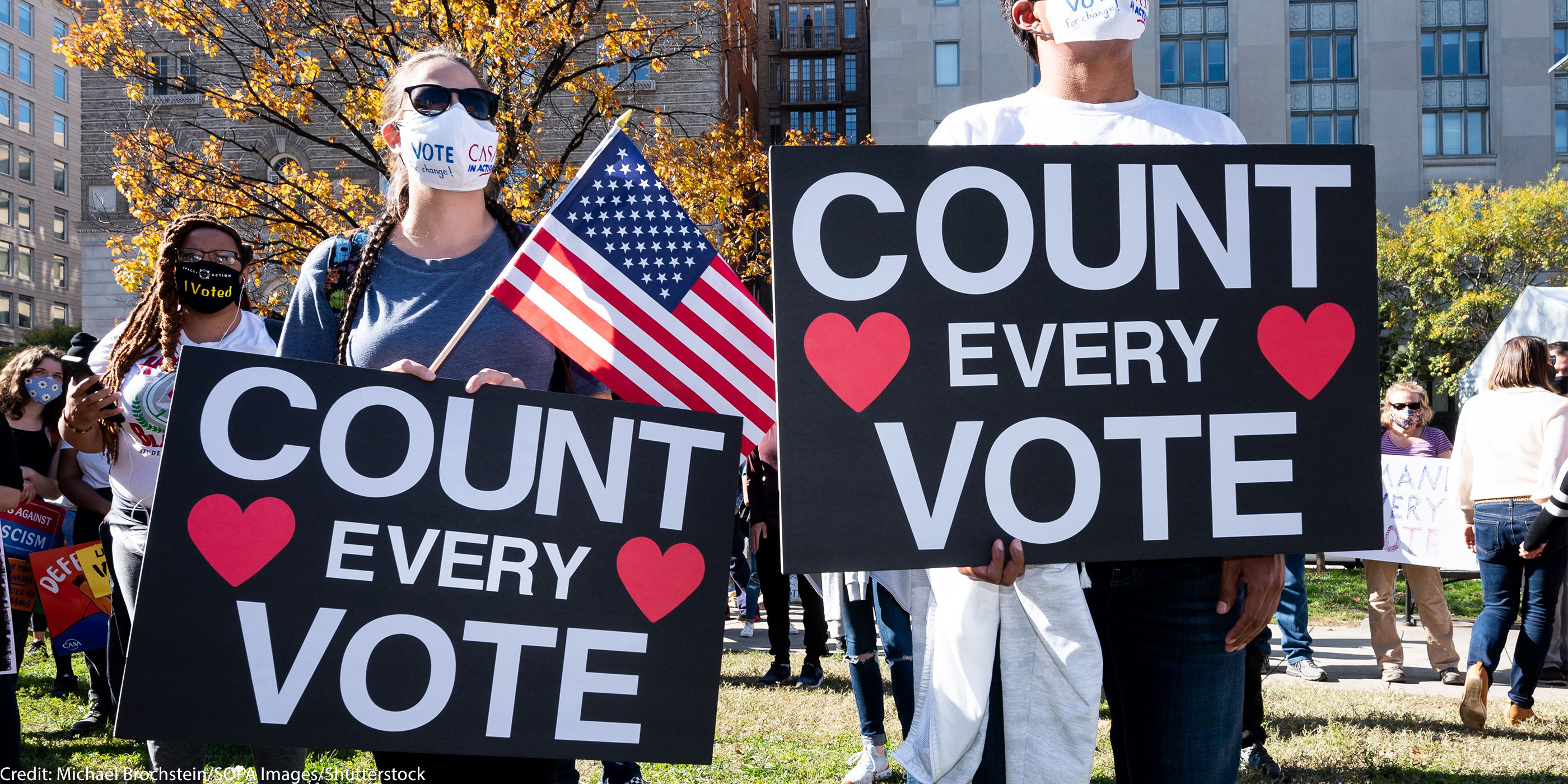
Two masked people hold signs that read "COUNT EVERY VOTE."

ONE: Mail-In and Absentee Ballots

2020’s infamous four-day wait for the presidential election to be called can, at least partially, be attributed to the large numbers of people who voted by mail during the pandemic. We know that processing mail-in ballots can be time consuming. Currently, some states allow election workers to begin this lengthy process before Election Day, while others still do not. In 2020, the majority of mail-in ballots came from Democratic-leaning voters. If this election follows this pattern, there may be a late-in-the-day surge of votes in certain states.

Some states, such as Nevada and California, allow mail-in ballots that are postmarked by Election Day and arrive a specified number of days after Election Day to still be counted. This means that unofficial election results in some states may come days after Election Day.

TWO: State-Based Procedures and Processing Times

Every state has its own rules and procedures for how to count the vote.

For example, not all states offer early voting, or only offer short periods of early voting, which can possibly lead to long lines and bottlenecks on Election Day that extend the time it takes to gather all the votes. Additionally, many states, such as Pennsylvania and Wisconsin, do not begin processing any ballots – including mail-in or absentee ballots – until Election Day. It is therefore possible, and in some cases likely, that results won’t be projected until after Election Day. In other states, like Georgia and Michigan, pre-processing of mail-in and absentee ballots is allowed before Election Day, so projected election results in those states may come sooner, including on Election Night or the following morning.

THREE: Verifying and Counting the Vote

Canvassing is the process of counting ballots, ensuring all ballots are accounted for, and that only valid ballots are counted.

Importantly, many states also have automatic recount procedures that trigger at certain points, such as if the race is within 0.5 percent, that can also extend the canvassing process. For swing states, like Pennsylvnia, or, more recently, Nevada, the margin of victory for either candidate may be small. In these scenarios, states may recount the vote, or presidential candidates may call for a recount, which means that the states that could determine the outcome of the election may not be called until November 6th or even later.

At the ACLU, we know that these checks and verifications are standard procedure to ensure that every vote is counted. We also know that select nationwide processes can help expand access and improve the right to vote, including same-day and online voter registration across states, required early-voting access in all states for a set period, and no-excuse vote-by-mail to allow voters across the country to request and cast an absentee/mail ballot with no excuse or reason necessary.

This election, we’ll be watching the results roll in and knowing that our work doesn’t stop when the polls close. Ensuring the future of democracy requires us to safeguard our right to vote today. Join us and demand that every vote be counted and every validated result be certified to protect our freedoms.


Published November 5, 2024 at 08:39PM
via ACLU https://ift.tt/MsdnxWy