Wednesday, 22 January 2025

ACLU: Trump's Executive Orders Promoting Sex Discrimination, Explained

Trump's Executive Orders Promoting Sex Discrimination, Explained

Donald Trump was re-elected president on a wave of attacks against women and transgender people. Anti-transgender politicians spent more than $215 million on ads scapegoating trans people and promoting a Project 2025 agenda that threatens to rollback reproductive freedom and punish people for departing from archaic gender roles. On his first day back in office, President Trump signed a far-reaching executive order requiring federal agencies to discriminate against transgender people by denying who they are and threatening the freedom of self-determination and self-expression for all.

In 2020, the Supreme Court issued a 6-3 ruling in Bostock v. Clayton County affirming that discrimination against someone because they are LGBTQ is sex discrimination under Title VII of the 1964 Civil Rights Act. Justice Neil Gorsuch, writing for the majority, said: “it is impossible to discriminate against a person for being homosexual or transgender without discriminating against that individual based on sex.” Trump also withdrew an executive order issued by former President Joe Biden directing federal agencies to enforce this court ruling as applied to all laws prohibiting sex discrimination.

We all deserve the freedom to be ourselves, including the right to determine what’s right for our bodies and lives. Trump’s sex discrimination mandate threatens to deny that freedom to transgender people across the country while forcing everyone else to sacrifice their own freedom and privacy, too.

What Does the Order Say?

Trump’s signed order states: “It is the policy of the United States to recognize two sexes, male and female.  These sexes are not changeable and are grounded in fundamental and incontrovertible reality.” The order defines terms like “man” and “woman” based on whether a person “at conception” belongs “to the sex that produces the large reproductive cell” or that “produces the small reproductive cell.”

Trump’s order then directs federal agencies to “enforce laws governing sex-based rights, protections, opportunities, and accommodations” using his cramped definitions, including designating sex on passports and other federal identification documents, or determining where transgender people are confined in federal custody. The order also includes a sweeping mandate to all agencies to “end the Federal funding of gender ideology.” Of course, the order does not explain what that means or how agencies would accomplish such a task.

For decades, feminist legal scholars and women’s rights advocates have opposed efforts to define gender based strictly on biology. Recent state laws that use these definitions to discriminate against transgender people have resulted in invasive and traumatizing efforts to determine who “counts” as a man or as a woman, targeting youth who are even suspected of being transgender because they do not conform to sex stereotypes. This order likewise ignores the existence of intersex people and others with variations in sex characteristics beyond the overly-simplistic definitions Trump endorsed.

What Does the Order Do?

Very few executive orders change policy immediately, and they cannot change laws passed by Congress or protections guaranteed by the Constitution. As of January 21, 2025 it is unclear how the Trump administration will enforce this order as applied to educational settings, health care access, housing, federally-funded programs, and many other areas where federal law or policy references “sex” or “gender.”

Some of the most immediate impacts will likely be felt by the more than 2,000 transgender people currently held in federal custody. The order specifically calls on the Federal Bureau of Prisons (BOP) and the Department of Homeland Security (DHS) to ignore the guidelines of the Prison Rape Elimination Act (PREA) and enforce a blanket policy forcing transgender women into men’s prisons and detention centers against their will. This puts them at a severely heightened risk of sexual assault and abuse by other incarcerated persons and prison staff. The order also mandates that BOP withdraw critical health care from trans people in federal prison.

We also expect to see immediate impacts on access to updated sex designations on U.S. passports. Transgender people frequently update the sex designation on documents like birth certificates, driver’s licenses, and passports to reflect their gender identity rather than the sex they were assigned at birth. Requiring transgender peoples’ passports to show the sex they were assigned at birth effectively outs them as transgender whenever they have to present the document.

Soon after the order was issued, a Trump administration official told a reporter that the policy impacting gender markers on U.S. passports would not apply retroactively for current passport holders. Trump’s order will, however, prevent transgender and intersex people from obtaining new passports, visas, and trusted traveler documents that reflect who they are and how they are perceived in the world. Online forms and websites providing instructions for how to update your gender marker on federal travel documents have already been removed. As of January 21, 2025, we are awaiting further information about how precisely the new passport policy will be implemented. In the meantime, we know transgender people are fearful about whether they can safely travel.

What Happens Next?

We expect the order may be enforced in other contexts, such as in public schools and sex-separated spaces. It may also be used to limit workplace protections and to limit federally-funded programs that provide access for gender-affirming health care. If federal agencies and departments act to make those risks a reality, the ACLU and other LGBTQ rights organizations will fight them every step of the way.

If you have been impacted by this order, let us know.


Published January 23, 2025 at 01:58AM
via ACLU https://ift.tt/ziJ4gAN

ACLU: Trump's Executive Orders Promoting Sex Discrimination, Explained

Trump's Executive Orders Promoting Sex Discrimination, Explained

Donald Trump was re-elected president on a wave of attacks against women and transgender people. Anti-transgender politicians spent more than $215 million on ads scapegoating trans people and promoting a Project 2025 agenda that threatens to rollback reproductive freedom and punish people for departing from archaic gender roles. On his first day back in office, President Trump signed a far-reaching executive order requiring federal agencies to discriminate against transgender people by denying who they are and threatening the freedom of self-determination and self-expression for all.

In 2020, the Supreme Court issued a 6-3 ruling in Bostock v. Clayton County affirming that discrimination against someone because they are LGBTQ is sex discrimination under Title VII of the 1964 Civil Rights Act. Justice Neil Gorsuch, writing for the majority, said: “it is impossible to discriminate against a person for being homosexual or transgender without discriminating against that individual based on sex.” Trump also withdrew an executive order issued by former President Joe Biden directing federal agencies to enforce this court ruling as applied to all laws prohibiting sex discrimination.

We all deserve the freedom to be ourselves, including the right to determine what’s right for our bodies and lives. Trump’s sex discrimination mandate threatens to deny that freedom to transgender people across the country while forcing everyone else to sacrifice their own freedom and privacy, too.

What Does the Order Say?

Trump’s signed order states: “It is the policy of the United States to recognize two sexes, male and female.  These sexes are not changeable and are grounded in fundamental and incontrovertible reality.” The order defines terms like “man” and “woman” based on whether a person “at conception” belongs “to the sex that produces the large reproductive cell” or that “produces the small reproductive cell.”

Trump’s order then directs federal agencies to “enforce laws governing sex-based rights, protections, opportunities, and accommodations” using his cramped definitions, including designating sex on passports and other federal identification documents, or determining where transgender people are confined in federal custody. The order also includes a sweeping mandate to all agencies to “end the Federal funding of gender ideology.” Of course, the order does not explain what that means or how agencies would accomplish such a task.

For decades, feminist legal scholars and women’s rights advocates have opposed efforts to define gender based strictly on biology. Recent state laws that use these definitions to discriminate against transgender people have resulted in invasive and traumatizing efforts to determine who “counts” as a man or as a woman, targeting youth who are even suspected of being transgender because they do not conform to sex stereotypes. This order likewise ignores the existence of intersex people and others with variations in sex characteristics beyond the overly-simplistic definitions Trump endorsed.

What Does the Order Do?

Very few executive orders change policy immediately, and they cannot change laws passed by Congress or protections guaranteed by the Constitution. As of January 21, 2025 it is unclear how the Trump administration will enforce this order as applied to educational settings, health care access, housing, federally-funded programs, and many other areas where federal law or policy references “sex” or “gender.”

Some of the most immediate impacts will likely be felt by the more than 2,000 transgender people currently held in federal custody. The order specifically calls on the Federal Bureau of Prisons (BOP) and the Department of Homeland Security (DHS) to ignore the guidelines of the Prison Rape Elimination Act (PREA) and enforce a blanket policy forcing transgender women into men’s prisons and detention centers against their will. This puts them at a severely heightened risk of sexual assault and abuse by other incarcerated persons and prison staff. The order also mandates that BOP withdraw critical health care from trans people in federal prison.

We also expect to see immediate impacts on access to updated sex designations on U.S. passports. Transgender people frequently update the sex designation on documents like birth certificates, driver’s licenses, and passports to reflect their gender identity rather than the sex they were assigned at birth. Requiring transgender peoples’ passports to show the sex they were assigned at birth effectively outs them as transgender whenever they have to present the document.

Soon after the order was issued, a Trump administration official told a reporter that the policy impacting gender markers on U.S. passports would not apply retroactively for current passport holders. Trump’s order will, however, prevent transgender and intersex people from obtaining new passports, visas, and trusted traveler documents that reflect who they are and how they are perceived in the world. Online forms and websites providing instructions for how to update your gender marker on federal travel documents have already been removed. As of January 21, 2025, we are awaiting further information about how precisely the new passport policy will be implemented. In the meantime, we know transgender people are fearful about whether they can safely travel.

What Happens Next?

We expect the order may be enforced in other contexts, such as in public schools and sex-separated spaces. It may also be used to limit workplace protections and to limit federally-funded programs that provide access for gender-affirming health care. If federal agencies and departments act to make those risks a reality, the ACLU and other LGBTQ rights organizations will fight them every step of the way.

If you have been impacted by this order, let us know.


Published January 22, 2025 at 08:28PM
via ACLU https://ift.tt/cWFPzhd

Monday, 20 January 2025

ACLU: “Here’s to the Work Ahead.” How I’m Honoring the Legendary Cecile Richards

“Here’s to the Work Ahead.” How I’m Honoring the Legendary Cecile Richards

Today, as on many other days, I told myself, “Be more Cecile.” Cecile is Cecile Richards, the marvel of a human best known as the president of Planned Parenthood. Cecile died January 20th. She will always live in my heart as someone who showed me, and so many others, how to be fierce and loving and curious and to be all in on life.

Today, I join the American Civil Liberties Union (ACLU) community to mourn Cecile, a one-in-a-generation leader who forever altered the trajectory of women’s rights and reproductive freedom in this country. I pledge to honor Cecile by taking action, to do right by others, guided by the question, WWCD (What would Cecile do)?

I’ve known Cecile for years through our work in the abortion space and mutual friends. We’ve stood together in the press scrum on the steps of the Supreme Court and at rallies; we’ve enjoyed many a cheese and crackers plate on Amtrak journeys between New York and DC; and I’ve eaten many a bowl of her chili at pre-Thanksgiving parties with family and friends at her apartment.

Cecile’s accomplishments are legion. For more than a decade, she pioneered Planned Parenthood’s efforts to expand access to birth control and other reproductive care under the Affordable Care Act, to expand its reproductive care services, and to fight abortion restrictions and bans long before Roe v. Wade was overturned. She built Planned Parenthood into a political force, with the power to demand change on the national stage and in private meetings at the White House. Every politician knew who she was. Everyone in my not-too-political family also knew. Cecile understood that disruption — of the status quo, of the majority voice, of expectation — was how change is made, no matter how uncomfortable that may be. It’s so fitting that her book was called, “Make Trouble.”

After leading Planned Parenthood for more than a decade, Cecile continued advancing womens’ rights and gender justice when she co-founded Supermajority, a women’s political action group that seeks to train and mobilize women to be organizers, activists, and leaders. Even after she was diagnosed with a glioblastoma, a terminal brain cancer she described as treatable, but not curable, Cecile couldn’t stop. Last fall, she co-founded Abortion in America, an organization dedicated to uplifting the voices of those denied health care because of state abortion bans. As a friend observed, Cecile is like a racehorse, restless for the chance to run.

Cecile started her career in the labor movement, working as an organizer for service workers including garment workers, nursing home workers, and janitors. She later served as deputy chief of staff for former Speaker Nancy Pelosi. She came from a distinguished background: She was the daughter of Ann Richards, the first woman governor of Texas, and David Richards, a civil rights lawyer. She learned early that a political life was a life of action and activism.

Cecile was named one of TIME Magazine’s 100 Most Influential People in the World in 2011 and 2012. She was also awarded the Roger N. Baldwin Medal of Liberty, the ACLU’s highest honor acknowledging individuals who have made lifetime contributions to the advancement of civil liberties. Just last year, President Joe Biden awarded her the Presidential Medal of Freedom, one of the nation’s top civilian awards.

But it's not Cecile’s accomplishments that leave us so full of love and grief. It is Cecile the person. One night when I stopped by Cecile’s apartment, she stirred a sweet concoction she was making for her staff while asking about the ACLU’s next move in the abortion space. Another night, we met Italian tourists at one of her parties whom I swear she had met in line that day at a grocery store. Whenever Cecile traveled to the Planned Parenthood clinics, she would stop to connect with staff and patients. She brought people in.

When I saw Cecile during these last few months, she spoke not of the challenges of her illness, but of the stories she was hearing of women denied critical health care and of her grandson. Her question was always ‘what is necessary for change’ — a question rooted in the heart. That conviction and compassion made her fierce and loving. It meant she sat up straight and spoke with fire to defend Planned Parenthood in a notoriously hostile five hour Senate hearing a decade ago. It meant she kept organizing even as her health declined. It gave her the energy to travel the country to support change, and threaten to turn the political power of Planned Parenthood against those who stood in the way.

One of her traits I loved most was her gift as a communicator. Cecile could connect on a personal level with the president just as she could with a distraught 19-year-old denied health care. She spoke from her heart, with conviction, clear and plain. To her very core, Cecile was an organizer: of movements, friends, and family. She was curious and listened, concerned most about what people need as well as what brought them joy.

In a video tribute to Cecile, her husband Kirk and her children offered gorgeous insight into her. Her daughter, Lily, shared that when Cecile testified before Congress in that most hostile hearing, inside her binder packed with notes and data and charts was a picture of her three children when they were little. The lesson, Lily reflected, was “if you have a center, a touchstone, you can get through anything.”

I didn’t think there ever would be a force strong enough to stop Cecile. But now we have lost her.

To honor Cecile is to carry on her legacy. When the ACLU recently gave Cecile its Roger Baldwin award, our highest honor, Cecile ended her acceptance speech with the words, “Here’s to the work ahead.” To Cecile, thank you for showing us the way to be and here’s to the work ahead.


Published January 21, 2025 at 12:42AM
via ACLU https://ift.tt/Mal2veB

ACLU: “Here’s to the Work Ahead.” How I’m Honoring the Legendary Cecile Richards

“Here’s to the Work Ahead.” How I’m Honoring the Legendary Cecile Richards

Today, as on many other days, I told myself, “Be more Cecile.” Cecile is Cecile Richards, the marvel of a human best known as the president of Planned Parenthood. Cecile died January 20th. She will always live in my heart as someone who showed me, and so many others, how to be fierce and loving and curious and to be all in on life.

Today, I join the American Civil Liberties Union (ACLU) community to mourn Cecile, a one-in-a-generation leader who forever altered the trajectory of women’s rights and reproductive freedom in this country. I pledge to honor Cecile by taking action, to do right by others, guided by the question, WWCD (What would Cecile do)?

I’ve known Cecile for years through our work in the abortion space and mutual friends. We’ve stood together in the press scrum on the steps of the Supreme Court and at rallies; we’ve enjoyed many a cheese and crackers plate on Amtrak journeys between New York and DC; and I’ve eaten many a bowl of her chili at pre-Thanksgiving parties with family and friends at her apartment.

Cecile’s accomplishments are legion. For more than a decade, she pioneered Planned Parenthood’s efforts to expand access to birth control and other reproductive care under the Affordable Care Act, to expand its reproductive care services, and to fight abortion restrictions and bans long before Roe v. Wade was overturned. She built Planned Parenthood into a political force, with the power to demand change on the national stage and in private meetings at the White House. Every politician knew who she was. Everyone in my not-too-political family also knew. Cecile understood that disruption — of the status quo, of the majority voice, of expectation — was how change is made, no matter how uncomfortable that may be. It’s so fitting that her book was called, “Make Trouble.”

After leading Planned Parenthood for more than a decade, Cecile continued advancing womens’ rights and gender justice when she co-founded Supermajority, a women’s political action group that seeks to train and mobilize women to be organizers, activists, and leaders. Even after she was diagnosed with a glioblastoma, a terminal brain cancer she described as treatable, but not curable, Cecile couldn’t stop. Last fall, she co-founded Abortion in America, an organization dedicated to uplifting the voices of those denied health care because of state abortion bans. As a friend observed, Cecile is like a racehorse, restless for the chance to run.

Cecile started her career in the labor movement, working as an organizer for service workers including garment workers, nursing home workers, and janitors. She later served as deputy chief of staff for former Speaker Nancy Pelosi. She came from a distinguished background: She was the daughter of Ann Richards, the first woman governor of Texas, and David Richards, a civil rights lawyer. She learned early that a political life was a life of action and activism.

Cecile was named one of TIME Magazine’s 100 Most Influential People in the World in 2011 and 2012. She was also awarded the Roger N. Baldwin Medal of Liberty, the ACLU’s highest honor acknowledging individuals who have made lifetime contributions to the advancement of civil liberties. Just last year, President Joe Biden awarded her the Presidential Medal of Freedom, one of the nation’s top civilian awards.

But it's not Cecile’s accomplishments that leave us so full of love and grief. It is Cecile the person. One night when I stopped by Cecile’s apartment, she stirred a sweet concoction she was making for her staff while asking about the ACLU’s next move in the abortion space. Another night, we met Italian tourists at one of her parties whom I swear she had met in line that day at a grocery store. Whenever Cecile traveled to the Planned Parenthood clinics, she would stop to connect with staff and patients. She brought people in.

When I saw Cecile during these last few months, she spoke not of the challenges of her illness, but of the stories she was hearing of women denied critical health care and of her grandson. Her question was always ‘what is necessary for change’ — a question rooted in the heart. That conviction and compassion made her fierce and loving. It meant she sat up straight and spoke with fire to defend Planned Parenthood in a notoriously hostile five hour Senate hearing a decade ago. It meant she kept organizing even as her health declined. It gave her the energy to travel the country to support change, and threaten to turn the political power of Planned Parenthood against those who stood in the way.

One of her traits I loved most was her gift as a communicator. Cecile could connect on a personal level with the president just as she could with a distraught 19-year-old denied health care. She spoke from her heart, with conviction, clear and plain. To her very core, Cecile was an organizer: of movements, friends, and family. She was curious and listened, concerned most about what people need as well as what brought them joy.

In a video tribute to Cecile, her husband Kirk and her children offered gorgeous insight into her. Her daughter, Lily, shared that when Cecile testified before Congress in that most hostile hearing, inside her binder packed with notes and data and charts was a picture of her three children when they were little. The lesson, Lily reflected, was “if you have a center, a touchstone, you can get through anything.”

I didn’t think there ever would be a force strong enough to stop Cecile. But now we have lost her.

To honor Cecile is to carry on her legacy. When the ACLU recently gave Cecile its Roger Baldwin award, our highest honor, Cecile ended her acceptance speech with the words, “Here’s to the work ahead.” To Cecile, thank you for showing us the way to be and here’s to the work ahead.


Published January 20, 2025 at 07:12PM
via ACLU https://ift.tt/4xRfbIE

Friday, 17 January 2025

ACLU: How to Take Action on Inauguration Day and Beyond

How to Take Action on Inauguration Day and Beyond

In a rare occurrence, this year Martin Luther King Jr. Day will coincide with the inauguration of President Donald Trump. The two federal holidays have only fallen on the same day once since former President Ronald Reagan made Martin Luther King Jr. Day a national holiday in 1983.

At the ACLU, we’re using this rare Inauguration-MLK Day pairing to advocate for our civil rights and civil liberties. While we don’t endorse or oppose candidates for elected office, we recognize that Trump’s re-election will have immense implications for the future of our democratic norms, institutions, and processes.

Dr. King encouraged Americans to engage in nonviolent resistance to overcome injustice and oppression. In his honor, the ACLU has created a non-exhaustive guide for how to take action and join the effort to create a more perfect union. Read more below.


LEARN … about the issues, people, and policies shaping our lives.

Catch Up On Project 2025

Project 2025 is a federal policy agenda and a blueprint for a radical restructuring of the executive branch that threatens to strip away our vital civil rights and civil liberties. Published by conservative think tank The Heritage Foundation and aligned with the Trump administration, its 900-page proposals would undercut decades of progress and Constitutional protections.

In 2024 we broke down the impact that Project 2025 will have on real people. From immigrant families torn apart, to the denial of vital reproductive healthcare, to censorship in our classrooms, Project 2025 promises vast and devastating ramifications. While Project 2025’s alarming vision threatens our fundamental liberties, the ACLU has a roadmap for how we’ll continue to fight for an America where we have the right to say what we want, to control our bodies, and participate freely in society. To join us in the fight, add your name to a growing movement of community members looking to fight back.

Read Up On Other Civil Liberties News

At the ACLU, we believe that knowledge is power. To help communities make informed decisions about our civil liberties and civil rights, our news blog offers perspective on current events, updates on our legal and advocacy work and real stories from the individuals and groups impacted by the fight for our rights.

In 2024, we explained what’s at stake in the Supreme Court case on gender-affirming care. We broke down what the Constitution says about birthright citizenship. We also explored why the government should not be allowed to childproof the internet and why banning TikTok is unconstitutional.

Our news page is updated regularly with the latest from the courts, Congress and our communities. Bookmark this page or sign-up for email updates to stay informed.


TRACK … the bills, state court cases and more that impact our rights.

Track Bills Across the Country

Bill tracking, or the monitoring of proposed laws that may expand or restrict our rights, empowers us to stay informed, take action, and intervene before bills become law. To follow bills, start by visiting your state legislature’s website, where most have searchable databases containing summaries of current legislation, bill sponsors, and voting history.

From Roe v. Wade and the Dobbs case, which overturned the right to an abortion; to Loving v. Virginia, which struck down laws banning interracial marriage; and Obergefell v. Hodges, which recognized marriage equality across the country — many Supreme Court cases that address all of our civil rights come from laws that were passed in state legislatures.

At the ACLU, our 54 affiliate offices across the nation provide local connections to attorneys and advocates working on state-level civil rights issues impacting your community. Use our interactive map to find your affiliate, learn about local legislative action, and access resources to inform your advocacy. The ACLU action page is also updated regularly with petitions and volunteer opportunities to help you get involved in your state.

Track State Supreme Court Cases

State Supreme Courts are responsible for interpreting their own state’s constitution and laws, and serve as the highest authority in a state’s judicial system. This often means that state Supreme Courts have the power to provide broader protections for civil rights and civil liberties than the U.S. Supreme Court or federal law.

With federal courts growing increasingly hostile to civil liberties, state Supreme Courts have become a first line of defense for our freedoms. In 2023, the ACLU launched its State Supreme Court Initiative to advocate for improved access to these courts and their cases.

To learn more about your state Supreme Court, find your court on our interactive map and read reports on key state court cases across the country.


ORGANIZE … to protect our most fundamental rights.

Lead or Attend a Protest

The First Amendment protects your right to assemble and express your views through protest. However, police and other government officials are allowed to place certain narrow restrictions on the exercise of speech rights. Want to know what actions are protected? The ACLU’s Know Your Rights (KYR) guide empowers all individuals with clear, practical information about their constitutional and civil rights.

Before you hit the streets, read our guide and then test your civil liberties knowledge with the ACLU’s Know Your Rights quiz. If your rights have been violated, you can take action by finding your local ACLU affiliate and filling out their online form to report any civil liberties violations.

Engage Your Community

The ACLU's "How to Organize" resource offers ideas to help you engage and organize your community. Whether it's starting a group, joining existing coalitions, leading a protest, or activating a PTA, there are many ways you can take the first step to fight back.

No matter who is president, the ACLU’s advocacy and organizing teams are working to build a firewall for freedom – a barrier that stops the spread of constant attacks on our civil rights – in our communities. Want to join the ACLU in protecting our freedoms? Our volunteer teams are dedicated to mobilizing communities across the country in defense of civil liberties. Sign up now to receive immediate steps to begin taking action.


TALK and WRITE … about the issues that matter

Start a Conversation

At the ACLU, we believe speaking up is key to a strong democracy. By using our voices, we can hold leaders accountable and ensure that everyone’s rights and liberties are protected. Curious about how to discuss issues like abortion rights, LGBTQ rights, free speech, immigrants’ rights, and more? The ACLU has suggestions for how to open dialogues in your community.

Do you want to know what speech is protected by the First Amendment? Check out our three-part “Ask an Expert” podcast series where Ben Wizner, director of the ACLU's Speech, Privacy, and Technology Project, answers questions about the First Amendment, its protections, and its importance.

Write Your Elected Officials

Elected officials are meant to represent the people they serve, and it’s essential that we make sure they hear our voices. Writing to your legislators is one of the most powerful ways to exercise your rights and influence policy. Whether you’re drafting a letter or posting a message online, contacting your elected officials is a protected expression of free speech that plays a vital role in influencing decisions that shape our civil rights and liberties.

Effective advocacy starts with clear, concise communication. Take a look at the ACLU’s writing tips guide to make sure you’re equipped with strategies for crafting effective and impactful messages.


Whether you choose to take action using the resources shared here, or in other ways – like donating to causes you care about, expressing yourself creatively, seeking out wellness resources, or coming together with loved ones – there is no right or wrong way to fight for our rights, our communities and our nation.

At the ACLU, we’d love to see how you’re getting involved. Take a photo or video of what taking action looks like for you, share it on your social media page and tag the ACLU (@aclu_nationwide) on Instagram, or @aclu on X, Facebook and TikTok.


Published January 17, 2025 at 10:14PM
via ACLU https://ift.tt/JLuA2Qd

ACLU: How to Take Action on Inauguration Day and Beyond

How to Take Action on Inauguration Day and Beyond

In a rare occurrence, this year Martin Luther King Jr. Day will coincide with the inauguration of President Donald Trump. The two federal holidays have only fallen on the same day once since former President Ronald Reagan made Martin Luther King Jr. Day a national holiday in 1983.

At the ACLU, we’re using this rare Inauguration-MLK Day pairing to advocate for our civil rights and civil liberties. While we don’t endorse or oppose candidates for elected office, we recognize that Trump’s re-election will have immense implications for the future of our democratic norms, institutions, and processes.

Dr. King encouraged Americans to engage in nonviolent resistance to overcome injustice and oppression. In his honor, the ACLU has created a non-exhaustive guide for how to take action and join the effort to create a more perfect union. Read more below.


LEARN … about the issues, people, and policies shaping our lives.

Catch Up On Project 2025

Project 2025 is a federal policy agenda and a blueprint for a radical restructuring of the executive branch that threatens to strip away our vital civil rights and civil liberties. Published by conservative think tank The Heritage Foundation and aligned with the Trump administration, its 900-page proposals would undercut decades of progress and Constitutional protections.

In 2024 we broke down the impact that Project 2025 will have on real people. From immigrant families torn apart, to the denial of vital reproductive healthcare, to censorship in our classrooms, Project 2025 promises vast and devastating ramifications. While Project 2025’s alarming vision threatens our fundamental liberties, the ACLU has a roadmap for how we’ll continue to fight for an America where we have the right to say what we want, to control our bodies, and participate freely in society. To join us in the fight, add your name to a growing movement of community members looking to fight back.

Read Up On Other Civil Liberties News

At the ACLU, we believe that knowledge is power. To help communities make informed decisions about our civil liberties and civil rights, our news blog offers perspective on current events, updates on our legal and advocacy work and real stories from the individuals and groups impacted by the fight for our rights.

In 2024, we explained what’s at stake in the Supreme Court case on gender-affirming care. We broke down what the Constitution says about birthright citizenship. We also explored why the government should not be allowed to childproof the internet and why banning TikTok is unconstitutional.

Our news page is updated regularly with the latest from the courts, Congress and our communities. Bookmark this page or sign-up for email updates to stay informed.


TRACK … the bills, state court cases and more that impact our rights.

Track Bills Across the Country

Bill tracking, or the monitoring of proposed laws that may expand or restrict our rights, empowers us to stay informed, take action, and intervene before bills become law. To follow bills, start by visiting your state legislature’s website, where most have searchable databases containing summaries of current legislation, bill sponsors, and voting history.

From Roe v. Wade and the Dobbs case, which overturned the right to an abortion; to Loving v. Virginia, which struck down laws banning interracial marriage; and Obergefell v. Hodges, which recognized marriage equality across the country — many Supreme Court cases that address all of our civil rights come from laws that were passed in state legislatures.

At the ACLU, our 54 affiliate offices across the nation provide local connections to attorneys and advocates working on state-level civil rights issues impacting your community. Use our interactive map to find your affiliate, learn about local legislative action, and access resources to inform your advocacy. The ACLU action page is also updated regularly with petitions and volunteer opportunities to help you get involved in your state.

Track State Supreme Court Cases

State Supreme Courts are responsible for interpreting their own state’s constitution and laws, and serve as the highest authority in a state’s judicial system. This often means that state Supreme Courts have the power to provide broader protections for civil rights and civil liberties than the U.S. Supreme Court or federal law.

With federal courts growing increasingly hostile to civil liberties, state Supreme Courts have become a first line of defense for our freedoms. In 2023, the ACLU launched its State Supreme Court Initiative to advocate for improved access to these courts and their cases.

To learn more about your state Supreme Court, find your court on our interactive map and read reports on key state court cases across the country.


ORGANIZE … to protect our most fundamental rights.

Lead or Attend a Protest

The First Amendment protects your right to assemble and express your views through protest. However, police and other government officials are allowed to place certain narrow restrictions on the exercise of speech rights. Want to know what actions are protected? The ACLU’s Know Your Rights (KYR) guide empowers all individuals with clear, practical information about their constitutional and civil rights.

Before you hit the streets, read our guide and then test your civil liberties knowledge with the ACLU’s Know Your Rights quiz. If your rights have been violated, you can take action by finding your local ACLU affiliate and filling out their online form to report any civil liberties violations.

Engage Your Community

The ACLU's "How to Organize" resource offers ideas to help you engage and organize your community. Whether it's starting a group, joining existing coalitions, leading a protest, or activating a PTA, there are many ways you can take the first step to fight back.

No matter who is president, the ACLU’s advocacy and organizing teams are working to build a firewall for freedom – a barrier that stops the spread of constant attacks on our civil rights – in our communities. Want to join the ACLU in protecting our freedoms? Our volunteer teams are dedicated to mobilizing communities across the country in defense of civil liberties. Sign up now to receive immediate steps to begin taking action.


TALK and WRITE … about the issues that matter

Start a Conversation

At the ACLU, we believe speaking up is key to a strong democracy. By using our voices, we can hold leaders accountable and ensure that everyone’s rights and liberties are protected. Curious about how to discuss issues like abortion rights, LGBTQ rights, free speech, immigrants’ rights, and more? The ACLU has suggestions for how to open dialogues in your community.

Do you want to know what speech is protected by the First Amendment? Check out our three-part “Ask an Expert” podcast series where Ben Wizner, director of the ACLU's Speech, Privacy, and Technology Project, answers questions about the First Amendment, its protections, and its importance.

Write Your Elected Officials

Elected officials are meant to represent the people they serve, and it’s essential that we make sure they hear our voices. Writing to your legislators is one of the most powerful ways to exercise your rights and influence policy. Whether you’re drafting a letter or posting a message online, contacting your elected officials is a protected expression of free speech that plays a vital role in influencing decisions that shape our civil rights and liberties.

Effective advocacy starts with clear, concise communication. Take a look at the ACLU’s writing tips guide to make sure you’re equipped with strategies for crafting effective and impactful messages.


Whether you choose to take action using the resources shared here, or in other ways – like donating to causes you care about, expressing yourself creatively, seeking out wellness resources, or coming together with loved ones – there is no right or wrong way to fight for our rights, our communities and our nation.

At the ACLU, we’d love to see how you’re getting involved. Take a photo or video of what taking action looks like for you, share it on your social media page and tag the ACLU (@aclu_nationwide) on Instagram, or @aclu on X, Facebook and TikTok.


Published January 17, 2025 at 04:44PM
via ACLU https://ift.tt/JEgVC8Q

Thursday, 16 January 2025

ACLU: "This is the Moment to Be 100 Percent In." How One of the ACLU’s Immigrants' Rights Experts is Fighting For Our Freedoms.

"This is the Moment to Be 100 Percent In." How One of the ACLU’s Immigrants' Rights Experts is Fighting For Our Freedoms.

Maribel Hernández Rivera is a hugger. Her natural warmth and compassion is rivaled only by her sense of preparedness. As a life-long advocate for immigrants’ rights, she has been working tirelessly for months to draft a plan to combat President-elect Donald Trump’s efforts to deport millions of people, including members of Hernández Rivera’s family.

“When I think about [immigrants’ rights] I think about human beings. I think about my father and my husband,” Hernández Rivera says. “I think about how we can respect the humanity of the people whose lives will be impacted.”

Giddel Contreras (Maribel's husband) and her on their wedding day.

Giddel Contreras and Maribel on their wedding day.

Maribel Hernández Rivera

Hernández Rivera has worked in the ACLU’s National Political Action Department fighting for immigrants’ rights since 2021. She previously spent a decade advocating for immigrants’ rights with the New York City Mayor's Office of Immigrant Affairs, the Immigrant Justice Corps, the Mexican American Legal Defense and Educational Fund, and more. While in law school at New York University, she was also an advocate for undocumented immigrants.

For Hernández Rivera, helping the immigrant community is a way to give back, and to ensure that no one feels unsupported in their journey. “When I first came to the states, I thought no one cared,” Hernández Rivera says, explaining how she felt isolated as an undocumented person. “I really want to show others that we’re never alone. There are people fighting for our rights.”

Hernández Rivera came to the states from Mexico in 1993 and settled with her family in Houston, Texas. As a child, she was fearful that if anyone knew she was undocumented, she’d be deported. Even as she excelled in school, learning English and going on to attend Phillips Exeter Academy and, later, Harvard University, she continued to plan for what she might do if she was forced to return to her home country.

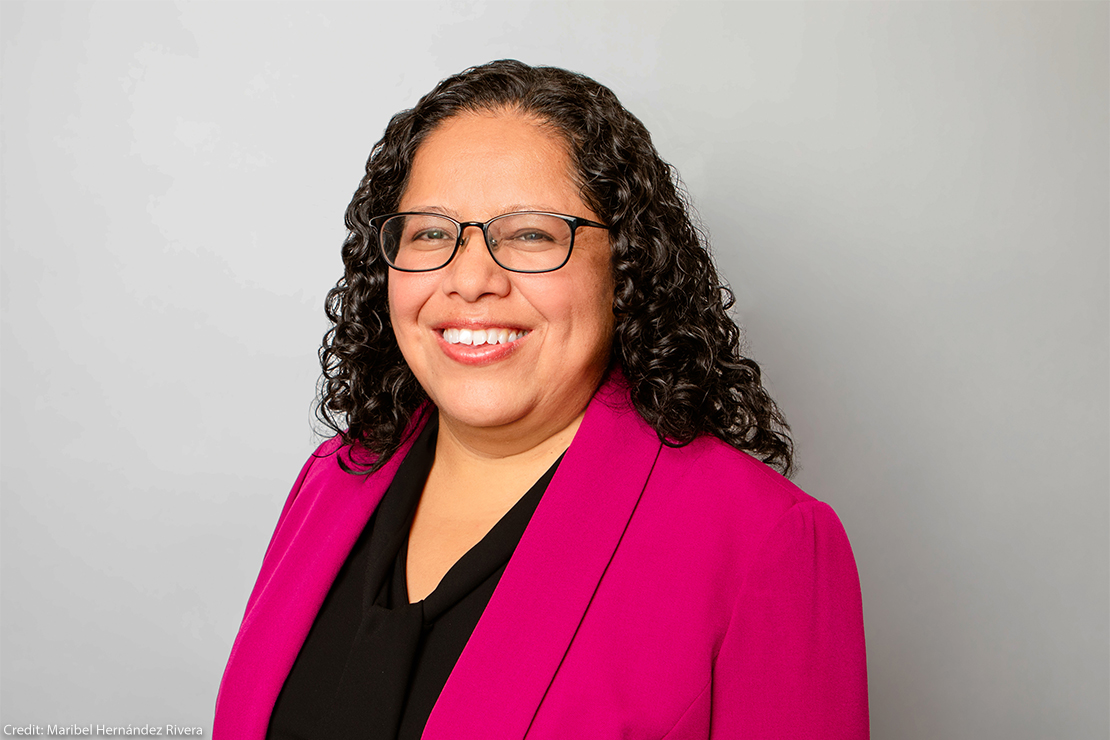
A closeup of Maribel Hernández Rivera.

Maribel Hernández Rivera

“I thought that if I was sent back to Mexico, I was going to work as a luggage carrier in the airport. In that case, knowing English would guarantee me a good tip,” she laughs.

While she jokes about it now, reality was much more serious for Hernández Rivera and her family. In 2006, her father died in a car accident while undocumented. The authorities never notified the family of his passing. Hernández Rivera was deeply hurt by the experience. “[My father’s death] really showed how immigrants are not treated as human beings,” she says.

Today, Hernández Rivera honors her father’s legacy by fighting for increased rights, dignity and compassion for the immigrant community. Many people come to the states fleeing violence, or seeking greater opportunity for themselves and the families they were forced to leave behind. But once in the U.S., Hernández Rivera points out, there exists few pathways for legal citizenship and the threat of deportation always looms large. In her own family, Hernández Rivera has seen just how quickly a new life in the states can be taken away.

Hernández Rivera’s husband, Giddel Contreras, has temporary protected status (TPS), which gives immigrants time-limited permission to live and work in the U.S. When Donald Trump was elected in 2016, he vowed to end TPS for millions. If her husband was deported, Hernández Rivera had to decide whether to go with him to Honduras, possibly facing the same violence that led to the deaths of some of his family members, or to stay in the U.S. and support her mother and step-father. Either choice would rip her family in two.

To her great relief, the first Trump administration was not able to eliminate this vital protection. Today, however, Trump has vowed to be more aggressive in his efforts to deport millions of people. Giddel’s TPS status expires this summer and Hernández Rivera finds herself returning to what she has done since she was a child: Making plans for how to survive uncertainty.

“Trump upended our lives the first time around,” Hernández Rivera says. “I know that the second time around, I have to be even more prepared.”

Hernández Rivera’s fight for her family’s safety mirrors her fight for all immigrants. At the ACLU, alongside her legal and advocacy colleagues, Hernández Rivera is working to build a civil rights firewall to protect residents to the full extent possible, including safeguarding asylum access, ending unlawful detention and mobilizing communities to take action. As a native Spanish speaker, Hernández Rivera helps communicate this plan to the communities most impacted by the Trump administration’s draconian policies. Whether it's sharing links on social media or doing an interview in Spanish, Hernández Rivera wants the word out that there is a movement fighting for the immigrant community.

“I get asked every day about how to get ready, what can I do?” Hernández Rivera says. “I must step up, for me, my family and my community. We have to be in this together. This is the moment to be 100 percent in.”

Our series, Behind the Fight for Our Rights, asks individuals defending our freedoms how they’re thinking about the next four years. Below, Hernández Rivera shares insight into her life – both professional and personal – under the Trump administration.

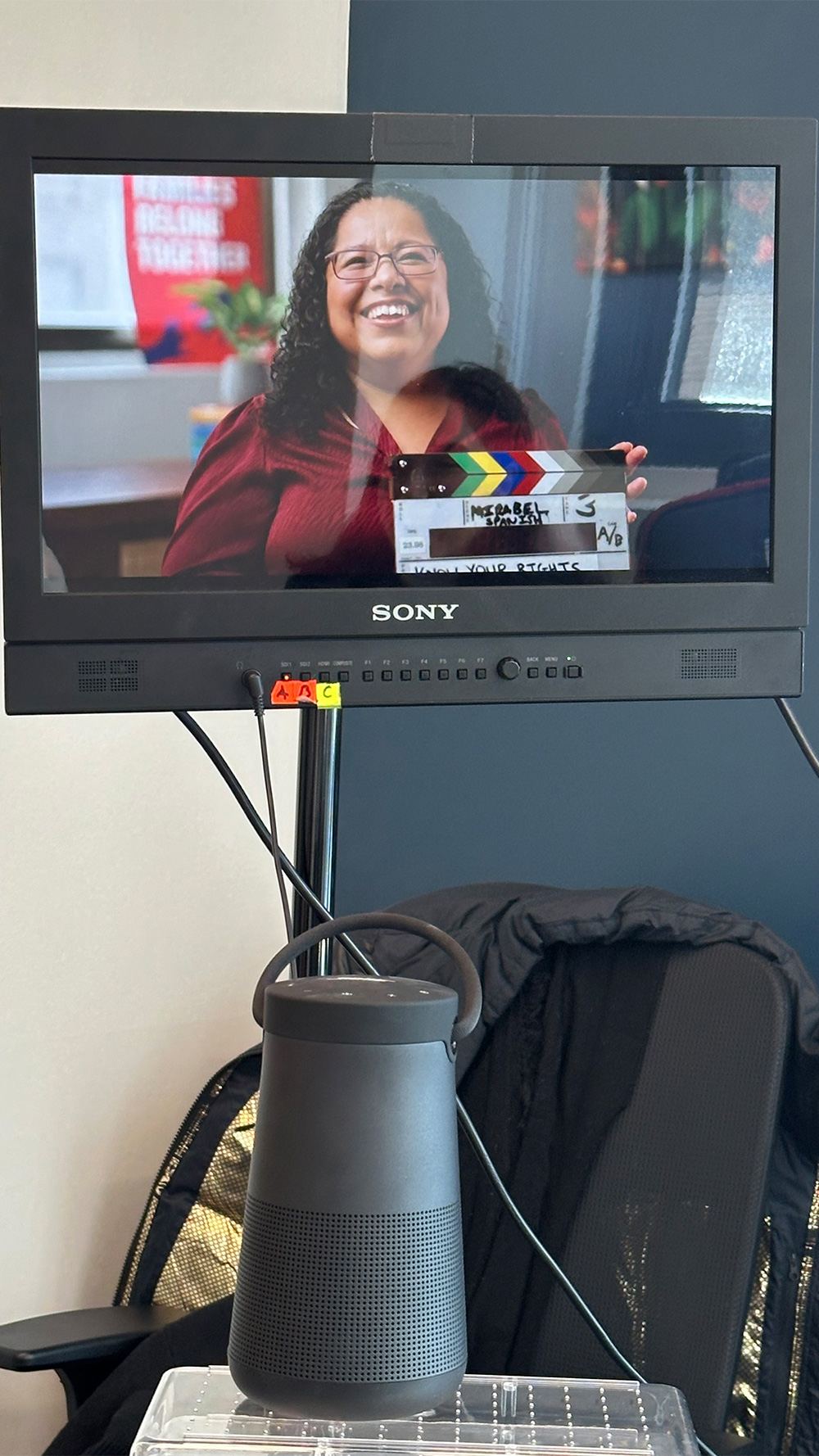
Maribel Hernández Rivera on a monitor.

ACLU: What are you most looking forward to in the next four years?

HERNÁNDEZ RIVERA: I know it’s going to be a very difficult four years, but I also know our community is going to come together. I look forward to fighting side by side with our community.

ACLU: What is the biggest challenge you’re expecting in the next four years?

HERNÁNDEZ RIVERA: We know the Trump administration’s policies will be far more cruel than before. The biggest challenge will be losing loved ones to Trump’s deportation machine.

ACLU: What do you wish people knew more about the fight for immigrants’ rights

HERNÁNDEZ RIVERA: I wish people kept in mind that when we talk about immigration, we’re talking about parents, children, neighbors, and community members. It’s not easy to come to the U.S and it's not easy to fix your immigration status.

ACLU: What is one thing you wish you knew about the fight for immigrants’ rights

HERNÁNDEZ RIVERA: I wish I knew that those making the decisions cared about and understood the human consequences of their actions.


Published January 16, 2025 at 08:45PM
via ACLU https://ift.tt/0faWXnZ