Wednesday, 29 September 2021

ACLU: Our Leaders Have the Power to Decarcerate and Save Lives, But Where is the Will? | American Civil Liberties Union

Our Leaders Have the Power to Decarcerate and Save Lives, But Where is the Will? | American Civil Liberties Union

Research shows that reductions in the United States incarceration rate would have prevented millions of COVID-19 cases and tens of thousands of deaths, both inside jails and prisons and in their surrounding communities. For those of us working with incarcerated people during the pandemic, this confirms what we already know: decarceration will save lives and is a vital part of pandemic response. So why, with the Delta variant tearing through the country and a new, vaccine resistant variant discovered, are we not seeing more releases?

In part, this is due to a failure in leadership. Massachusetts Supreme Court Chief Justice Ralph Gants explained the dilemma in his comments on a lawsuit to increase releases from the state’s detention facilities: “We’ve got the governor saying, ‘Not my problem, I shouldn’t be ordered to do something.’ We’ve got the Department of Correction saying, ‘We manage the prisons, the only thing we’re involved with is medical parole,’ and now we’ve got the parole board saying that it’s not their problem. So who’s supposed to do it?” Justice Gants asked.

COVID releases that did occur prove that a range of government actors have the power to release people when they deem it appropriate. This is not a question of authority; it is a question of will.

Governors have the power to commute sentences, as they did everywhere from Washington state to North Carolina. State legislatures can pass bills to release people early, as New Jersey’s did. Corrections departments can expedite releases or release people early, as many states, including Wisconsin and Iowa’s, did. State courts can identify people for early release or appoint special masters to do this as they did in Maryland and Hawaii, or expand those eligible for release hearings as in Massachusetts. Federal courts can act similarly, as when a federal judge ordered federal immigration authorities to immediately release people from Pennsylvania prisons. Criminal judicial systems, superior courts, and district attorneys can adopt policies that fix the presumptive bail amount for certain charged offenses at $0, so that people are not locked in jails due to their poverty and inability to raise enough money to buy their freedom pending trial.

With thousands dead from COVID-19 in U.S. jails, prisons, and immigration detention centers, the failure of officials with the authority to release people to do so is inexcusable. The evidence shows that when jails, prisons, and immigration detention centers reduced the number of people locked up, public safety did not suffer, and that releases save lives.

While ensuring vaccine access is vital, it is not a substitute for decarceration. Breakthrough infections remain a danger even for those who are vaccinated, and vaccinated people are still able to spread the disease to others, including those who are unable to be vaccinated. During a July COVID-19 outbreak in a highly-vaccinated Texas federal prison, for example, 70 percent of vaccinated people were infected, along with 93 percent of unvaccinated people in the prison.

Carceral settings, communal living spaces that often have tight quarters and poor ventilation, are an ideal environment for spreading the highly infectious Delta variant, and the discovery of the vaccine-resistant Mu variant further proves the danger of relying on vaccines alone. The World Health Organization has emphasized the “need to do everything possible to stop the spread of the virus in order to prevent mutations that may reduce the efficacy of existing vaccines.”

As the U.S. battles the latest wave of the COVID-19 pandemic, we need to learn from the mistakes of the first waves, including the failure to release large numbers of people from the prisons, jails, and detention centers that became hotbeds for the virus. Judges, elected officials, and correctional officers have a choice to make as they respond to this wave. They can choose to value public health and the safety of incarcerated people over the will to punish no matter the cost.

What you can do:
4,000 People Could Be Sent Back to Prison. Contact Biden Now.
Send your message


Published September 29, 2021 at 09:54PM
via ACLU https://ift.tt/3CUiYiv

ACLU: Our Leaders Have the Power to Decarcerate and Save Lives, But Where is the Will? | American Civil Liberties Union

Our Leaders Have the Power to Decarcerate and Save Lives, But Where is the Will? | American Civil Liberties Union

Research shows that reductions in the United States incarceration rate would have prevented millions of COVID-19 cases and tens of thousands of deaths, both inside jails and prisons and in their surrounding communities. For those of us working with incarcerated people during the pandemic, this confirms what we already know: decarceration will save lives and is a vital part of pandemic response. So why, with the Delta variant tearing through the country and a new, vaccine resistant variant discovered, are we not seeing more releases?

In part, this is due to a failure in leadership. Massachusetts Supreme Court Chief Justice Ralph Gants explained the dilemma in his comments on a lawsuit to increase releases from the state’s detention facilities: “We’ve got the governor saying, ‘Not my problem, I shouldn’t be ordered to do something.’ We’ve got the Department of Correction saying, ‘We manage the prisons, the only thing we’re involved with is medical parole,’ and now we’ve got the parole board saying that it’s not their problem. So who’s supposed to do it?” Justice Gants asked.

COVID releases that did occur prove that a range of government actors have the power to release people when they deem it appropriate. This is not a question of authority; it is a question of will.

Governors have the power to commute sentences, as they did everywhere from Washington state to North Carolina. State legislatures can pass bills to release people early, as New Jersey’s did. Corrections departments can expedite releases or release people early, as many states, including Wisconsin and Iowa’s, did. State courts can identify people for early release or appoint special masters to do this as they did in Maryland and Hawaii, or expand those eligible for release hearings as in Massachusetts. Federal courts can act similarly, as when a federal judge ordered federal immigration authorities to immediately release people from Pennsylvania prisons. Criminal judicial systems, superior courts, and district attorneys can adopt policies that fix the presumptive bail amount for certain charged offenses at $0, so that people are not locked in jails due to their poverty and inability to raise enough money to buy their freedom pending trial.

With thousands dead from COVID-19 in U.S. jails, prisons, and immigration detention centers, the failure of officials with the authority to release people to do so is inexcusable. The evidence shows that when jails, prisons, and immigration detention centers reduced the number of people locked up, public safety did not suffer, and that releases save lives.

While ensuring vaccine access is vital, it is not a substitute for decarceration. Breakthrough infections remain a danger even for those who are vaccinated, and vaccinated people are still able to spread the disease to others, including those who are unable to be vaccinated. During a July COVID-19 outbreak in a highly-vaccinated Texas federal prison, for example, 70 percent of vaccinated people were infected, along with 93 percent of unvaccinated people in the prison.

Carceral settings, communal living spaces that often have tight quarters and poor ventilation, are an ideal environment for spreading the highly infectious Delta variant, and the discovery of the vaccine-resistant Mu variant further proves the danger of relying on vaccines alone. The World Health Organization has emphasized the “need to do everything possible to stop the spread of the virus in order to prevent mutations that may reduce the efficacy of existing vaccines.”

As the U.S. battles the latest wave of the COVID-19 pandemic, we need to learn from the mistakes of the first waves, including the failure to release large numbers of people from the prisons, jails, and detention centers that became hotbeds for the virus. Judges, elected officials, and correctional officers have a choice to make as they respond to this wave. They can choose to value public health and the safety of incarcerated people over the will to punish no matter the cost.

What you can do:
4,000 People Could Be Sent Back to Prison. Contact Biden Now.
Send your message


Published September 30, 2021 at 02:24AM
via ACLU https://ift.tt/3CUiYiv

ACLU: Family Surveillance by Algorithm: The Rapidly Spreading Tools Few Have Heard Of

Family Surveillance by Algorithm: The Rapidly Spreading Tools Few Have Heard Of

Last month, police took American Idol finalist Syesha Mercado’s days-old newborn Ast away because she had not reported her daughter’s birth to authorities, while she was still fighting to regain custody of her son from the state. In February 2021, Syesha had taken her 13-month-old son Amen’Ra to a hospital because he had difficulty transitioning from breast milk to formula and was refusing to eat. What should have been an ordinary medical visit for a new mom prompted a state-contracted child abuse pediatrician with a known history of wrongfully reporting medical conditions as child abuse to call child welfare. Authorities took custody of Amen’Ra on the grounds that Syesha had neglected him. Syesha has been reunited with Ast after substantial media attention and public outrage, but continues to fight for the return of Amen’Ra.

Meanwhile, it took over a year and a half for Erin Yellow Robe, a member of the Crow Creek Sioux Tribe, to be reunited with her children. Based on an unsubstantiated rumor that Erin was misusing prescription pills, authorities took custody of her children and placed them with white foster parents — despite the federal Indian Child Welfare Act’s requirements and the willingness of relatives and tribal members to care for the children.

For white families, these scenarios typically do not lead to child welfare involvement. For Black and Indigenous families, they often lead to years — potentially a lifetime — of ensnarement in the child welfare system or, as some are now more appropriately calling it, the family regulation system.

Child Welfare as Disparate Policing

Our country’s latest reckoning with structural racism has involved critical reflection on the role of the criminal justice system, education policy, and housing practices in perpetuating racial inequity. The family regulation system needs to be added to this list, along with the algorithms working behind the scenes. That’s why the ACLU has conducted a nationwide survey to learn more about these tools.

Women and children who are Indigenous, Black, or experiencing poverty are disproportionately placed under child welfare’s scrutiny. Once there, Indigenous and Black families fare worse than their white counterparts at nearly every critical step. These disparities are partly the legacy of past social practices and government policies that sought to tear apart Indigenous and Black families. But the disparities are also the result of the continued policing of women in recent years through child welfare practices, public benefits laws, the failed war on drugs, and other criminal justice policies that punish women who fail to conform to particular conceptions of “fit mothers.”

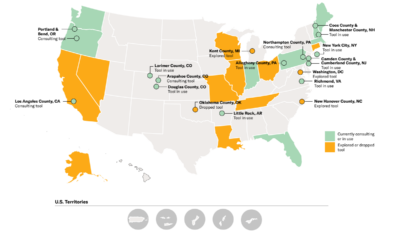
Map of the U.S. states and territories indicating jurisdictions in at least half of U.S. states have considered using predictive analytics in child welfare decisions.

Turning to Predictive Analytics for Solutions

Many child welfare agencies have begun turning to risk assessment tools for reasons ranging from wanting the ability to predict which children are at higher risk for maltreatment to improving agency operations. Allegheny County, Pennsylvania has been using the Allegheny Family Screening Tool (AFST) since 2016. The AFST generates a risk score for complaints received through the county’s child maltreatment hotline by looking at whether certain characteristics of the agency’s past cases are also present in the complaint allegations. Key among these characteristics are family member demographics and prior involvement with the county’s child welfare, jail, juvenile probation, and behavioral health systems. Intake staff then use this risk score as an aide in deciding whether or not to follow up on a complaint with a home study or a formal investigation, or to dismiss it outright.

Like their criminal justice analogues, however, child welfare risk assessment tools do not predict the future. For instance, a recidivism risk assessment tool measures the odds that a person will be arrested in the future, not the odds that they will actually commit a crime. Just as being under arrest doesn’t necessarily mean you did something illegal, a child’s removal from the home, often the target of a prediction model, doesn’t necessarily mean a child was in fact maltreated.

We examined how many jurisdictions across the 50 states, D.C., and U.S. territories are using one category of predictive analytics tools: models that systematically use data collected by jurisdictions’ public agencies to attempt to predict the likelihood that a child in a given situation or location will be maltreated. Here’s what we found:

  • Local or state child welfare agencies in at least 26 states plus D.C. have considered using such predictive tools. Of these, jurisdictions in at least 11 states are currently using them.
  • Large jurisdictions like New York City, Oregon, and Allegheny County have been using predictive analytics for several years now.
  • Some tools currently in use, such as the AFST, are used when deciding whether to refer a complaint for further agency action, while others are used to flag open cases for closer review because the tool deems them to be higher-risk scenarios.

The Flaws of Predictive Analytics

Despite the growing popularity of these tools, few families or advocates have heard about them, much less provided meaningful input into their development and use. Yet countless policy choices and value judgments are made in the course of creating and using the tool, any or all of which can impact whether the tool promotes “fairness” or reduces racial disproportionality in agency action.

Moreover, like the tools we have seen in the criminal legal system, any tool built from a jurisdiction’s historical data runs the risk of continuing and increasing existing bias. Historically over-regulated and over-separated communities may get caught in a feedback loop that quickly magnifies the biases in these systems. Who decides what “high risk” means? When a caseworker sees a “high” risk score for a Black person, do they respond in the same way as they would for a white person?

Ultimately, we must ask whether these tools are the best way to spend hundreds of thousands, if not millions of dollars, when such funds are urgently needed to help families avoid the crises that lead to abuse and neglect allegations.

What the ACLU is Doing

It’s critical that we interrogate these tools before they become entrenched, as they have in the criminal justice system. Information about the data used to create a predictive algorithm, the policy choices embedded in the tool, and the tool’s impact both system-wide and in individual cases are some of the things that should be disclosed to the public before a tool is adopted and throughout its use. In addition to such transparency, jurisdictions need to make available opportunities to question and contest a tool’s implementation or application in a specific instance if our policymakers and elected officials are to be held accountable for the rules and penalties enforced through such tools.

In this vein, the ACLU has requested data from Allegheny County and other jurisdictions to independently evaluate the design and impact of their predictive analytics tools and any measures they may be taking to address fairness, due process, and civil liberty concerns.

It’s time that all of us ask our local policymakers to end the unnecessary and harmful policing of families through the family regulation system.

Read the full white paper:

https://www.aclu.org/fact-sheet/family-surveillance-algorithm

We need you with us to keep fighting
Donate today

Published September 30, 2021 at 01:37AM
via ACLU https://ift.tt/3ihfHlk

ACLU: Family Surveillance by Algorithm: The Rapidly Spreading Tools Few Have Heard Of

Family Surveillance by Algorithm: The Rapidly Spreading Tools Few Have Heard Of

Last month, police took American Idol finalist Syesha Mercado’s days-old newborn Ast away because she had not reported her daughter’s birth to authorities, while she was still fighting to regain custody of her son from the state. In February 2021, Syesha had taken her 13-month-old son Amen’Ra to a hospital because he had difficulty transitioning from breast milk to formula and was refusing to eat. What should have been an ordinary medical visit for a new mom prompted a state-contracted child abuse pediatrician with a known history of wrongfully reporting medical conditions as child abuse to call child welfare. Authorities took custody of Amen’Ra on the grounds that Syesha had neglected him. Syesha has been reunited with Ast after substantial media attention and public outrage, but continues to fight for the return of Amen’Ra.

Meanwhile, it took over a year and a half for Erin Yellow Robe, a member of the Crow Creek Sioux Tribe, to be reunited with her children. Based on an unsubstantiated rumor that Erin was misusing prescription pills, authorities took custody of her children and placed them with white foster parents — despite the federal Indian Child Welfare Act’s requirements and the willingness of relatives and tribal members to care for the children.

For white families, these scenarios typically do not lead to child welfare involvement. For Black and Indigenous families, they often lead to years — potentially a lifetime — of ensnarement in the child welfare system or, as some are now more appropriately calling it, the family regulation system.

Child Welfare as Disparate Policing

Our country’s latest reckoning with structural racism has involved critical reflection on the role of the criminal justice system, education policy, and housing practices in perpetuating racial inequity. The family regulation system needs to be added to this list, along with the algorithms working behind the scenes. That’s why the ACLU has conducted a nationwide survey to learn more about these tools.

Women and children who are Indigenous, Black, or experiencing poverty are disproportionately placed under child welfare’s scrutiny. Once there, Indigenous and Black families fare worse than their white counterparts at nearly every critical step. These disparities are partly the legacy of past social practices and government policies that sought to tear apart Indigenous and Black families. But the disparities are also the result of the continued policing of women in recent years through child welfare practices, public benefits laws, the failed war on drugs, and other criminal justice policies that punish women who fail to conform to particular conceptions of “fit mothers.”

Map of the U.S. states and territories indicating jurisdictions in at least half of U.S. states have considered using predictive analytics in child welfare decisions.

Turning to Predictive Analytics for Solutions

Many child welfare agencies have begun turning to risk assessment tools for reasons ranging from wanting the ability to predict which children are at higher risk for maltreatment to improving agency operations. Allegheny County, Pennsylvania has been using the Allegheny Family Screening Tool (AFST) since 2016. The AFST generates a risk score for complaints received through the county’s child maltreatment hotline by looking at whether certain characteristics of the agency’s past cases are also present in the complaint allegations. Key among these characteristics are family member demographics and prior involvement with the county’s child welfare, jail, juvenile probation, and behavioral health systems. Intake staff then use this risk score as an aide in deciding whether or not to follow up on a complaint with a home study or a formal investigation, or to dismiss it outright.

Like their criminal justice analogues, however, child welfare risk assessment tools do not predict the future. For instance, a recidivism risk assessment tool measures the odds that a person will be arrested in the future, not the odds that they will actually commit a crime. Just as being under arrest doesn’t necessarily mean you did something illegal, a child’s removal from the home, often the target of a prediction model, doesn’t necessarily mean a child was in fact maltreated.

We examined how many jurisdictions across the 50 states, D.C., and U.S. territories are using one category of predictive analytics tools: models that systematically use data collected by jurisdictions’ public agencies to attempt to predict the likelihood that a child in a given situation or location will be maltreated. Here’s what we found:

  • Local or state child welfare agencies in at least 26 states plus D.C. have considered using such predictive tools. Of these, jurisdictions in at least 11 states are currently using them.
  • Large jurisdictions like New York City, Oregon, and Allegheny County have been using predictive analytics for several years now.
  • Some tools currently in use, such as the AFST, are used when deciding whether to refer a complaint for further agency action, while others are used to flag open cases for closer review because the tool deems them to be higher-risk scenarios.

The Flaws of Predictive Analytics

Despite the growing popularity of these tools, few families or advocates have heard about them, much less provided meaningful input into their development and use. Yet countless policy choices and value judgments are made in the course of creating and using the tool, any or all of which can impact whether the tool promotes “fairness” or reduces racial disproportionality in agency action.

Moreover, like the tools we have seen in the criminal legal system, any tool built from a jurisdiction’s historical data runs the risk of continuing and increasing existing bias. Historically over-regulated and over-separated communities may get caught in a feedback loop that quickly magnifies the biases in these systems. Who decides what “high risk” means? When a caseworker sees a “high” risk score for a Black person, do they respond in the same way as they would for a white person?

Ultimately, we must ask whether these tools are the best way to spend hundreds of thousands, if not millions of dollars, when such funds are urgently needed to help families avoid the crises that lead to abuse and neglect allegations.

What the ACLU is Doing

It’s critical that we interrogate these tools before they become entrenched, as they have in the criminal justice system. Information about the data used to create a predictive algorithm, the policy choices embedded in the tool, and the tool’s impact both system-wide and in individual cases are some of the things that should be disclosed to the public before a tool is adopted and throughout its use. In addition to such transparency, jurisdictions need to make available opportunities to question and contest a tool’s implementation or application in a specific instance if our policymakers and elected officials are to be held accountable for the rules and penalties enforced through such tools.

In this vein, the ACLU has requested data from Allegheny County and other jurisdictions to independently evaluate the design and impact of their predictive analytics tools and any measures they may be taking to address fairness, due process, and civil liberty concerns.

It’s time that all of us ask our local policymakers to end the unnecessary and harmful policing of families through the family regulation system.

Read the full white paper:

https://www.aclu.org/fact-sheet/family-surveillance-algorithm

We need you with us to keep fighting
Donate today

Published September 29, 2021 at 09:07PM
via ACLU https://ift.tt/3ihfHlk

Tuesday, 28 September 2021

ACLU: Understaffed, Unsanitary ICE Facility in New Mexico Fails Annual Inspection

Understaffed, Unsanitary ICE Facility in New Mexico Fails Annual Inspection

This piece originally appeared on the ACLU of New Mexico’s blog.

The privately-run ICE detention center in Torrance County, New Mexico failed its government inspection earlier this year, with a newly released report finding severe understaffing, unsanitary food, and visitation rules that were inaccessible to people with no money, among other complaints.

The failed inspection is the latest in a series of troubling news for the Torrance County Detention Center, which earlier this year reported a massive COVID-19 outbreak among detainees and staff, as well as reports of guards using harsh chemical agents in response to a peaceful hunger strike protesting conditions at the facility.

The Torrance detention center in Estancia, southeast of Albuquerque, detains male migrants for ICE and the U.S. Marshals Service, as well as men and women for Torrance County. It is managed by CoreCivic, a private for-profit prison corporation based in Nashville, Tenn. The inspection was conducted from July 27 through 29 by The Nakamoto Group, a private contractor that inspects ICE detention facilities. ICE has 60 days from the completion to post the results online.

Allegra Love, an attorney with the El Paso Immigration Collaborative who has worked with detained migrants at Torrance and other ICE facilities, said The Nakamoto Group inspections are notoriously friendly to the facilities and failures are rare.

“I’m surprised that they failed the inspection because I’ve worked in detention centers for the last seven years and they’re all really terrible,” Love said. “You’re never at one that is good or that treats their detainees well, but they all pass their inspections.”

ICE and CoreCivic did not respond to requests for comments about the inspection, which found the facility “does not meet standards.”

During their July review of Torrance, The Nakamoto Group inspectors found 22 deficiencies in how ICE detainees were held, including four categorized as deficiencies in priority components.

Among the most concerning for Love is severe understaffing. Although not a specific deficiency, inspectors noted that “the current staffing level is at 50 percent of the authorized correction/security positions. Staff is currently working mandatory overtime shifts.”

Love said she’s had trouble connecting with a client at the facility, with a staff member saying it would take two weeks just to schedule a legal call. Lack of staff, she said, is a security concern.

“This is not a greenhouse or coffee shop,” she said. “They’re in charge of people’s well-being and safety.”

Twelve of the complaints cited by investigators focused on food preparation, including safety and sanitation concerns with how food was prepared and presented. Food service should be “under the direct supervision of an experienced food service administrator,” the report said. Inspectors also found the facility’s dishwasher wasn’t hot enough to actually sanitize dishes.

That didn’t surprise ​​Ernesto Rodrigo Callado, who was detained for 10 months at Torrance and even worked in the kitchen for a time. The food, he said, was often flavorless and undercooked and was a constant source of complaints.

“The beans were hard, you could throw them at the wall three times and if you kept going you’d break the wall,” Callado said. “They made rice that tasted like going to the yard and eating dirt.”

He said except for a few dishes he tried to prepare his own meals and buy food from the commissary instead.

Alvaro, who asked that his real name not be used for fear of retaliation from immigration authorities, said he also worked in the Torrance kitchen and noticed food that smelled bad. People often had stomach aches that he attributed to the food.

“Just because we’re immigrants doesn’t mean we have to eat like dogs,” he said.

Inspectors also found deficiencies in visitation access. During the COVID-19 pandemic, the facility replaced general in-person visits with paid video calls through tablets, making them inaccessible for detainees without money.

Callado said the tablets were often slow to load and even just waiting for a photo his family had sent him to load could quickly become unaffordable.

The report also noted grievance paperwork and medical grievances were not being maintained properly in detainees’ files and directed the facility to ensure grievances are filed as required. ICE received 43 grievances from detainees at Torrance in the year leading up to the late July inspection, two-thirds of which have been substantiated.

The two other ICE detention facilities in New Mexico, in Otero and Cibola counties, passed their inspections from The Nakomoto Group in January and May respectively.

The ACLU previously called for the closure of the Otero County Processing Center for its long history of inhumane treatment, including denial of access to medical care, retaliatory use of solitary confinement and more. And last year Reuters uncovered numerous unanswered calls for medical attention, inadequate mental health treatment and quarantining procedures and more at Cibola County Correctional Center’s now-closed transgender detainee unit.

Earlier this year, the ACLU of New Mexico filed a lawsuit alongside the New Mexico Immigrant Law Center on behalf of nine former Torrance detainees and the Santa Fe Dreamers Project against CoreCivic and Torrance County. The lawsuit alleged CoreCivic sprayed the men with chemical agents in response to a peaceful hunger strike. The men were protesting inadequate precautions against COVID-19, poor living conditions, and the withholding of status updates on their immigration cases.

Zoila Alvarez Hernández, an immigrant rights attorney at the ACLU of New Mexico, said The Nakamoto Group was correct to fail Torrance after all of the issues at the facility.

“I’m pleasantly surprised that a third-party vendor that (ICE) contracted actually did their job and reported it,” she said. “However, I am not optimistic that CoreCivic and Torrance County will take corrective action to address the deficiencies that were pointed out in the inspection.”

In late May, the Santa Fe New Mexican reported a COVID-19 outbreak at the facility, which by then had infected 110 detainees and 16 staff members. There have been 370 COVID cases among people detained by ICE at Torrance, according to the federal agency.

By late May, during the COVID-19 outbreak, Torrance had an average daily population of 29 people in immigration custody, according to data from the nonprofit Transactional Records Access Clearinghouse. By late August, the average daily population was up to 126.

For Love, that raises the question of why detainees were sent to Torrance if it wasn’t adequately staffed, among the other deficiencies noted in the inspection.

“Why are they still there,” she said, “if we can’t meet their very, very, very basic needs?”

What you can do:
Congress: Divest from ICE and Stop Abuses
Send your message


Published September 29, 2021 at 01:39AM
via ACLU https://ift.tt/3F2iZmr

ACLU: Understaffed, Unsanitary ICE Facility in New Mexico Fails Annual Inspection

Understaffed, Unsanitary ICE Facility in New Mexico Fails Annual Inspection

This piece originally appeared on the ACLU of New Mexico’s blog.

The privately-run ICE detention center in Torrance County, New Mexico failed its government inspection earlier this year, with a newly released report finding severe understaffing, unsanitary food, and visitation rules that were inaccessible to people with no money, among other complaints.

The failed inspection is the latest in a series of troubling news for the Torrance County Detention Center, which earlier this year reported a massive COVID-19 outbreak among detainees and staff, as well as reports of guards using harsh chemical agents in response to a peaceful hunger strike protesting conditions at the facility.

The Torrance detention center in Estancia, southeast of Albuquerque, detains male migrants for ICE and the U.S. Marshals Service, as well as men and women for Torrance County. It is managed by CoreCivic, a private for-profit prison corporation based in Nashville, Tenn. The inspection was conducted from July 27 through 29 by The Nakamoto Group, a private contractor that inspects ICE detention facilities. ICE has 60 days from the completion to post the results online.

Allegra Love, an attorney with the El Paso Immigration Collaborative who has worked with detained migrants at Torrance and other ICE facilities, said The Nakamoto Group inspections are notoriously friendly to the facilities and failures are rare.

“I’m surprised that they failed the inspection because I’ve worked in detention centers for the last seven years and they’re all really terrible,” Love said. “You’re never at one that is good or that treats their detainees well, but they all pass their inspections.”

ICE and CoreCivic did not respond to requests for comments about the inspection, which found the facility “does not meet standards.”

During their July review of Torrance, The Nakamoto Group inspectors found 22 deficiencies in how ICE detainees were held, including four categorized as deficiencies in priority components.

Among the most concerning for Love is severe understaffing. Although not a specific deficiency, inspectors noted that “the current staffing level is at 50 percent of the authorized correction/security positions. Staff is currently working mandatory overtime shifts.”

Love said she’s had trouble connecting with a client at the facility, with a staff member saying it would take two weeks just to schedule a legal call. Lack of staff, she said, is a security concern.

“This is not a greenhouse or coffee shop,” she said. “They’re in charge of people’s well-being and safety.”

Twelve of the complaints cited by investigators focused on food preparation, including safety and sanitation concerns with how food was prepared and presented. Food service should be “under the direct supervision of an experienced food service administrator,” the report said. Inspectors also found the facility’s dishwasher wasn’t hot enough to actually sanitize dishes.

That didn’t surprise ​​Ernesto Rodrigo Callado, who was detained for 10 months at Torrance and even worked in the kitchen for a time. The food, he said, was often flavorless and undercooked and was a constant source of complaints.

“The beans were hard, you could throw them at the wall three times and if you kept going you’d break the wall,” Callado said. “They made rice that tasted like going to the yard and eating dirt.”

He said except for a few dishes he tried to prepare his own meals and buy food from the commissary instead.

Alvaro, who asked that his real name not be used for fear of retaliation from immigration authorities, said he also worked in the Torrance kitchen and noticed food that smelled bad. People often had stomach aches that he attributed to the food.

“Just because we’re immigrants doesn’t mean we have to eat like dogs,” he said.

Inspectors also found deficiencies in visitation access. During the COVID-19 pandemic, the facility replaced general in-person visits with paid video calls through tablets, making them inaccessible for detainees without money.

Callado said the tablets were often slow to load and even just waiting for a photo his family had sent him to load could quickly become unaffordable.

The report also noted grievance paperwork and medical grievances were not being maintained properly in detainees’ files and directed the facility to ensure grievances are filed as required. ICE received 43 grievances from detainees at Torrance in the year leading up to the late July inspection, two-thirds of which have been substantiated.

The two other ICE detention facilities in New Mexico, in Otero and Cibola counties, passed their inspections from The Nakomoto Group in January and May respectively.

The ACLU previously called for the closure of the Otero County Processing Center for its long history of inhumane treatment, including denial of access to medical care, retaliatory use of solitary confinement and more. And last year Reuters uncovered numerous unanswered calls for medical attention, inadequate mental health treatment and quarantining procedures and more at Cibola County Correctional Center’s now-closed transgender detainee unit.

Earlier this year, the ACLU of New Mexico filed a lawsuit alongside the New Mexico Immigrant Law Center on behalf of nine former Torrance detainees and the Santa Fe Dreamers Project against CoreCivic and Torrance County. The lawsuit alleged CoreCivic sprayed the men with chemical agents in response to a peaceful hunger strike. The men were protesting inadequate precautions against COVID-19, poor living conditions, and the withholding of status updates on their immigration cases.

Zoila Alvarez Hernández, an immigrant rights attorney at the ACLU of New Mexico, said The Nakamoto Group was correct to fail Torrance after all of the issues at the facility.

“I’m pleasantly surprised that a third-party vendor that (ICE) contracted actually did their job and reported it,” she said. “However, I am not optimistic that CoreCivic and Torrance County will take corrective action to address the deficiencies that were pointed out in the inspection.”

In late May, the Santa Fe New Mexican reported a COVID-19 outbreak at the facility, which by then had infected 110 detainees and 16 staff members. There have been 370 COVID cases among people detained by ICE at Torrance, according to the federal agency.

By late May, during the COVID-19 outbreak, Torrance had an average daily population of 29 people in immigration custody, according to data from the nonprofit Transactional Records Access Clearinghouse. By late August, the average daily population was up to 126.

For Love, that raises the question of why detainees were sent to Torrance if it wasn’t adequately staffed, among the other deficiencies noted in the inspection.

“Why are they still there,” she said, “if we can’t meet their very, very, very basic needs?”

What you can do:
Congress: Divest from ICE and Stop Abuses
Send your message


Published September 28, 2021 at 09:09PM
via ACLU https://ift.tt/3F2iZmr

ACLU: Here’s What You Need to Know About the White House’s Plan to Promote Voting Access

Here’s What You Need to Know About the White House’s Plan to Promote Voting Access

Today on voter registration day, the Biden administration has a crucial opportunity to promote voting access. This past March, the Biden administration issued an executive order instructing federal agencies to put together plans to promote voting access through voter registration. The federal agencies will submit their plans to the White House this month. Especially with the innumerable attacks on the right to vote — more than 400 anti-voter bills have been introduced in 48 states during the 2021 legislative session — the Biden administration must ensure federal agencies propose and implement plans to provide robust and effective voter registration services.

The purpose of the Executive Order on Promoting Voting Access is to “protect and promote the exercise of the right to vote, eliminate discrimination and other barriers to voting, and expand access to voter registration and accurate election information” and to “ensure that registering to vote and the act of voting be made simple and easy for all those eligible to do so.” The order encourages federal agencies to embrace the original intent of the National Voter Registration Act, which dictates that the federal government be actively involved in providing voter registration services. When enacting the NVRA, Congress declared it the “duty of the federal, state, and local governments to promote the exercise of [the] right [to vote].”

Congress passed the NVRA in 1993 to address the discriminatory role voter registration plays in our elections. In the last 25 years, the NVRA has helped address this discrimination and close gaps in registration rates, particularly by requiring states to offer registration opportunities to eligible individuals who interact with state and local agencies such as DMVs and public assistance agencies. But rates of registration among Black and Brown people and low-income people are still disproportionately lower, preventing them from exercising their fundamental right to vote. President Biden’s executive order presents a great opportunity to better achieve the goals and intent of the NVRA by engaging the federal government’s many existing programs to offer eligible individuals a meaningful opportunity to register to vote.

Still, the executive order does not replace the need for federal legislation to protect the right to vote. In Shelby County v. Holder, the Voting Rights Act was weakened by the Supreme Court. The court’s 2013 decision struck down the formula used to identify which states were required to obtain prior approval from the Justice Department, gutting the heart of this landmark legislation. Then, this summer, the Supreme Court substantially weakened another part of the VRA in Brnovich v. DNC, making it more difficult for voting rights advocates to challenge racially discriminatory voting laws in court.

Biden’s executive order does not rehabilitate the VRA or address the lack of pre-clearance for states with prior records of voting discrimination — that must be addressed by Congress. We urge Congress to act now to cement the legacy of the VRA and protect the rights of all Americans by passing the John Lewis Voting Advancement Act. In the meantime, amidst voting rights attacks happening across the country, the administration’s executive order provides an unprecedented opportunity for the federal government to provide meaningful opportunities to register to vote, and expand access to the ballot for millions of Americans.

In issuing the order, the Biden administration demonstrated its strong commitment to ensuring unfettered access to the ballot. But it must see this step through. Given the lack of Congressional action thus far protecting the right to vote, it’s crucial that the administration implement this order expansively and comprehensively. Ensuring our federal agencies do all they can to expand access to voter registration is not only easy, it’s the right thing to do.

What you can do:
Congress: Protect Our Voting Rights
Send your message


Published September 28, 2021 at 07:51PM
via ACLU https://ift.tt/3APaCI9