Michigan Lawmakers Must Protect the Rights of Children and Join the Global Consensus
As of April 15, 2022, I have spent 12,075 days behind bars for a 1989 crime I was convicted of committing at age 15. It would be the first and only arrest during my childhood. Since then, I have languished behind bars for more than two-thirds of my life, living in a veritable penal tomb.
I am one of 363 people in Michigan sentenced to life without parole (LWOP) for crimes committed as children — sometimes called “juvenile lifers.” I am also the first person in Berrien County, Michigan to be charged under a 1988 law that empowered prosecutors to automatically transfer children to be tried and sentenced in adult court. Michigan ranks first in the nation as the state with the largest number of juvenile lifers.
My arrest occurred during the height of America’s tough-on-crime era when children of color were being demonized as “superpredators” and states were making it easier to impose mandatory LWOP sentences on kids that are tantamount to death-by-incarceration. More than three decades later, I am a husband, proud father to three amazing daughters, and a grandfather. I am also a journalist and social justice advocate who works at the intersection of decarceration, racial justice, and conflict resolution. This month I will turn 49 years old — my 34th birthday in prison.
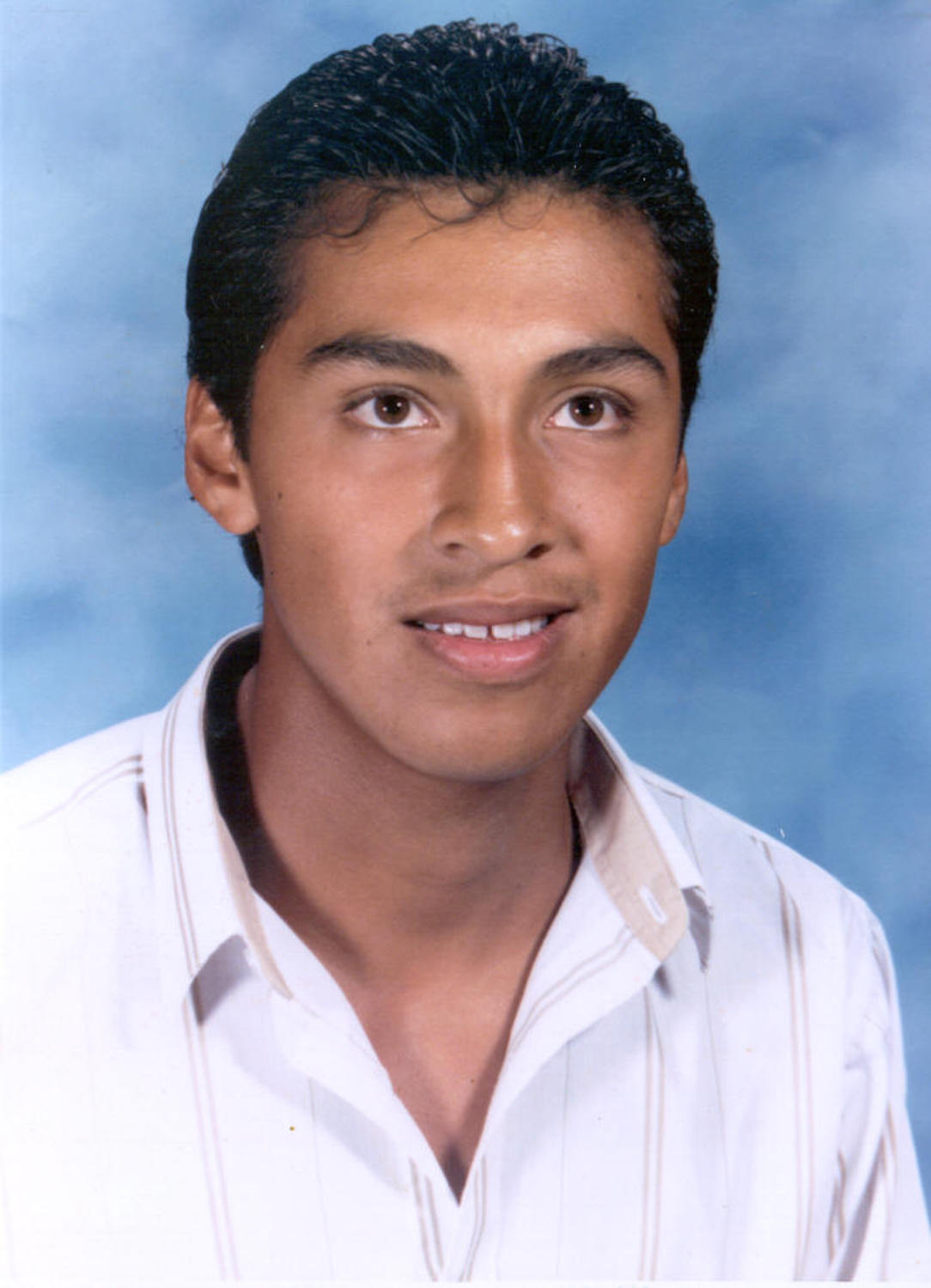
The author at 15 years old.
Like many people convicted of a crime as a child, I have accomplished a lot during my time in prison. But outdated and inhumane sentencing policies still embraced by states like Michigan continue to prevent people like me from getting a second chance to contribute all we have to offer to the world beyond bars. Now, Michigan lawmakers have a chance to change that.
Last year, the Inter-American Commission on Human Rights (IACHR) issued a historic report that analyzed the practice of sentencing children to life without parole, and called on the United States to “prohibit and abolish the sentence of life imprisonment without parole for juveniles” in Michigan and across the country. The report was issued in response to a petition filed in 2006 by the ACLU, the ACLU of Michigan, and the Columbia Law School Human Rights Institute on behalf of 32 people sentenced to life without parole in Michigan..
In its scathing analysis of Michigan’s treatment of juvenile lifers, the IACHR found “the sentencing of juveniles to life without parole … incompatible with the International Covenant on Civil and Political Rights, a human rights treaty ratified by the United States.”
The United States is the only country in the world that still sentences children to life in prison without the possibility of parole. There is a global consensus that children cannot be held to the same standards of responsibility as adults, and that they are entitled to special protection and treatment by the criminal legal system — yet the United States doesn’t do so and remains a shameful outlier.
Recognizing the inhumanity of this treatment, 25 states and the District of Columbia have outlawed life-without-parole sentences for children. In nine other states, no one is serving a juvenile LWOP sentence. But in 16 states, these sentences are still legal.
Michigan, which allows a child over the age of 13 to be sentenced to life without parole, is the worst offender. It’s a stain on our state’s reputation, and the mark of a recalcitrant throw-away mentality. It is also at odds with the growing majority of states in the country that have embraced the concepts of redemption and second chances — and the U.S. Supreme Court, which held in 2012 that mandatory life-without-parole sentences for children violate the Eighth Amendment.
Michigan lawmakers now have a chance to bring our state in line with global standards for the treatment of children convicted of serious crimes. Bills were introduced this year in both the state’s House and Senate that would ban life-without-parole sentences for juveniles. These bills (House Bills 5941-5944 and Senate Bills 848-851) all have bipartisan support, reflecting the growing consensus that second chances are imperative, especially for young people. By passing these bills, lawmakers can signal their support for rehabilitation and the eventual reintegration into society of children the state once sentenced to die in prison.
While the IACHR lacks the authority to enforce its recommendation on the U.S., its decision on LWOP sentences for children can and should influence the way Michigan and other states treat children convicted of crimes by highlighting the panoply of human rights violations they’ve been subjected to as a consequence of extreme sentences. The commission’s analysis can also be presented in courts and used to inform lawmakers why LWOP sentences for children are inhumane and misguided.
The IACHR’s report should also prompt the U.S. Senate to finally ratify the Convention on the Rights of the Child (CRC), the world’s most widely ratified treaty. The U.S. remains the only country in the world that hasn’t ratified it, the most comprehensive universal human rights treaty on children’s rights. If ratified, the CRC would prohibit life-without-parole sentences for children in all 50 states.
Michigan lawmakers don’t need another independent international commission or court ruling to tell them they are standing on the wrong side of history. It is past time for Michigan and the U.S. to catch up to the global community when it comes to protecting the rights of children and recognizing their inherent dignity. Abandoning the draconian practice of condemning children to die in prison will reflect the evolving standards of decency that mark the progress of a civilized society.
Michigan Lawmakers Must Protect the Rights of Children and Join the Global Consensus
As of April 15, 2022, I have spent 12,075 days behind bars for a 1989 crime I was convicted of committing at age 15. It would be the first and only arrest during my childhood. Since then, I have languished behind bars for more than two-thirds of my life, living in a veritable penal tomb.
I am one of 363 people in Michigan sentenced to life without parole (LWOP) for crimes committed as children — sometimes called “juvenile lifers.” I am also the first person in Berrien County, Michigan to be charged under a 1988 law that empowered prosecutors to automatically transfer children to be tried and sentenced in adult court. Michigan ranks first in the nation as the state with the largest number of juvenile lifers.
My arrest occurred during the height of America’s tough-on-crime era when children of color were being demonized as “superpredators” and states were making it easier to impose mandatory LWOP sentences on kids that are tantamount to death-by-incarceration. More than three decades later, I am a husband, proud father to three amazing daughters, and a grandfather. I am also a journalist and social justice advocate who works at the intersection of decarceration, racial justice, and conflict resolution. This month I will turn 49 years old — my 34th birthday in prison.
The author at 15 years old.
Like many people convicted of a crime as a child, I have accomplished a lot during my time in prison. But outdated and inhumane sentencing policies still embraced by states like Michigan continue to prevent people like me from getting a second chance to contribute all we have to offer to the world beyond bars. Now, Michigan lawmakers have a chance to change that.
Last year, the Inter-American Commission on Human Rights (IACHR) issued a historic report that analyzed the practice of sentencing children to life without parole, and called on the United States to “prohibit and abolish the sentence of life imprisonment without parole for juveniles” in Michigan and across the country. The report was issued in response to a petition filed in 2006 by the ACLU, the ACLU of Michigan, and the Columbia Law School Human Rights Institute on behalf of 32 people sentenced to life without parole in Michigan..
In its scathing analysis of Michigan’s treatment of juvenile lifers, the IACHR found “the sentencing of juveniles to life without parole … incompatible with the International Covenant on Civil and Political Rights, a human rights treaty ratified by the United States.”
The United States is the only country in the world that still sentences children to life in prison without the possibility of parole. There is a global consensus that children cannot be held to the same standards of responsibility as adults, and that they are entitled to special protection and treatment by the criminal legal system — yet the United States doesn’t do so and remains a shameful outlier.
Recognizing the inhumanity of this treatment, 25 states and the District of Columbia have outlawed life-without-parole sentences for children. In nine other states, no one is serving a juvenile LWOP sentence. But in 16 states, these sentences are still legal.
Michigan, which allows a child over the age of 13 to be sentenced to life without parole, is the worst offender. It’s a stain on our state’s reputation, and the mark of a recalcitrant throw-away mentality. It is also at odds with the growing majority of states in the country that have embraced the concepts of redemption and second chances — and the U.S. Supreme Court, which held in 2012 that mandatory life-without-parole sentences for children violate the Eighth Amendment.
Michigan lawmakers now have a chance to bring our state in line with global standards for the treatment of children convicted of serious crimes. Bills were introduced this year in both the state’s House and Senate that would ban life-without-parole sentences for juveniles. These bills (House Bills 5941-5944 and Senate Bills 848-851) all have bipartisan support, reflecting the growing consensus that second chances are imperative, especially for young people. By passing these bills, lawmakers can signal their support for rehabilitation and the eventual reintegration into society of children the state once sentenced to die in prison.
While the IACHR lacks the authority to enforce its recommendation on the U.S., its decision on LWOP sentences for children can and should influence the way Michigan and other states treat children convicted of crimes by highlighting the panoply of human rights violations they’ve been subjected to as a consequence of extreme sentences. The commission’s analysis can also be presented in courts and used to inform lawmakers why LWOP sentences for children are inhumane and misguided.
The IACHR’s report should also prompt the U.S. Senate to finally ratify the Convention on the Rights of the Child (CRC), the world’s most widely ratified treaty. The U.S. remains the only country in the world that hasn’t ratified it, the most comprehensive universal human rights treaty on children’s rights. If ratified, the CRC would prohibit life-without-parole sentences for children in all 50 states.
Michigan lawmakers don’t need another independent international commission or court ruling to tell them they are standing on the wrong side of history. It is past time for Michigan and the U.S. to catch up to the global community when it comes to protecting the rights of children and recognizing their inherent dignity. Abandoning the draconian practice of condemning children to die in prison will reflect the evolving standards of decency that mark the progress of a civilized society.
Alabama Wants to Criminalize Medically-Necessary Care for Trans Youth. Two Dads are Fighting Back.
Although they have never met one another, Jeff Walker and Jeff White have a lot in common. Both have called Alabama home for decades and have built their lives around raising a family there. Both were unsure about what to do when each of their daughters said, “I’m transgender.” But both of them, along with their wives, Lisa Walker and Christa White, refused to give into fear. They listened to their daughters, they learned from them and others, and above all else they continued to love and support their children.
Now, both dads fear they might have to leave their home state to do what’s best for their kids.
That’s because earlier this month, Alabama has made it a felony, punishable with up to 10 years in prison, to provide medically necessary care to trans youth. But rather than be driven out, these families are choosing to courageously challenge this unjust and harmful law.
We recently sued in Alabama on behalf of the White and Walker families to stop this law from going into effect. This is the seventh challenge to an anti-trans law we have brought since 2020, along with our lawsuit blocking Texas Gov. Greg Abbott’s directive to investigate families with trans kids for child abuse.
Even when a bill doesn’t pass or is blocked by courts, we know the consequences are grave. A leading suicide prevention organization says “the escalation of state policies that are harmful to LGBTQ people will only heighten and intensify experiences of rejection and discrimination and could lead to an increase in suicidal ideation.” Another organization reports increases in messages by LGBTQ+ youth to their crisis prevention hotline when anti-trans bills are introduced in the youth’s state. Trans youth, their parents, their doctors, and their teachers around the country are living in fear of being forced out of their state or their job.
We will continue to fight in state legislatures and courts, but the true measure of our work must be preventing these laws from being introduced in the first place.
We want more people to learn what Jeff Walker and Jeff White learned: that the medical care their daughters are receiving has been prescribed to cisgender adolescents for decades; that providing this care to transgender youth is supported by every major medical association; that this medical care is safe and effective; and when transgender youth are denied this care, it is more likely they will experience depression, struggle in school, and consider suicide.
Ultimately, like so many parents, these families decided to love their children and ensure that they are able to thrive.
The families report that when their daughters started to work with doctors, the team of health care providers were respectful, informative, and supportive. The providers assessed the girls to learn about their individual and unique needs. They gave the families truthful and unbiased information about what research has shown to be safe and effective medical care for young trans people. The families asked questions. The healthcare teams patiently answered. And, in the end, these two families decided on the best course of action to take for their kids.
Since accessing medical care, their daughters have grown more confident and are performing better in school. They are still the same people that they have always been — H.W. continues to love politics, and C.W. continues to love video games. But now, they are able to live more openly as their true selves and have become more connected with their families.
Jeff, Lisa, Jeff, and Christa are not alone. Parents around the country have spoken up in support of their transgender kids in the wake of the political and legislative attacks.
If our litigation doesn’t succeed, some families with the means to do so will move out of state to protect their kids. But many families with trans kids won’t have that option. For them, this lawsuit will determine whether they can continue to get the care they need, or whether they will be barred from accessing that care until 19, the age of majority in Alabama.
Trans youth need adults to speak up and say these attacks must end. If you want to speak up but don’t know what to say, we have a guide to talking about attacks on trans youth.
Passing bills that attack trans youth won’t stop youth from being trans, but they will stop trans youth from growing up at all.