Wednesday, 14 February 2024

ACLU: “There Was No One That Looked Like Me:” Why Diversity Matters in the Military

“There Was No One That Looked Like Me:” Why Diversity Matters in the Military

Last year, the Supreme Court overturned its prior holdings on affirmative action, effectively ending race-conscious admissions practices in most colleges and universities and, consequently, restricting the ability of schools to address systemic racial inequalities that persist in higher education. But the court’s decision was left with one exception: military service academies. Now, the same group that brought to the Supreme Court the case that overturned affirmative action, Students for Fair Admissions (SFFA), is suing the U.S. Naval Academy and West Point, alleging in two separate lawsuits that the military academies’ use of race in their admissions processes is unconstitutional.

Affirmative action at service academies is essential for confronting our military’s discriminatory history, which continues to impact service members of color. The ACLU, the ACLU of Maryland, and NYCLU, along with our partners NAACP Legal Defense Fund and the National Association of Black Military Women, filed two amicus briefs in New York and Maryland in support of affirmative action, highlighting the experiences of people of color, specifically the unique experience of Black women in the military.

We recently spoke with three veterans who are members of the National Association of Black Military Women. They shared insight into their personal experiences and challenges within the military — from facing unachievable uniform requirements to highlighting the importance of representation. Our conversation has been edited for length and clarity.

Navy Veteran Sheena Todd - 2010 - 2015
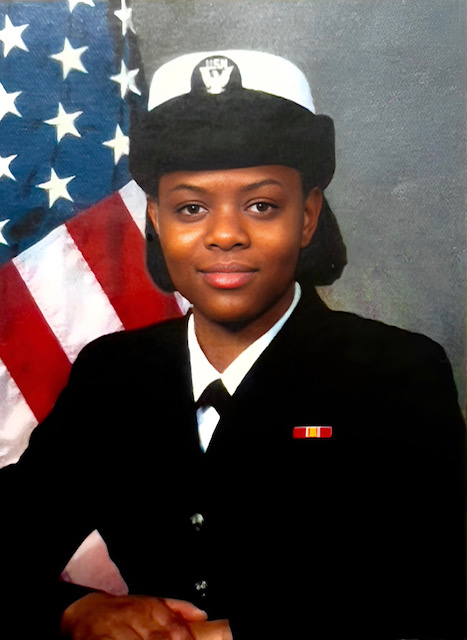
A photo of Sheena Todd.

ACLU: Could you tell us about your time in the military and why you decided to join?

Veteran Todd: I was working a few jobs, going to school, and times were tough. This was a way to get out of Detroit and also do something really amazing and scary. It was very important for me to take some time to find myself, grow up a little bit, explore the world, and see what the American dream was about. I’ve always been in jobs that were geared towards service. For me, it was just important to learn to take care of myself and then taking care of others just came naturally.

ACLU: How important is it to have military leadership that represents the diversity of service members?
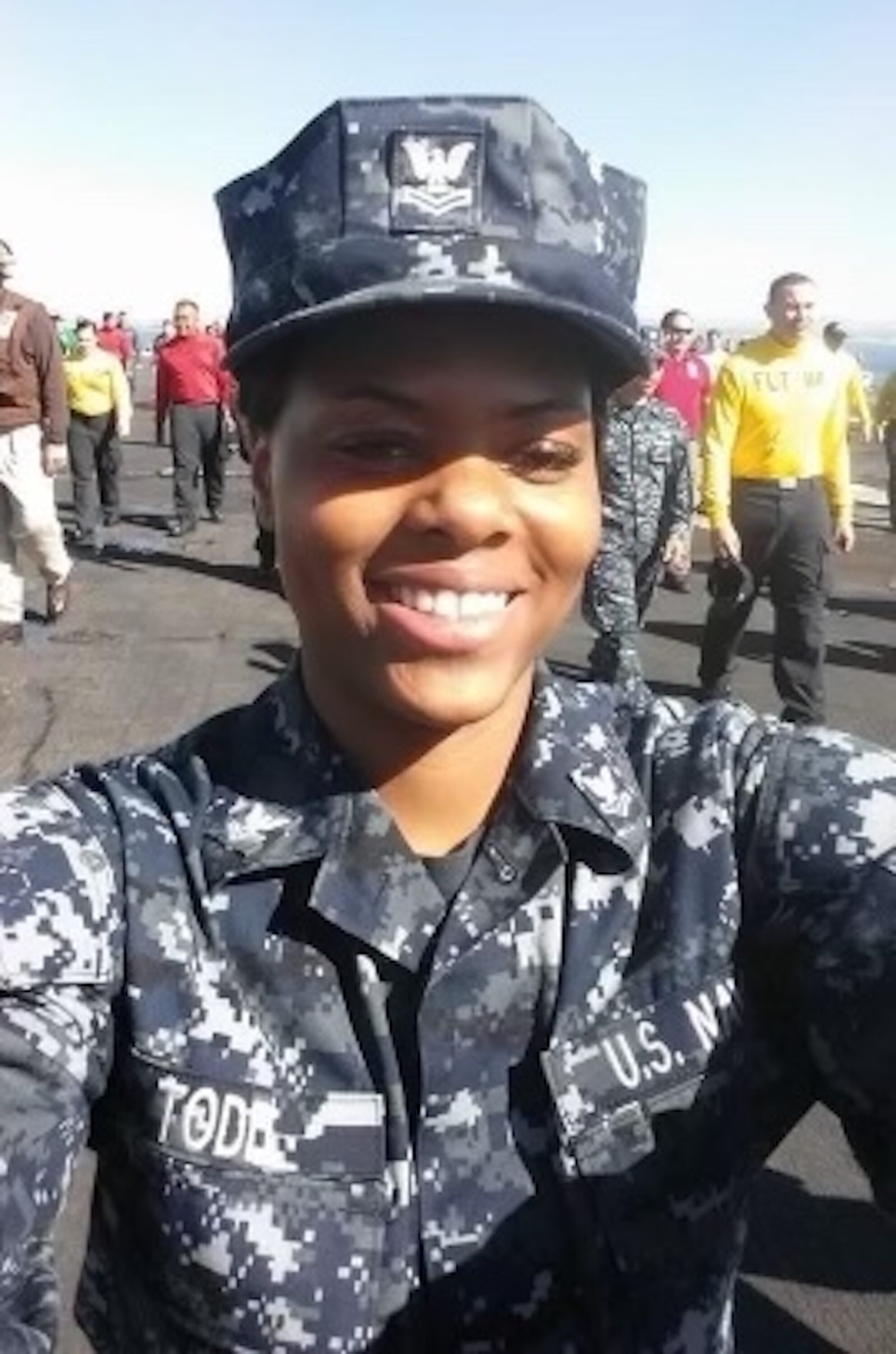
A photo of Sheena Todd.

Veteran Todd: Having a role model, mentorship, and someone who is culturally competent of what African Americans go through, while also allowing others to get some exposure to that type of leadership, is important in addressing discrimination. It definitely affects morale and the cohesion of the group to walk into a room and look around, and no one looks like you at your job, at a hearing, or at a base. It’s also super important when you think about retention and recruitment. If I am not comfortable or I’m not in a place where I feel like I’m in alignment with who I’m surrounded by, it’s really tough. You don’t feel accepted, welcomed, or valued. The other part of this is seeing what’s possible, and being able to learn from each other and what their experiences were. Seeing those positive examples and building credibility and trust with people that are not like you – that exposure opens up your mind.

ACLU: The military imposes certain uniform requirements that can disproportionately impact people of color. Did the uniform requirements affect your time in the military?

Veteran Todd: That was a big deal for me in the military. When it came to uniforms, the regulations were not put in place for us. It was put in place for people with hair that could conform to those regulations. Our hair doesn’t do that. We have to do a little more extra. I was the yeoman that kept instructions in my pocket because they were up for interpretation. I used to get stopped all the time about my hair. There was this one time where I was actually put at attention by a superior. He said I was distracting the sailors and needed to do something about myself. I didn’t have any makeup on, my hair was natural, and I had on overalls and big boots, so I didn’t know what he wanted me to change. I looked around at every other Black girl on that ship; their hair was shaved off. Then I looked at some of our counterparts who had flipped up hair and all this extra stuff. Were they getting pulled to the side? Absolutely not. I’m really glad that they began to change some of those regulations.

Retired Air Force Chief Master Sergeant Sebrena L. Flagg-Briggs - 1986 - 2021
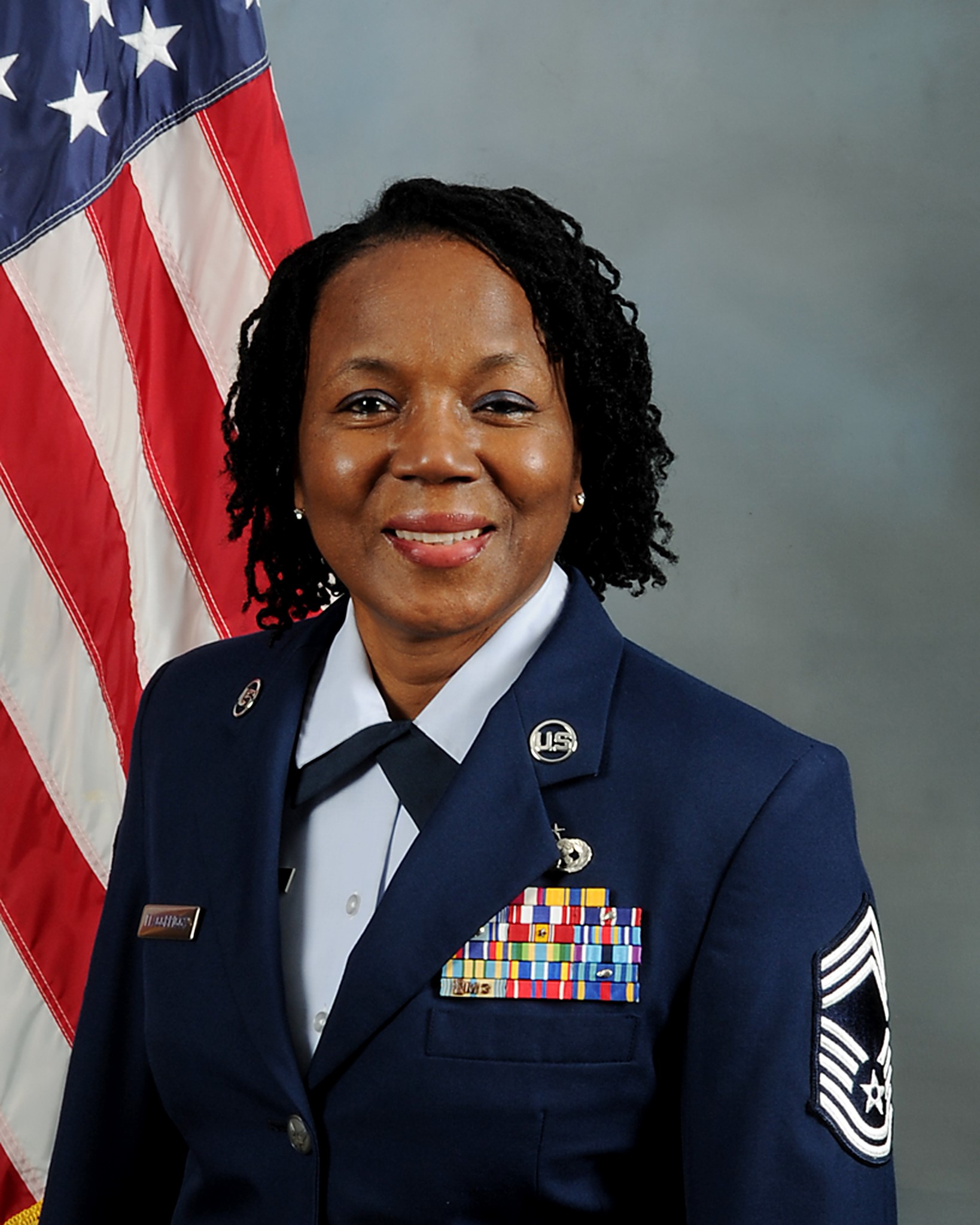
A photo of Sebrena L. Flagg-Briggs.

ACLU: Could you tell us about your time in the military and why you decided to join?

Retired Chief Master Sgt. Flagg-Briggs: It was rewarding. It was awesome and it was tough. I joined the military because I wanted to do more for my community. I felt the need to serve others and in my mind, the best way was to serve my country. I would be serving everybody by joining the military.

ACLU: Our amicus highlights that people of color collectively make up as much as 37 percent of the enlisted ranks, but only 14.8 percent of the highest pay grade officers. How do you think this affects the experiences of service members of color?

Retired Chief Master Sgt. Flagg-Briggs: When I first came into the military, there was no one that looked like me in a lot of the rooms that I entered. When you don’t see people in the room that represent you, you don’t feel heard. They don’t understand where we’re coming from or how it makes us feel to not see someone that looks like us in higher rank positions. How can they decide uniform policies like how my hair should be, or how the makeup fits my face, or what color is my natural hair color? Those things came up a lot in the military. It affects morale, and it affects people wanting to join.
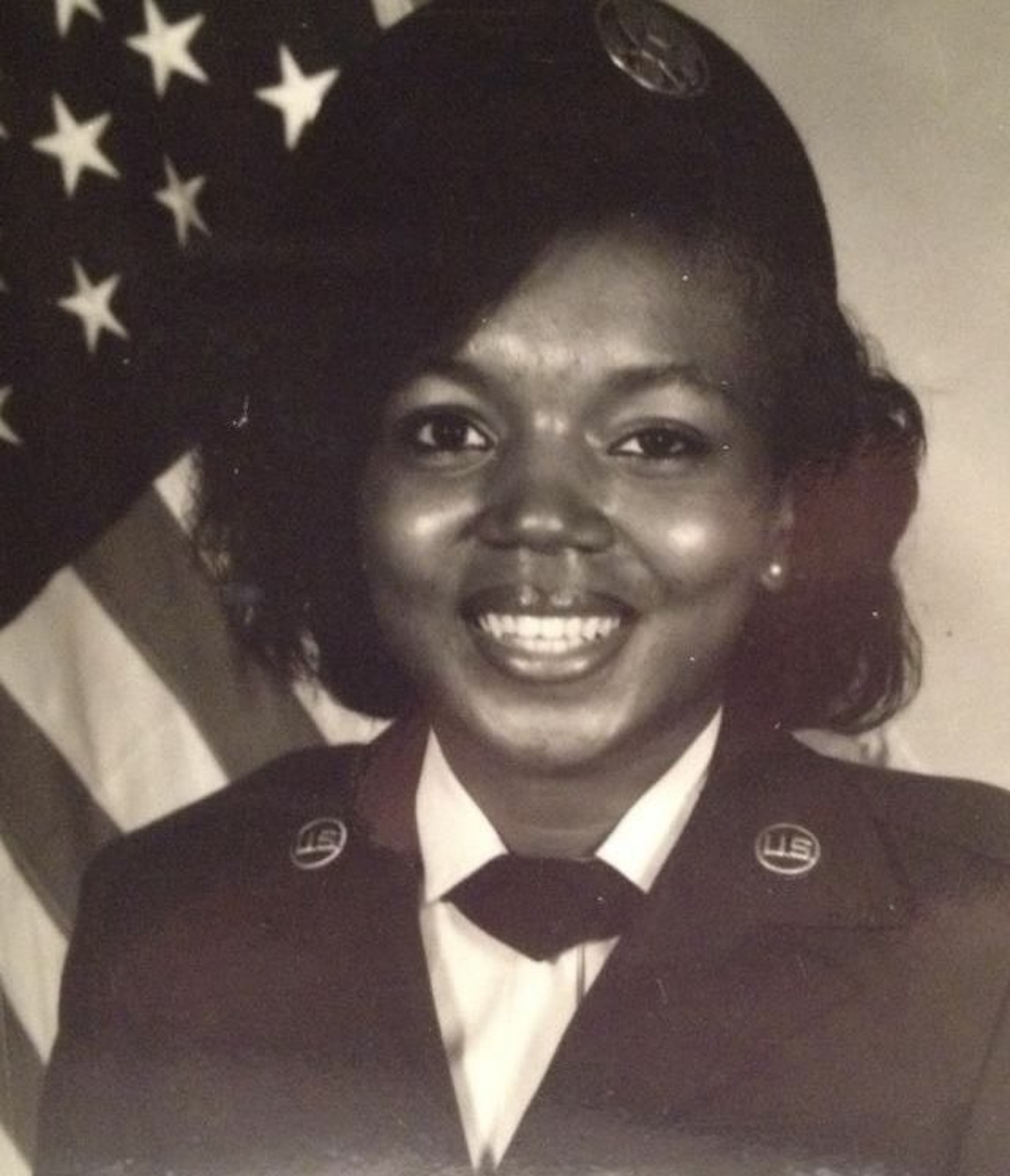
A younger photo of Sebrena L. Flagg-Briggs in service.

I was very heavy on joining an organization that promoted diversity because I thought it was important that men, women, Black, white, different nationalities be represented. It gave me a greater understanding of their perspective, and I was able to share my perspective. We were able to gather our thoughts, our differences, and come up with a common solution that would make everybody feel included.

ACLU: Disciplinary hearings affecting service members are reviewed by the military’s own judge panel. How important is it to have leadership that represents the diversity of service members and understands different upbringings?

Retired Chief Master Sgt. Flagg-Briggs: That is extremely important. Sometimes when the decisions are made, it perpetuates in your mind that there’s no way they understand who I am or what I represent, because that opinion doesn’t sound like it is for me. There have been examples where there was one type of solution or punishment that was going to be put upon a person and because I was in the room, I helped them understand that it wasn’t as they saw it. The relief that they got from having me in the room was astounding. Many times I was the only woman of color or the only person of color in the room, and I was always opinionated and spoke for folk that were on the line. That was truly important during my 35 years of service. Rising to the rank of Chief, it made me more aware. It helped me help others to understand why it’s important to get in the room, earn more rank, so that we can be better understood, and we could share our experiences and other folks would understand as well.

Marine Corps Veteran Marnisha Mintlow - 1997 - 2001
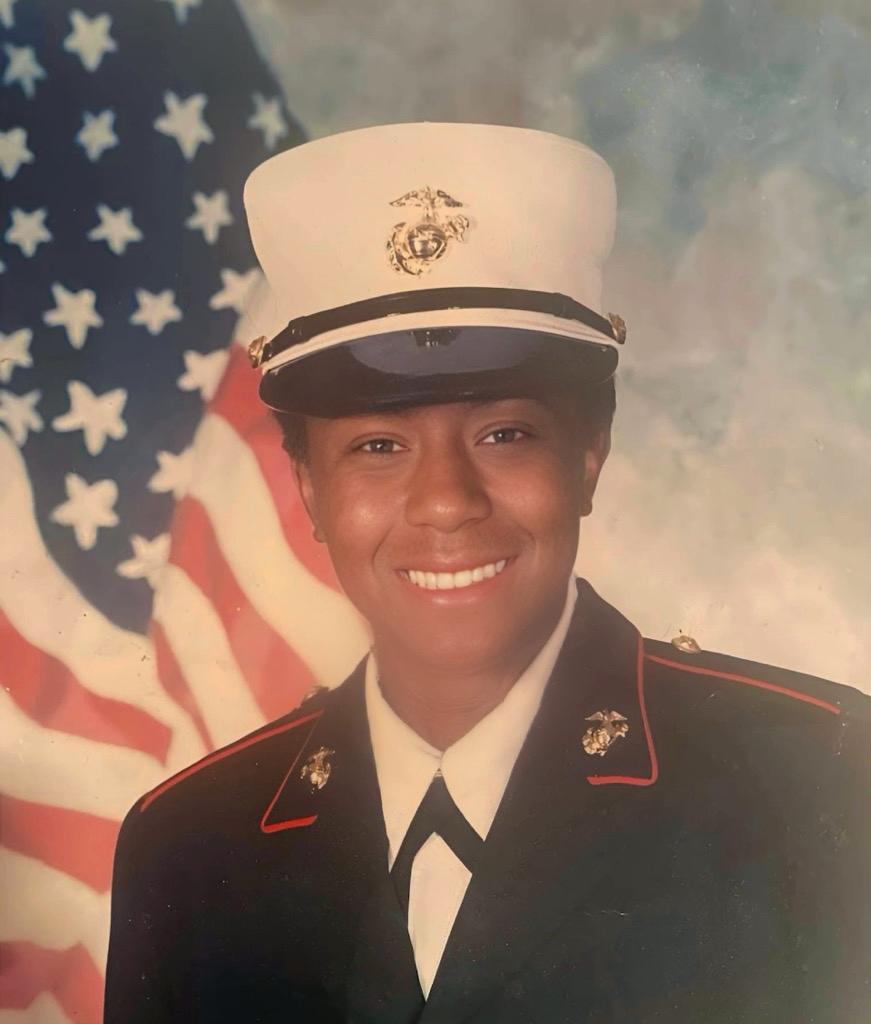
A photo of Marnisha Mintlow.

ACLU: Could you tell us about your time in the military and why you decided to join?

Veteran Mintlow: When I joined, it was about me getting money for school. But as you’re gaining education and knowledge of what this branch has gone through, the wars it has fought and won for our country, and you built a relationship with the branch, you learn the importance. So then it becomes, I served my country, I did my part, I put my life on the line.

ACLU: The military imposes certain uniform requirements that can disproportionately impact people of color. Did the uniform requirements affect your time in the military?

Veteran Mintlow: It wasn’t necessarily uniforms that were my issue. It was the weight requirement. Once you hit the maximum weight requirement, they will do what’s called a body fat measurement. When they do that for women, they measure our necks, our waists, and hips. I still believe that is not a fair measurement for women of color. In my culture and as a Black woman, the widest part of my body is my hips, and there is nothing I can do about it. There are some things that we cannot fix, and to have that held against me, it negatively impacted my military career. I was at a point in my career where I was supposed to get a meritorious promotion, but did not get it because I was considered overweight by their metrics.

ACLU: Why is it important to have representation in the military?

Veteran Mintlow: It’s important to have a diverse population amongst enlisted members and officers so that people who are not in the military have an opportunity to see themselves in the military. When I wasn’t in the military, every person I saw in the Marine Corps was a man. So while I was at my recruiter’s office, they had a poster on the wall of a Black woman in a blue dress, and I said, I need to see her in real life. When I went to the Military Entrance Processing Station, which is where you do your swearing in and you sign all your paperwork, I met a Black woman. She was my visual. I knew I could do this because she looked like me and she did it. It’s very important to have those role models and those mentors in real life. When we see people who are like us, doing these things, it gives us the initiative, the drive, and the inspiration to know that we can do those things, too.

We need you with us to keep fighting
Donate today

Published February 15, 2024 at 01:27AM
via ACLU https://ift.tt/n8tGQxr

Tuesday, 13 February 2024

ACLU: Border Patrol’s Abusive Practice of Taking Migrants’ Property Needs to End

Border Patrol’s Abusive Practice of Taking Migrants’ Property Needs to End

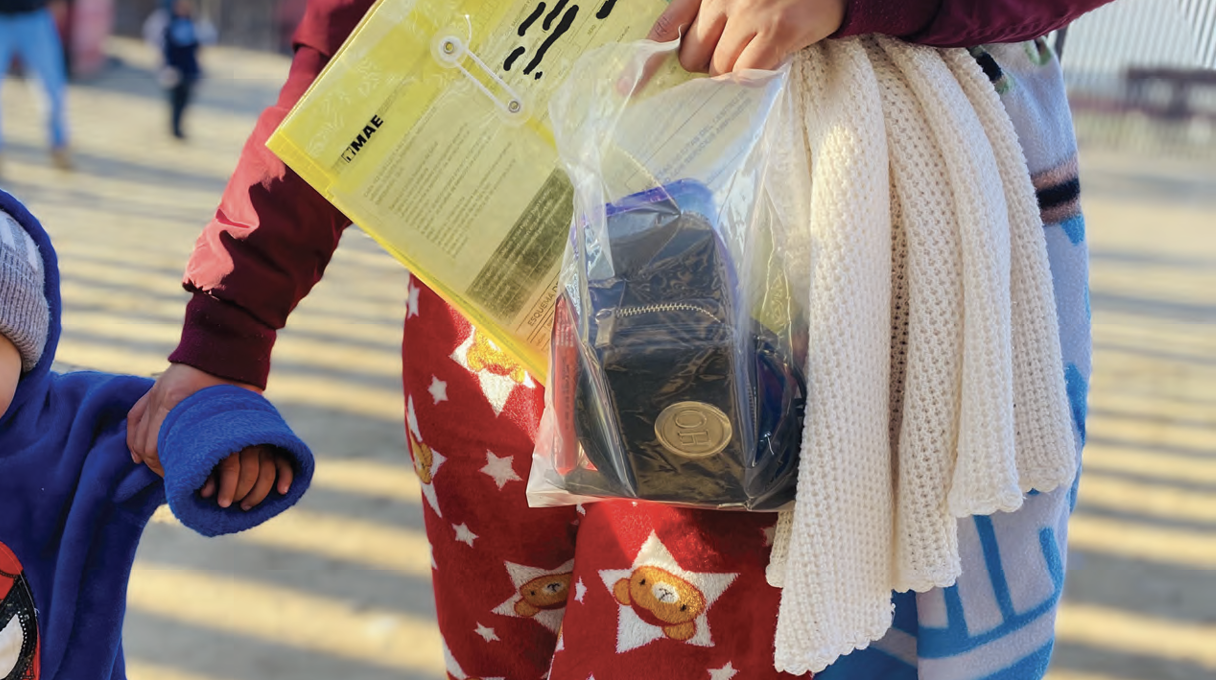
Seeking lives of safety and opportunity, people coming to the United States as migrants and asylum-seekers may carry only their most essential and beloved possessions. When they arrive in the U.S. and are taken into Border Patrol custody, many migrants endure the devastating loss of their property: Border Patrol agents routinely confiscate, trash, or force them to throw away their precious belongings.

In a new report published in partnership with organizations working on the southern border, From Hope to Heartbreak, we document routine cases of this abusive treatment focusing on confiscation of medication and medical devices, legal and identity documents, religious items, and items of financial, practical, or sentimental value.

The report relies heavily on hundreds of intakes conducted by the Kino Border Initiative (KBI), which runs a migrant aid center along Mexico’s border with Arizona, and ProtectAZ Health, which offers free medical screenings and care to migrants in Phoenix.

Medications and Medical Devices

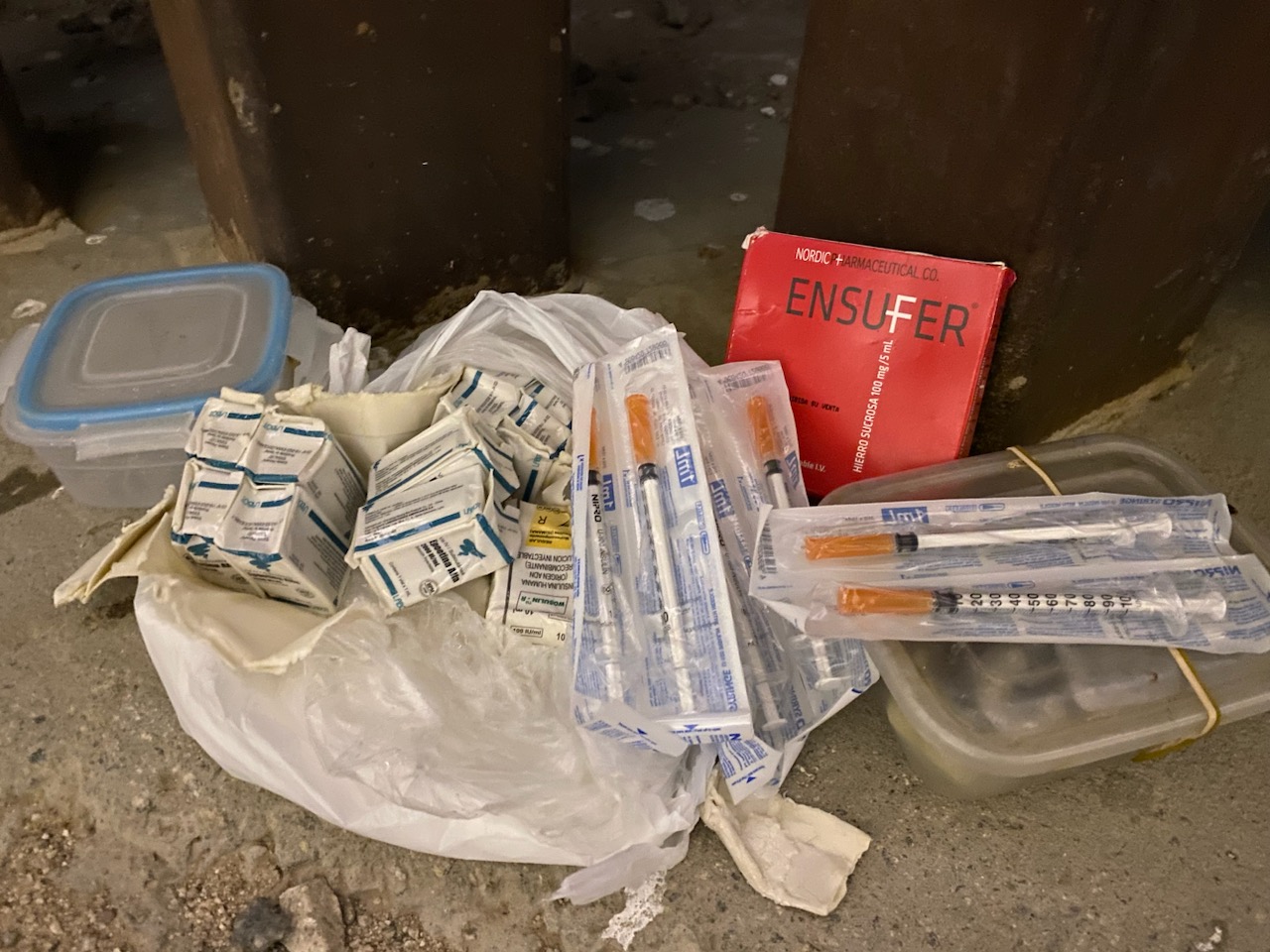
A pile of various medical materials.

Border Patrol and its parent agency, Customs and Border Protection (CBP), have routinely confiscated life-saving medications and medical devices from adults and children who have illnesses such as seizure disorders, high blood pressure, diabetes, asthma, and genetic conditions.

CBP agents took a 5-year-old girl’s epilepsy medications away from her mother. When the little girl, whom we are calling Rosa, experienced convulsions, she was taken to the hospital. When she was discharged from the hospital and returned to CBP custody with new medications and special dietary supplements, CBP agents confiscated those. Not until the family was released to a shelter in Las Cruces, New Mexico, did Rosa receive the medical care she needed.

Depriving people of their necessary medication obviously risks their health and safety. It also adds stress to local hospital systems, as people need to visit the emergency room or be hospitalized because their health deteriorates from missing their medication.

ProtectAZ received a 13-year-old boy, whom we are calling Leonel, at their shelter. Leonel has a genetic condition in which he lacks a necessary amino acid that prevents the build up of ammonia in his body. The condition can have serious consequences if untreated, including seizures, coma and death. Leonel needed to take daily supplements, but they were confiscated by Border Patrol in Casa Grande, Arizona. At the ProtectAZ shelter, Leonel’s health deteriorated, and he had to be admitted to the hospital for a week to stabilize his condition.

In a separate occurrence, a 7-year-old boy with moderate-persistent asthma was detained for two days. His inhaler was taken away, and he wasn’t given a replacement. After being released, he developed respiratory symptoms, and his condition worsened quickly. His family took him to the emergency department, and he was transferred to a pediatric intensive care unit.

Legal and Identity Documents

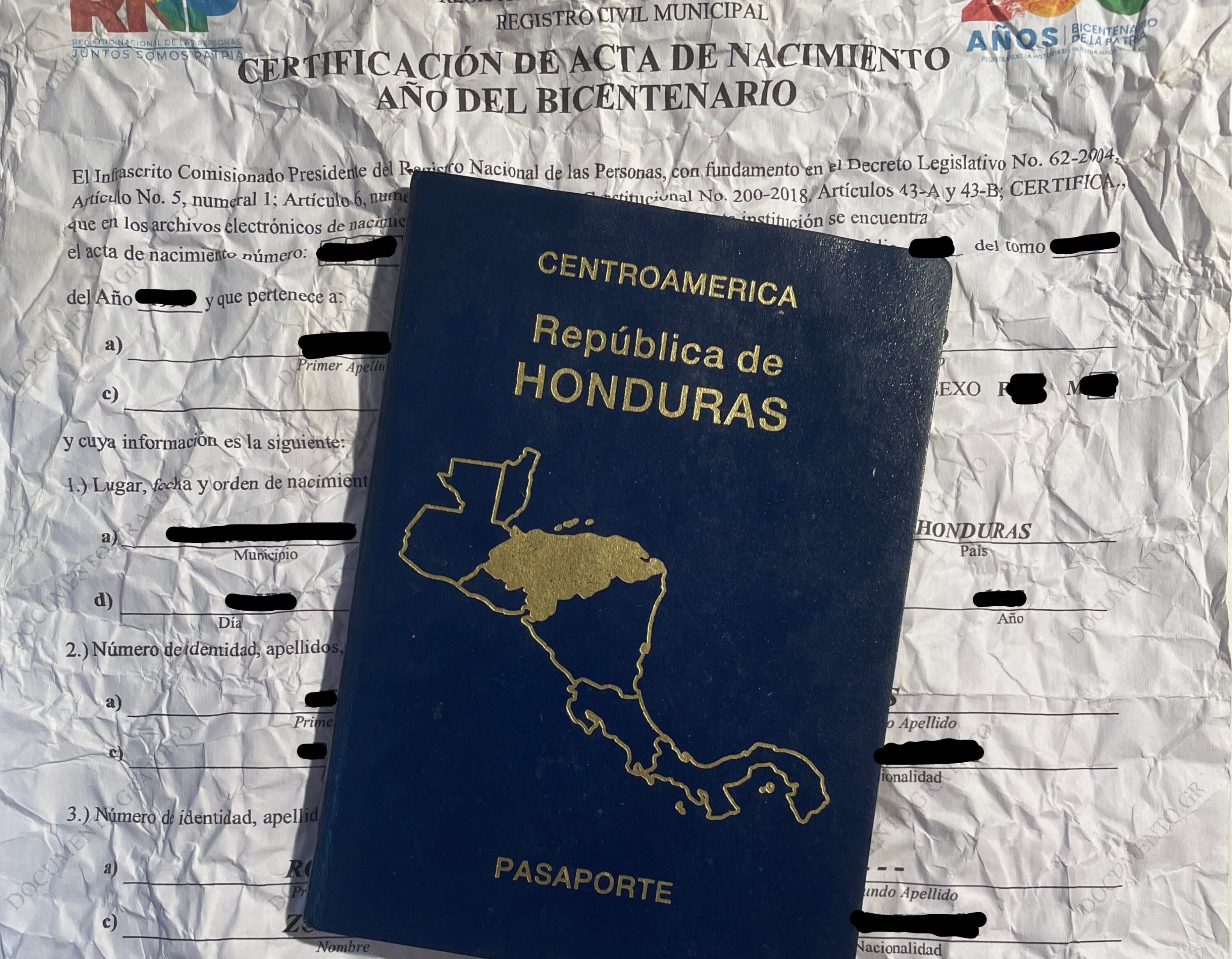
A honduran passport.

Confiscating or destroying legal and identity documents, such as birth certificates, passports, medical records, and documents to substantiate asylum claims, has been a hallmark of Border Patrol’s operations.

One man told KBI that Border Patrol agents tore his birth certificate up in front of him. He managed to save his Mexican identity card because he had hidden it in his shoe. Advocates in the Rio Grande Valley Sector in Texas report finding discarded documents that could be important in substantiating asylum claims, such as police reports and medical records. Volunteers with the Borderlands Collective in San Diego say document confiscation is especially concerning for parents of minor children, who may not be able to prove that they are family without their children’s birth records.

“Passports are very important here,” one person had shared. “To open an account, to identify yourself, and I don’t have that document. I don’t have the children’s birth records because they took them from me. That makes me feel terrible.”

Migrants who are deported, expelled or returned to Mexico cannot withdraw or receive money without identity documents. Confiscated or destroyed documents pose a significant barrier to asylum-seekers’ ability to substantiate their claims. The Children’s Legal Center sued Immigration and Customs Enforcement (ICE) on behalf of 68 asylum-seekers whose documents the agency had confiscated. The lawsuit argues the confiscation violates the plaintiffs’ due process rights to seek work authorization and to support their asylum cases.

Religious Items

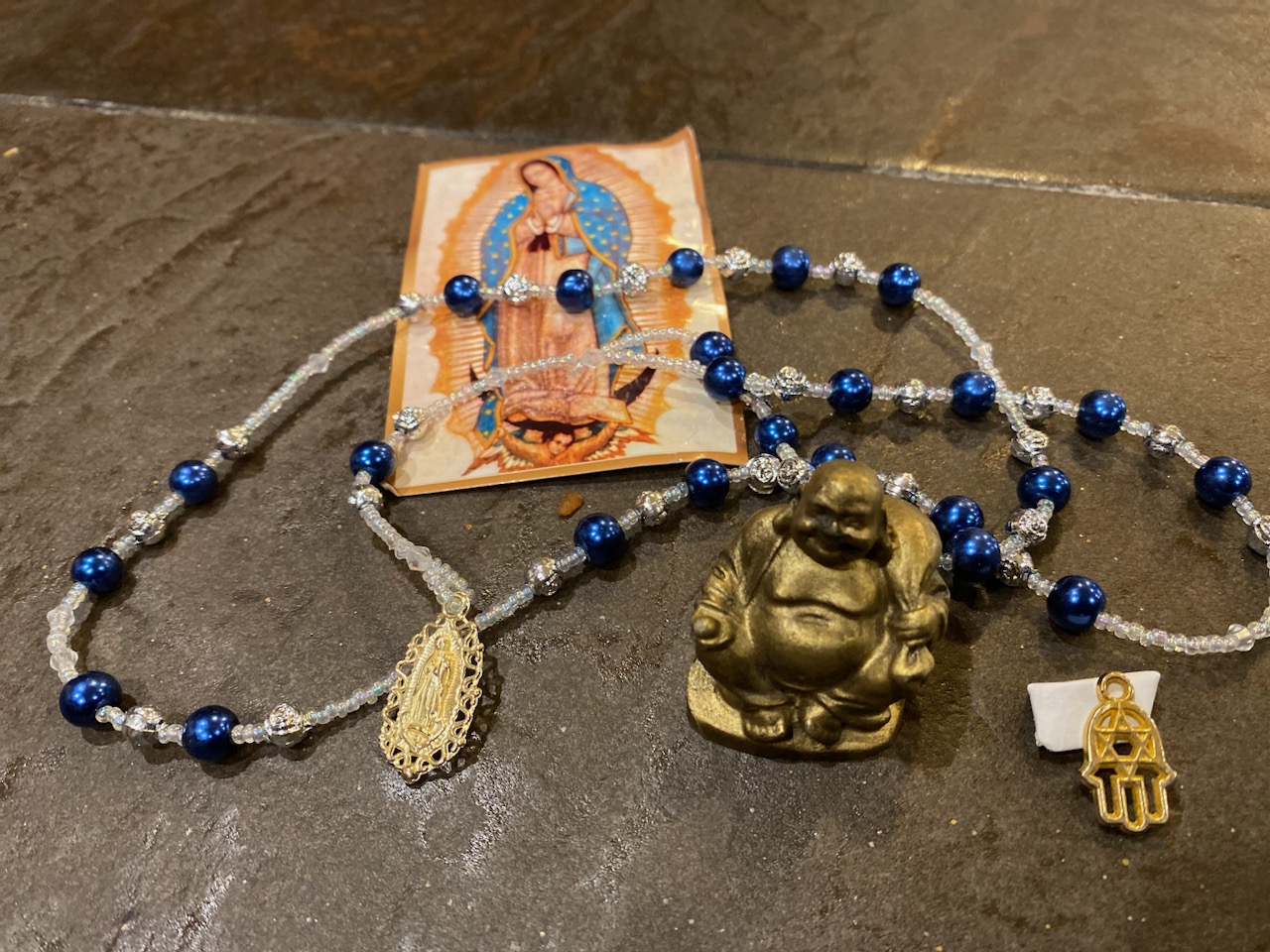
A pile of religious items, including a small Buddha statue and an image of the Virgin Mary.

Over the summer of 2022, there was a spike in reports of Border Patrol taking away Sikh asylum-seekers’ turbans. Forcing a Sikh person to remove their turban is a serious violation of their faith. “They told me to take off my turban. I know a little English, and I said, ‘It’s my religion.’ But they insisted.” The man pleaded with the officers, but they forced him to remove his turban and toss it in a pile of trash. He asked if he could at least keep his turban for when he was released from custody, but they told him no.

While Border Patrol has since taken positive steps forward on how it handles turbans and other Sikh articles of faith, the agency’s religious freedom violations aren’t limited to people of the Sikh faith. A person told KBI that Border Patrol agents took his Bible, which he told them had significant spiritual meaning to him, and trashed it in front of him. Border Patrol agents in Yuma told several Muslim migrants they had to throw away their prayer mats. One of the men said his prayer mat had been in his family for more than 100 years.

Migrants’ religious freedom is protected both by the First Amendment and the federal Religious Freedom Restoration Act, which provides additional protection for the free exercise of religion. Some asylum-seekers are fleeing religious persecution in their home countries, and the experience of CBP violating their religious faith can be a retraumatizing experience. CBP has been made aware of their violations for years, suggesting a failure of CBP policy and practice to fully respect the religious freedom rights of migrants and asylum-seekers.

Items of Practical, Financial, or Sentimental Value

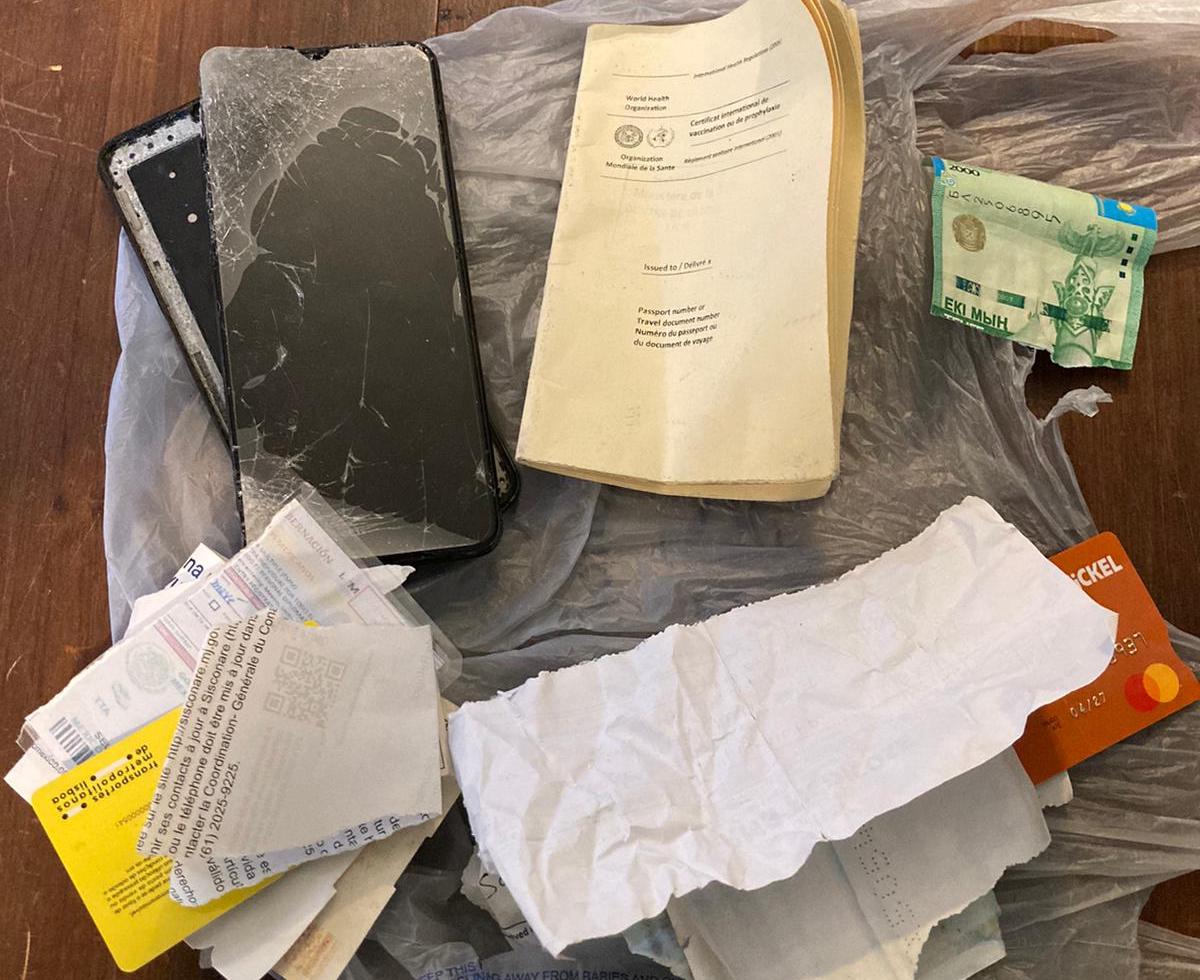
A collection of documents, money, and a damaged smartphone.

Migrants have regularly reported Border Patrol agents confiscate their money and cellphones. These items are of clear value and represent a devastating loss: impoverishment and loss of contact with loved ones. Several migrants told KBI they lost the equivalent of hundreds of dollars to Border Patrol. One man described seeing a Border Patrol agent take 3,000 pesos from another man and rip it up in his face. Other migrants described the loss of family photos on their confiscated cellphones.

Confiscation of clothing appears to be widespread in Border Patrol custody, leaving migrants with only a single layer of clothing. “The official asked me how many shirts I had, and I responded that I had two shirts plus a sweater. The official started laughing and told me I had to take everything off but one shirt,” one person recounted.

Volunteers and shelters supporting migrants are critical of this practice, especially during the winter and if migrants are traveling north. One shelter in Las Cruces, New Mexico, said it spent $100,000 every month to provide clothes to migrants. Once the Border Patrol sectors in New Mexico reduced their confiscation of people’s clothes, the shelter reported reducing costs for clothing people by half.

Finally, migrants report having their cherished belongings confiscated or trashed – children’s toys, heirloom jewelry, and even a loved one’s ashes. One man said Border Patrol agents forced him to throw away his father’s ashes – his father had died while journeying to the U.S. from Nicaragua.

The Systematic Confiscation of Migrants' Belongings at the U.S. Southern Border, Despite the Vast Resources Available to Border Patrol, is Indefensible

CBP’s practice of property confiscation and destruction isn’t only cruel, unnecessary, and, in some cases, life-threatening, in many cases, it likely violates federal law and policy. We outline achievable policy changes that CBP can adopt to protect the dignity, safety, and rights of people arriving in the U.S.

Border Patrol must ensure migrants in its custody and those released from custody have continuous access to their medications and medical devices. Migrants should be allowed to keep as many of their personal belongings as possible in custody and after they are released. CBP must change its policies to comply with federal safeguards of religious freedom in its treatment of people’s religious garb and religious items.

The bottom line is that CBP can and must do better to live up to our nation’s values and commitments to people seeking safety within our borders. People seeking refuge in the U.S. deserve to be welcomed with dignity.

What you can do:
Tell Congress: Protect families seeking asylum
Send your message


Published February 13, 2024 at 06:46PM
via ACLU https://ift.tt/CnLdsj3

ACLU: Border Patrol’s Abusive Practice of Taking Migrants’ Property Needs to End

Border Patrol’s Abusive Practice of Taking Migrants’ Property Needs to End

Seeking lives of safety and opportunity, people coming to the United States as migrants and asylum-seekers may carry only their most essential and beloved possessions. When they arrive in the U.S. and are taken into Border Patrol custody, many migrants endure the devastating loss of their property: Border Patrol agents routinely confiscate, trash, or force them to throw away their precious belongings.

In a new report published in partnership with organizations working on the southern border, From Hope to Heartbreak, we document routine cases of this abusive treatment focusing on confiscation of medication and medical devices, legal and identity documents, religious items, and items of financial, practical, or sentimental value.

The report relies heavily on hundreds of intakes conducted by the Kino Border Initiative (KBI), which runs a migrant aid center along Mexico’s border with Arizona, and ProtectAZ Health, which offers free medical screenings and care to migrants in Phoenix.

Medications and Medical Devices

A pile of various medical materials.

Border Patrol and its parent agency, Customs and Border Protection (CBP), have routinely confiscated life-saving medications and medical devices from adults and children who have illnesses such as seizure disorders, high blood pressure, diabetes, asthma, and genetic conditions.

CBP agents took a 5-year-old girl’s epilepsy medications away from her mother. When the little girl, whom we are calling Rosa, experienced convulsions, she was taken to the hospital. When she was discharged from the hospital and returned to CBP custody with new medications and special dietary supplements, CBP agents confiscated those. Not until the family was released to a shelter in Las Cruces, New Mexico, did Rosa receive the medical care she needed.

Depriving people of their necessary medication obviously risks their health and safety. It also adds stress to local hospital systems, as people need to visit the emergency room or be hospitalized because their health deteriorates from missing their medication.

ProtectAZ received a 13-year-old boy, whom we are calling Leonel, at their shelter. Leonel has a genetic condition in which he lacks a necessary amino acid that prevents the build up of ammonia in his body. The condition can have serious consequences if untreated, including seizures, coma and death. Leonel needed to take daily supplements, but they were confiscated by Border Patrol in Casa Grande, Arizona. At the ProtectAZ shelter, Leonel’s health deteriorated, and he had to be admitted to the hospital for a week to stabilize his condition.

In a separate occurrence, a 7-year-old boy with moderate-persistent asthma was detained for two days. His inhaler was taken away, and he wasn’t given a replacement. After being released, he developed respiratory symptoms, and his condition worsened quickly. His family took him to the emergency department, and he was transferred to a pediatric intensive care unit.

Legal and Identity Documents

A honduran passport.

Confiscating or destroying legal and identity documents, such as birth certificates, passports, medical records, and documents to substantiate asylum claims, has been a hallmark of Border Patrol’s operations.

One man told KBI that Border Patrol agents tore his birth certificate up in front of him. He managed to save his Mexican identity card because he had hidden it in his shoe. Advocates in the Rio Grande Valley Sector in Texas report finding discarded documents that could be important in substantiating asylum claims, such as police reports and medical records. Volunteers with the Borderlands Collective in San Diego say document confiscation is especially concerning for parents of minor children, who may not be able to prove that they are family without their children’s birth records.

“Passports are very important here,” one person had shared. “To open an account, to identify yourself, and I don’t have that document. I don’t have the children’s birth records because they took them from me. That makes me feel terrible.”

Migrants who are deported, expelled or returned to Mexico cannot withdraw or receive money without identity documents. Confiscated or destroyed documents pose a significant barrier to asylum-seekers’ ability to substantiate their claims. The Children’s Legal Center sued Immigration and Customs Enforcement (ICE) on behalf of 68 asylum-seekers whose documents the agency had confiscated. The lawsuit argues the confiscation violates the plaintiffs’ due process rights to seek work authorization and to support their asylum cases.

Religious Items

A pile of religious items, including a small Buddha statue and an image of the Virgin Mary.

Over the summer of 2022, there was a spike in reports of Border Patrol taking away Sikh asylum-seekers’ turbans. Forcing a Sikh person to remove their turban is a serious violation of their faith. “They told me to take off my turban. I know a little English, and I said, ‘It’s my religion.’ But they insisted.” The man pleaded with the officers, but they forced him to remove his turban and toss it in a pile of trash. He asked if he could at least keep his turban for when he was released from custody, but they told him no.

While Border Patrol has since taken positive steps forward on how it handles turbans and other Sikh articles of faith, the agency’s religious freedom violations aren’t limited to people of the Sikh faith. A person told KBI that Border Patrol agents took his Bible, which he told them had significant spiritual meaning to him, and trashed it in front of him. Border Patrol agents in Yuma told several Muslim migrants they had to throw away their prayer mats. One of the men said his prayer mat had been in his family for more than 100 years.

Migrants’ religious freedom is protected both by the First Amendment and the federal Religious Freedom Restoration Act, which provides additional protection for the free exercise of religion. Some asylum-seekers are fleeing religious persecution in their home countries, and the experience of CBP violating their religious faith can be a retraumatizing experience. CBP has been made aware of their violations for years, suggesting a failure of CBP policy and practice to fully respect the religious freedom rights of migrants and asylum-seekers.

Items of Practical, Financial, or Sentimental Value

A collection of documents, money, and a damaged smartphone.

Migrants have regularly reported Border Patrol agents confiscate their money and cellphones. These items are of clear value and represent a devastating loss: impoverishment and loss of contact with loved ones. Several migrants told KBI they lost the equivalent of hundreds of dollars to Border Patrol. One man described seeing a Border Patrol agent take 3,000 pesos from another man and rip it up in his face. Other migrants described the loss of family photos on their confiscated cellphones.

Confiscation of clothing appears to be widespread in Border Patrol custody, leaving migrants with only a single layer of clothing. “The official asked me how many shirts I had, and I responded that I had two shirts plus a sweater. The official started laughing and told me I had to take everything off but one shirt,” one person recounted.

Volunteers and shelters supporting migrants are critical of this practice, especially during the winter and if migrants are traveling north. One shelter in Las Cruces, New Mexico, said it spent $100,000 every month to provide clothes to migrants. Once the Border Patrol sectors in New Mexico reduced their confiscation of people’s clothes, the shelter reported reducing costs for clothing people by half.

Finally, migrants report having their cherished belongings confiscated or trashed – children’s toys, heirloom jewelry, and even a loved one’s ashes. One man said Border Patrol agents forced him to throw away his father’s ashes – his father had died while journeying to the U.S. from Nicaragua.

The Systematic Confiscation of Migrants' Belongings at the U.S. Southern Border, Despite the Vast Resources Available to Border Patrol, is Indefensible

CBP’s practice of property confiscation and destruction isn’t only cruel, unnecessary, and, in some cases, life-threatening, in many cases, it likely violates federal law and policy. We outline achievable policy changes that CBP can adopt to protect the dignity, safety, and rights of people arriving in the U.S.

Border Patrol must ensure migrants in its custody and those released from custody have continuous access to their medications and medical devices. Migrants should be allowed to keep as many of their personal belongings as possible in custody and after they are released. CBP must change its policies to comply with federal safeguards of religious freedom in its treatment of people’s religious garb and religious items.

The bottom line is that CBP can and must do better to live up to our nation’s values and commitments to people seeking safety within our borders. People seeking refuge in the U.S. deserve to be welcomed with dignity.

What you can do:
Tell Congress: Protect families seeking asylum
Send your message


Published February 14, 2024 at 12:16AM
via ACLU https://ift.tt/TDqdlHz

Monday, 12 February 2024

ACLU: When Florida Officials Tried to Silence Our Pro-Palestinian Student Group, We Sued

When Florida Officials Tried to Silence Our Pro-Palestinian Student Group, We Sued

While studying abroad a couple of years ago, I heard first-hand accounts from Jordanian-Palestinian friends about the displacement their families, and families like theirs, experienced during the 1948 Nakba (Arabic for “catastrophe”). Moved by the painful memories they shared, I started researching student organizations advocating for Palestinian rights, and came across the Instagram of the University of Florida (UF) chapter of Students for Justice in Palestine (SJP). When I enrolled at UF a few months later, I immediately joined.

As a member of UF SJP, it was devastating when top Florida officials ordered public universities to deactivate all SJP chapters in the state, including ours. I remember being in shock when I read the order. Officials justified deactivating our chapter not because of anything our group had said or done—but because of our affiliation with the national chapter of Students for Justice in Palestine, a separate group. According to the order, certain views expressed in an advocacy toolkit the National SJP issued on October 7 violated Florida’s “material support of terrorism” law. But my student group was not even involved with the creation of that toolkit, which itself is protected by the First Amendment.

On October 8, our SJP chapter issued its own statement, saying that we “mourned the loss of innocent Palestinian and Israeli life,” and made clear that “the killing of any life is always undignified and heartbreaking.” Later, we issued another statement urging the University of Florida to condemn all violence, antisemitism, Islamophobia, Palestinian erasure, and anti-Palestinian sentiment.

Our chapter has students from a variety of religious, racial, and cultural backgrounds, including members who are Jewish, Palestinian, and Palestinian-American, who believe that speaking up for Palestine is speaking up for humanity. Reading the deactivation order, we felt like we had no choice but to sue to protect our First Amendment right to free speech and free assocation. We know of multiple current and potential members of UF SJP who feared being punished and investigated. Our advocacy has suffered from having our state and university officials levy false accusations of “terrorism” against us. For months, we feared that at any moment the University could have denied us access to critical school funds, resources, and facilities that are fundamental to the survival and operation of our organization.

Near the end of January, the ACLU, ACLU of Florida, and Palestine Legal went to court to defend our rights and, on January 31, a federal judge dismissed our lawsuit. The court found that after issuing the order, Florida officials do not intend to deactivate our chapter. Although the court did not rule on our First Amendment claims, it’s a relief to know that the court concluded our chapter does not currently face deactivation.

As the judge acknowledged during the hearing on our case: “Words have consequences.” For months we have lived with fear and anxiety as a result of the order. I still carry a deep worry for my safety, for my loved ones’ safety, and the safety of any student who chooses to get involved in our SJP chapter. We hope that state officials learned their lesson when they walked back the deactivation order, and that the State University System Chancellor will now take his order down from his website.

I remember learning about my constitutional rights in seventh grade civics class, including how we were all entitled to free speech. The juxtaposition of what I grew up thinking college kids in the U.S. were allowed to do and say and what we went through last semester is really stark. I can’t overstate how deeply disappointing it was to see our state’s highest officials attempt to censor us. Their actions were contrary to everything I understood about how our democracy is supposed to work.

I can’t overstate how deeply disappointing it was to see our state’s highest officials attempt to censor us. Their actions were contrary to everything I understood about how our democracy is supposed to work.

At a time when the number of Palestinians killed or injured in Gaza is rising exponentially each day, standing up for our right to speak out on the issue felt like a no-brainer. While this experience hasn’t been easy, we’re proud to have fought for our rights in court. We hope our case sets a precedent that students cannot be silenced.

We need you with us to keep fighting
Donate today

Published February 12, 2024 at 07:00PM
via ACLU https://ift.tt/F93PSNx

ACLU: When Florida Officials Tried to Silence Our Pro-Palestinian Student Group, We Sued

When Florida Officials Tried to Silence Our Pro-Palestinian Student Group, We Sued

While studying abroad a couple of years ago, I heard first-hand accounts from Jordanian-Palestinian friends about the displacement their families, and families like theirs, experienced during the 1948 Nakba (Arabic for “catastrophe”). Moved by the painful memories they shared, I started researching student organizations advocating for Palestinian rights, and came across the Instagram of the University of Florida (UF) chapter of Students for Justice in Palestine (SJP). When I enrolled at UF a few months later, I immediately joined.

As a member of UF SJP, it was devastating when top Florida officials ordered public universities to deactivate all SJP chapters in the state, including ours. I remember being in shock when I read the order. Officials justified deactivating our chapter not because of anything our group had said or done—but because of our affiliation with the national chapter of Students for Justice in Palestine, a separate group. According to the order, certain views expressed in an advocacy toolkit the National SJP issued on October 7 violated Florida’s “material support of terrorism” law. But my student group was not even involved with the creation of that toolkit, which itself is protected by the First Amendment.

On October 8, our SJP chapter issued its own statement, saying that we “mourned the loss of innocent Palestinian and Israeli life,” and made clear that “the killing of any life is always undignified and heartbreaking.” Later, we issued another statement urging the University of Florida to condemn all violence, antisemitism, Islamophobia, Palestinian erasure, and anti-Palestinian sentiment.

Our chapter has students from a variety of religious, racial, and cultural backgrounds, including members who are Jewish, Palestinian, and Palestinian-American, who believe that speaking up for Palestine is speaking up for humanity. Reading the deactivation order, we felt like we had no choice but to sue to protect our First Amendment right to free speech and free assocation. We know of multiple current and potential members of UF SJP who feared being punished and investigated. Our advocacy has suffered from having our state and university officials levy false accusations of “terrorism” against us. For months, we feared that at any moment the University could have denied us access to critical school funds, resources, and facilities that are fundamental to the survival and operation of our organization.

Near the end of January, the ACLU, ACLU of Florida, and Palestine Legal went to court to defend our rights and, on January 31, a federal judge dismissed our lawsuit. The court found that after issuing the order, Florida officials do not intend to deactivate our chapter. Although the court did not rule on our First Amendment claims, it’s a relief to know that the court concluded our chapter does not currently face deactivation.

As the judge acknowledged during the hearing on our case: “Words have consequences.” For months we have lived with fear and anxiety as a result of the order. I still carry a deep worry for my safety, for my loved ones’ safety, and the safety of any student who chooses to get involved in our SJP chapter. We hope that state officials learned their lesson when they walked back the deactivation order, and that the State University System Chancellor will now take his order down from his website.

I remember learning about my constitutional rights in seventh grade civics class, including how we were all entitled to free speech. The juxtaposition of what I grew up thinking college kids in the U.S. were allowed to do and say and what we went through last semester is really stark. I can’t overstate how deeply disappointing it was to see our state’s highest officials attempt to censor us. Their actions were contrary to everything I understood about how our democracy is supposed to work.

I can’t overstate how deeply disappointing it was to see our state’s highest officials attempt to censor us. Their actions were contrary to everything I understood about how our democracy is supposed to work.

At a time when the number of Palestinians killed or injured in Gaza is rising exponentially each day, standing up for our right to speak out on the issue felt like a no-brainer. While this experience hasn’t been easy, we’re proud to have fought for our rights in court. We hope our case sets a precedent that students cannot be silenced.

We need you with us to keep fighting
Donate today

Published February 13, 2024 at 12:30AM
via ACLU https://ift.tt/yUKCfW4