Honduras : First Reviews Under the Stand-By Arrangement and the Arrangement Under the Standby Credit Facility, and Request for Modification of Performance Criteria-Press Release; Staff Report; and Statement by the Executive Director for Honduras
Published December 20, 2019 at 08:00AM Read more at imf.org
In this week’s episode of the Longreads Podcast, the last editors’ roundtable of 2019, Head of Audience Catherine Cusick, Head of Fact-CheckingMatt Giles, and writer Nick Chrastil share what they’ve been reading and working on.
A Fair Chance at Opportunity: The U.S. Government Bans the Box
When Rep. Elijah Cummings (D-Md.) reintroduced the Fair Chance Act earlier this year, he said: “This bill would give individuals who are reentering society from prison a fair chance at truly achieving the American dream.” The Fair Chance Act would ban the box that employers use to ask about arrest and conviction history on job applications. It also requires that federal agencies and contractors subject a prospective employee to a criminal background check only after a conditional job offer is made.
As such, qualified workers with arrest or conviction records can now compete fairly for employment with the largest employer in the world, the U.S. government.
This week, Rep. Cumming’s — who until his death in October, was advancing “common sense criminal justice reforms” for Marylanders and the more than 70 million Americans who have criminal histories — dream has been realized with Congress sending the Fair Chance Act to the president’s desk.
In addition to Congressman Cummings, Rep. Doug Collins (R-Ga.) and Sens. Cory Booker (D-N.J.) and Ron Johnson (R-Wis.) led the effort to “ban the box” at the federal level. Our organizations were pleased to rally for this bill’s enactment as part of a bipartisan coalition that included All of Us or None, JustLeadershipUSA, Center for American Progress, and Justice Action Network.
Gainful employment is critical to a person’s successful reentry to society after incarceration and the single most important predictor of whether or not a person will return to prison. But 75 percent of formerly incarcerated people are unemployed a year after release because of employer discrimination against people with criminal records. For Black people, a criminal record means not getting a job interview 40 percent more often than white people with similar histories. With 650,000 Americans returning to communities from prison each year, employers must eliminate barriers to jobs.
Now, the federal government will serve as a model for fair chance hiring, along with 35 states, the District of Columbia, and over 150 cities and counties that have ban the box policies. This cohort includes many private sector entities as well, with over 100 companies joining the Fair Chance Pledge issued by the Obama White House, which coincided with federal ban the box regulations implemented under that administration in 2015. The impetus for the Obama administration’s actions was the Fair Chance Act that had first been introduced months before in the 114th Congress.
Four years later, the Fair Chance Act is now law, standing to benefit more than 700,000 new job applicants every year. Fair Chance is a laudable accomplishment for congressional leaders, like Congressman Cummings, and criminal justice reform advocates, like our organizations, who understand that a criminal history should not deny anyone an opportunity to succeed in our economy. Though our work will continue to advance additional fair chance hiring practices in local and state government and the private sector, this week’s win on Fair Chance is a critical step in the right direction.
Published December 20, 2019 at 09:25PM
via ACLU https://ift.tt/2Sfbcvs
A Fair Chance at Opportunity: The U.S. Government Bans the Box
When Rep. Elijah Cummings (D-Md.) reintroduced the Fair Chance Act earlier this year, he said: “This bill would give individuals who are reentering society from prison a fair chance at truly achieving the American dream.” The Fair Chance Act would ban the box that employers use to ask about arrest and conviction history on job applications. It also requires that federal agencies and contractors subject a prospective employee to a criminal background check only after a conditional job offer is made.
As such, qualified workers with arrest or conviction records can now compete fairly for employment with the largest employer in the world, the U.S. government.
This week, Rep. Cumming’s — who until his death in October, was advancing “common sense criminal justice reforms” for Marylanders and the more than 70 million Americans who have criminal histories — dream has been realized with Congress sending the Fair Chance Act to the president’s desk.
In addition to Congressman Cummings, Rep. Doug Collins (R-Ga.) and Sens. Cory Booker (D-N.J.) and Ron Johnson (R-Wis.) led the effort to “ban the box” at the federal level. Our organizations were pleased to rally for this bill’s enactment as part of a bipartisan coalition that included All of Us or None, JustLeadershipUSA, Center for American Progress, and Justice Action Network.
Gainful employment is critical to a person’s successful reentry to society after incarceration and the single most important predictor of whether or not a person will return to prison. But 75 percent of formerly incarcerated people are unemployed a year after release because of employer discrimination against people with criminal records. For Black people, a criminal record means not getting a job interview 40 percent more often than white people with similar histories. With 650,000 Americans returning to communities from prison each year, employers must eliminate barriers to jobs.
Now, the federal government will serve as a model for fair chance hiring, along with 35 states, the District of Columbia, and over 150 cities and counties that have ban the box policies. This cohort includes many private sector entities as well, with over 100 companies joining the Fair Chance Pledge issued by the Obama White House, which coincided with federal ban the box regulations implemented under that administration in 2015. The impetus for the Obama administration’s actions was the Fair Chance Act that had first been introduced months before in the 114th Congress.
Four years later, the Fair Chance Act is now law, standing to benefit more than 700,000 new job applicants every year. Fair Chance is a laudable accomplishment for congressional leaders, like Congressman Cummings, and criminal justice reform advocates, like our organizations, who understand that a criminal history should not deny anyone an opportunity to succeed in our economy. Though our work will continue to advance additional fair chance hiring practices in local and state government and the private sector, this week’s win on Fair Chance is a critical step in the right direction.
Published December 20, 2019 at 03:55PM
via ACLU https://ift.tt/2Sfbcvs
In October, the Supreme Court heard its first trans civil rights case ever. The case was brought by our client Aimee Stephens, who was fired from her job at a funeral home solely for being transgender. That’s sex discrimination and it violates Title VII of the Civil Rights Act of 1964.
We have yet to see whether the Supreme Court will uphold the civil rights of trans people. But no matter what, history has already been made.
“I’ll never forget the feeling of coming out of the Supreme Court and seeing a crowd of trans people and allies chanting to Aimee,” said Chase Strangio, Deputy Director of Transgender Justice. “It’s a special reminder that it’s not about what happens in court, it’s about how we move forward.”
2. Transgender people’s access to healthcare under attack
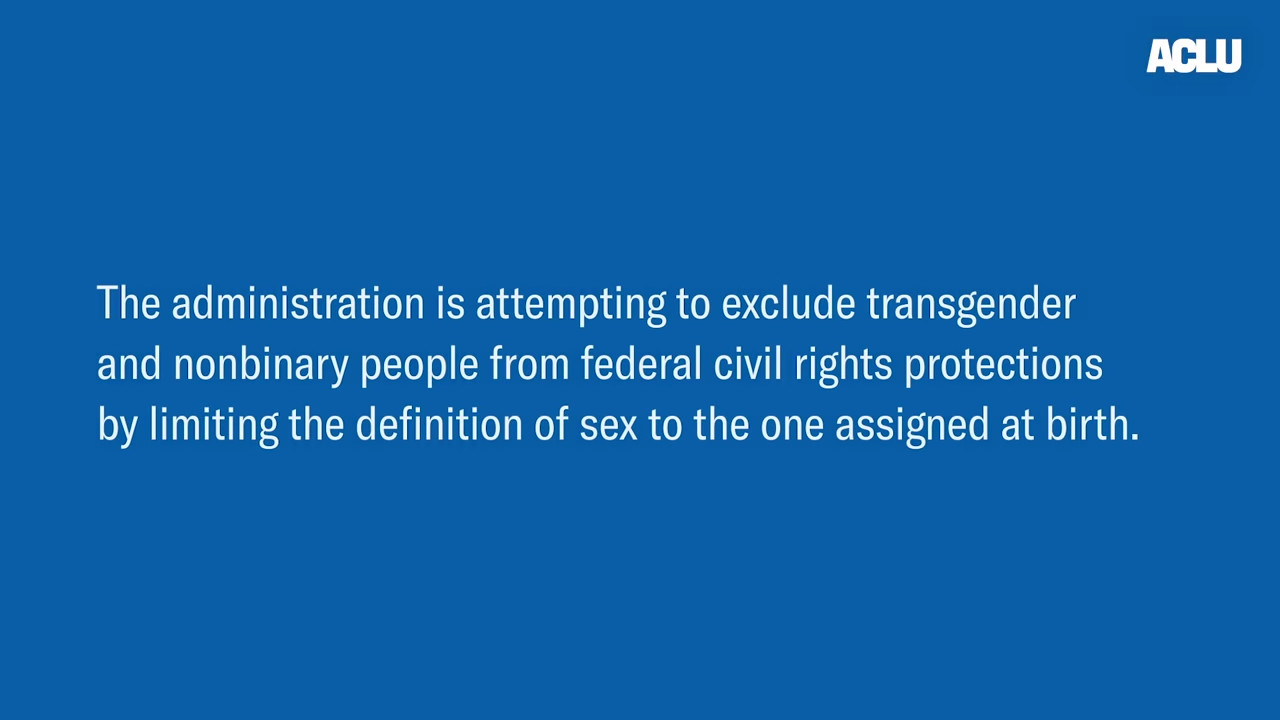
This year the Department of Health and Human Services proposed a change to the Affordable Care Act that would restrict healthcare access and insurance coverage for all trans and nonbinary people. It’s part of a coordinated effort to redefine sex discrimination across federal law. Over 20,000 ACLU supporters submitted comments to HHS opposing this rule, and if it goes into effect, we will sue.
“It is such a relief to achieve this closure and vindication from the court after four years of fighting not just for myself, but for trans youth across America,” said Gavin. “I promise to continue to advocate for as long as it takes for everyone to be able to live their authentic lives freely, in public, and without harassment and discrimination.”
4. The fight against the trans military ban continues
Soon after President Trump came into office, his administration banned transgender people from serving in the military. We sued on behalf of trans service members like Brock Stone, an 11-year Navy veteran who served in Afghanistan. In March this year, the Supreme Court ruled to uphold the ban while litigation continues. We’re still fighting for Brock Stone, because transgender people belong in the military — trans people belong everywhere.
In 1969, trans women of color led riots against police brutality and harassment at the Stonewall Inn, in one of the most important events in the history of LGBTQ activism. Their legacy continues 50 years later as we fight in the Supreme Court to protect transgender people and others from discrimination. Congress can do its part by passing the Equality Act to close the gaps in our civil rights laws and ensure explicit and comprehensive legal protections.
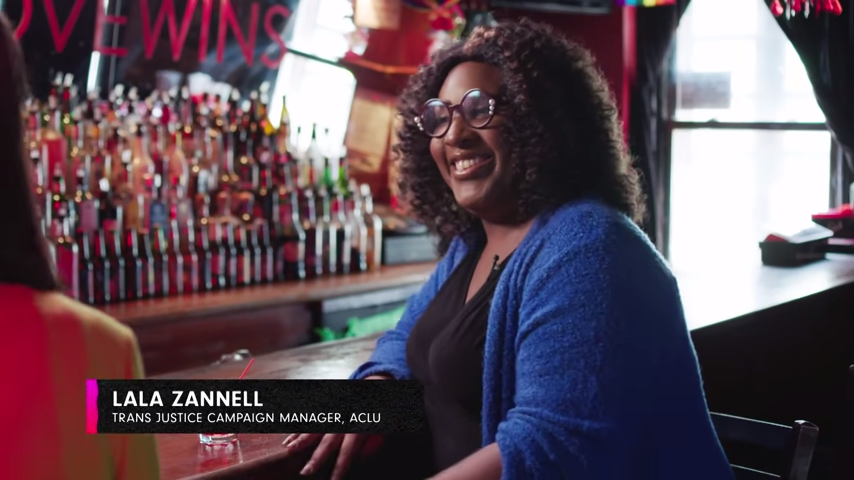
ACLU Trans Justice Campaign Manager LaLa Zannell discussed Stonewall and Pride 2019 on Full Frontal with Samantha Bee.
6. Trans Day of Remembrance
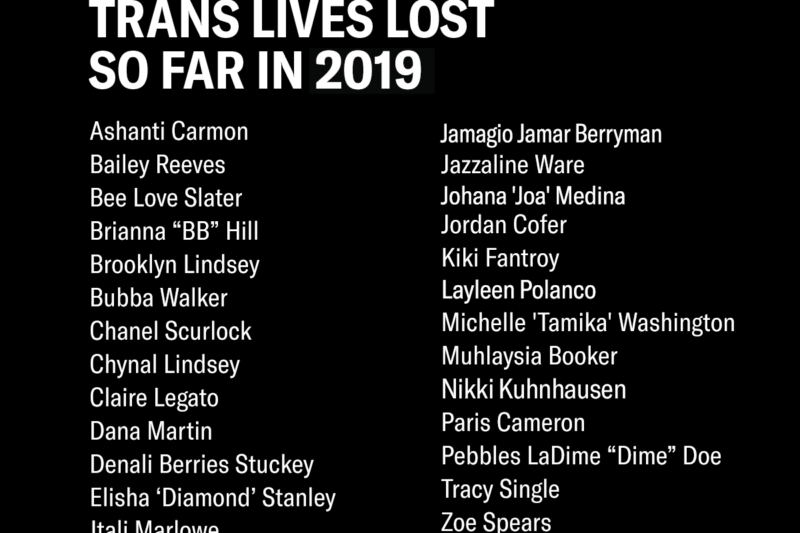
Trans lives are on the line every day — and in 2019 alone, 25 trans women of color were murdered. Tragically, their lives were taken because they lived in this world that too often fails to value black, brown, and gender non-conforming bodies.
In an interview with Democracy Now, LaLa Zannell explained that Trans Day of Remembrance “is a day for trans people across the country to take a moment to celebrate the living while using that moment to honor the ones we have lost in this movement.”
7. Trans student athletes fight for the right to participate in sports
Terry Miller and Andraya Yearwood are following their dreams as track stars at their Connecticut high school, but anti-trans advocates want to keep them out of sports. That’s discrimination.
Thousands have pledged their support for Terry and Andraya and for all transgender athletes who have the right to live as their authentic selves, including in sports. Girls who are transgender are girls.
The ACLU also stopped a bill attacking trans student athletes in South Dakota. We’re already seeing bills like this planned for 2020 state legislative sessions.
8. Government greenlights workplace discrimination
Nearly one-quarter of employees in the United States work for an employer that has a contract with the federal government. If the Department of Labor goes through with a new proposed rule, government-contracted employers could soon be able to fire employees for being LGBTQ or belonging to another minority or marginalized group. Over 64,000 ACLU activists submitted comments opposing the proposed rule.
9. California court rules against anti-trans discrimination in healthcare
ACLU SoCal won a landmark case protecting the rights of transgender patients trying to access medical care. The plaintiff, Evan Minton, was denied medical care because he is transgender, in what has become an increasing pattern of healthcare providers using religious freedom to discriminate against trans people. Religion should never be a license to discriminate.
Our documentary film Trans in America: Texas Strong won an Emmy Award for best documentary. The film is an intimate portrait of Kimberly and Kai Shappley, a mother and daughter navigating life in a religious community where Kai’s rights as a trans girl have been under attack — including her right to use the girls’ bathroom at school.
In October, the Supreme Court heard its first trans civil rights case ever. The case was brought by our client Aimee Stephens, who was fired from her job at a funeral home solely for being transgender. That’s sex discrimination and it violates Title VII of the Civil Rights Act of 1964.
We have yet to see whether the Supreme Court will uphold the civil rights of trans people. But no matter what, history has already been made.
“I’ll never forget the feeling of coming out of the Supreme Court and seeing a crowd of trans people and allies chanting to Aimee,” said Chase Strangio, Deputy Director of Transgender Justice. “It’s a special reminder that it’s not about what happens in court, it’s about how we move forward.”
2. Transgender people’s access to healthcare under attack
This year the Department of Health and Human Services proposed a change to the Affordable Care Act that would restrict healthcare access and insurance coverage for all trans and nonbinary people. It’s part of a coordinated effort to redefine sex discrimination across federal law. Over 20,000 ACLU supporters submitted comments to HHS opposing this rule, and if it goes into effect, we will sue.
“It is such a relief to achieve this closure and vindication from the court after four years of fighting not just for myself, but for trans youth across America,” said Gavin. “I promise to continue to advocate for as long as it takes for everyone to be able to live their authentic lives freely, in public, and without harassment and discrimination.”
4. The fight against the trans military ban continues
Soon after President Trump came into office, his administration banned transgender people from serving in the military. We sued on behalf of trans service members like Brock Stone, an 11-year Navy veteran who served in Afghanistan. In March this year, the Supreme Court ruled to uphold the ban while litigation continues. We’re still fighting for Brock Stone, because transgender people belong in the military — trans people belong everywhere.
In 1969, trans women of color led riots against police brutality and harassment at the Stonewall Inn, in one of the most important events in the history of LGBTQ activism. Their legacy continues 50 years later as we fight in the Supreme Court to protect transgender people and others from discrimination. Congress can do its part by passing the Equality Act to close the gaps in our civil rights laws and ensure explicit and comprehensive legal protections.
ACLU Trans Justice Campaign Manager LaLa Zannell discussed Stonewall and Pride 2019 on Full Frontal with Samantha Bee.
6. Trans Day of Remembrance
Trans lives are on the line every day — and in 2019 alone, 25 trans women of color were murdered. Tragically, their lives were taken because they lived in this world that too often fails to value black, brown, and gender non-conforming bodies.
In an interview with Democracy Now, LaLa Zannell explained that Trans Day of Remembrance “is a day for trans people across the country to take a moment to celebrate the living while using that moment to honor the ones we have lost in this movement.”
7. Trans student athletes fight for the right to participate in sports
Terry Miller and Andraya Yearwood are following their dreams as track stars at their Connecticut high school, but anti-trans advocates want to keep them out of sports. That’s discrimination.
Thousands have pledged their support for Terry and Andraya and for all transgender athletes who have the right to live as their authentic selves, including in sports. Girls who are transgender are girls.
The ACLU also stopped a bill attacking trans student athletes in South Dakota. We’re already seeing bills like this planned for 2020 state legislative sessions.
8. Government greenlights workplace discrimination
Nearly one-quarter of employees in the United States work for an employer that has a contract with the federal government. If the Department of Labor goes through with a new proposed rule, government-contracted employers could soon be able to fire employees for being LGBTQ or belonging to another minority or marginalized group. Over 64,000 ACLU activists submitted comments opposing the proposed rule.
9. California court rules against anti-trans discrimination in healthcare
ACLU SoCal won a landmark case protecting the rights of transgender patients trying to access medical care. The plaintiff, Evan Minton, was denied medical care because he is transgender, in what has become an increasing pattern of healthcare providers using religious freedom to discriminate against trans people. Religion should never be a license to discriminate.
Our documentary film Trans in America: Texas Strong won an Emmy Award for best documentary. The film is an intimate portrait of Kimberly and Kai Shappley, a mother and daughter navigating life in a religious community where Kai’s rights as a trans girl have been under attack — including her right to use the girls’ bathroom at school.